
How I Build a Call Funnel That Can Handle Cold Paid Traffic

I hope you enjoy reading this blog post. If you want my team to just do your marketing for you, click here.
Author: Jeremy Haynes | Published October 12, 2026
Earnings Disclaimer: You have a .1% probability of hitting million-dollar months according to the US Bureau of Labor Statistics. As stated by law, we cannot and do not make any guarantees about your own ability to get results or earn any money with our ideas, information, programs, or strategies. We don’t know you, and your results in life are up to you. We’re here to help by giving you our greatest strategies to move you forward, faster. However, nothing on this page or any of our websites or emails is a promise or guarantee of future earnings. Any financial numbers referenced here, or on any of our sites or emails, are simply estimates or projections or past results, and should not be considered exact, actual, or as a promise of potential earnings – all numbers are illustrative only.
Your call funnel can book appointments all day and still leave your closers with a job they cannot handle. Cold paid traffic brings people who need to understand the problem, your approach, and why the offer fits before they can make a buying decision. If the sales team has only worked with people already convinced by your organic content, that education is a different job. I build the funnel around making that job easier.
The page, application, and calendar are part of it. So are the numbers behind the budget, the information people receive after booking, and the team’s ability to follow up. A filled calendar means very little if the people on it arrive confused or the closer has no time left to handle them.
I want marketing and sales working on the same problem. Give the right people a reason to book, help them understand the decision before they arrive, and make sure the team can handle the calls your budget is buying.
7 weeks. Real frameworks. Covering copywriting, funnels, paid ads, and conversion systems.
What Cold Paid Leads Need From Your Sales Team
Cold paid leads can need education that your organic prospects already received. Start by checking whether your salespeople can handle that conversation.
A viewer who has watched your content for months brings context into the call. Someone clicking an ad for the first time may bring curiosity and a few unanswered questions. Both can be worth speaking with, but the closer has different work to do.
Listen to what happens when the buyer asks how the offer works. Can the salesperson explain the problem and the process clearly? Can they help the person compare it with what they have tried? Or do they only know how to take payment from somebody who has already decided?
Make the sales team’s job easier before you ask them to take more calls. That means looking for explanations, demonstrations, and proof the prospect can consume before the appointment. Your marketing can carry some of the education instead of leaving all of it to the person on the phone.
One operator selling a done-for-you property service built a page with addresses, deal information, and video breakdowns. A prospect could inspect the work rather than rely on a broad claim. For your offer, find the work a buyer would want to check and make it easy to inspect.
Build the equivalent around your own approved work. Show what your process involves, explain what the buyer is evaluating, and give the setter something useful to send. That is how education before and during a sales call becomes a real part of the funnel.
How the Call Funnel Budget Sets Your Expectations
The budget needs to connect to booked calls, attended calls, closed sales, and cash collected. Start with that math before deciding how many calendars you intend to fill.
For a single-call process, I look at ad spend, cost per call, show rate, close rate, and average cash collected per sale. Then I account for selling costs and the other expenses that affect the result. The full contract price is the wrong input when you only collect part of it upfront.
A two-call process adds second-call booking and second-call attendance. Somebody attending the first conversation does not mean they attended the next one. Keep those steps in the model so the extra friction is visible.
Define cost per call consistently, too. A scheduled appointment and a qualified scheduled appointment can produce different totals. Use the same definition when comparing the budget with what actually arrived.
In one illustrative calculation, I use $15,000 in spend and a $345 cost per call. That buys roughly 43 scheduled calls. Spread over the example’s 22 working days, it is about two calls per day. Put your own cost and working days into the calculation before deciding how many closers you can keep busy.
You can work through your own assumptions with the VSL and call-funnel calculator. Check the inputs against your records before deciding what spend to approve. A spreadsheet can calculate a weak assumption perfectly.
The first test also needs a loss you can absorb. Do not force the budget upward simply because you hired several closers and now want them busy. Put your strongest available salesperson on the initial calls, get useful feedback, and give yourself room to fix what you learn.
Why Closer Math Belongs Before More Ad Spend
Closer math tells you when the volume you want will exceed the team you have. Work backward from the goal through collected cash, closes, attendance, and bookings.
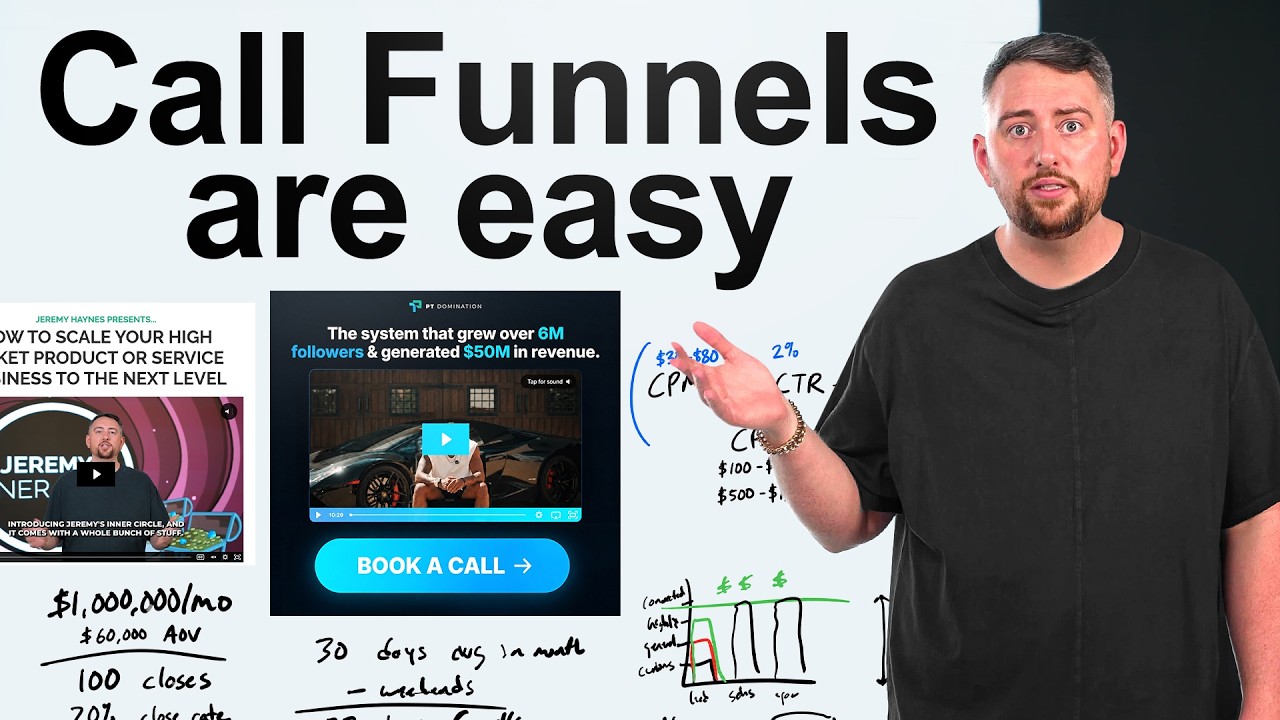
My illustrative million-dollar-month calculation starts with $10,000 collected per sale, a 20% close rate, a 60% show rate, and a $150 cost per booked call. It works backward to 100 sales, 500 calls taken, and roughly 833 bookings. Using the rounded booking count produces about $125,000 in advertising spend.
Change the collected amount or the attendance rate and the required bookings change. These figures are only inputs for the example. Before planning around your own goal, account for the costs of selling and delivering the sales too.
The calendar is the next check. The example uses 22 working days and eight booked slots per closer per day. That produces a need for roughly five closers. Use the schedule your people can actually work when doing your own math.
Know when you need the next closer before the calendar reaches its limit. Recruitment and training take time, and an accepted offer does not make somebody ready for your leads. Check your own hiring history instead of assuming the team can appear whenever marketing creates more demand.
This is the connection between sales capacity and scaling. More bookings help only when the business has people ready to handle them and enough time left for the work after the call.
Why I Start With a Simple Call Funnel Page
I start with a headline, a video sales letter, and an application or a button. I want the visitor’s attention on the explanation that helps them decide whether the offer fits.
Extra sections give the visitor other ways to consume the page. Sometimes that helps. Sometimes it lets them skim past the very explanation they need before booking. Look at what they actually do instead of assuming a longer page is more persuasive.
I prefer to begin simply and let the evidence tell me what to add. If people watch and understand the video, adding more material may solve nothing. If the audience does not consume video, written sections or a deck sales letter can be a better way to explain the offer.
Embedding the application removes a step. Sending people through a button to another page adds one. I look at that choice through the tradeoff between the volume of bookings and the intent of the people booking.
Make the choice with the sales result in view. A page producing cheaper calls can still create a harder job for the closer. A page producing fewer calls can still be wasting relevant people if the additional step serves no purpose.
What Your VSL Needs to Give a Skeptical Buyer
Your video sales letter needs believable reasons to care and a clear explanation of how your offer addresses the problem. Research what buyers are already thinking about before writing the script.
I call those real reasons. They come from the buyer’s circumstances and concerns. A reason you invented because it sounds impressive can fall apart as soon as the prospect compares it with what they know.
I questioned a water-filtration business opportunity because I was unconvinced that the problem and demand justified the pitch being proposed. The lesson is to check the actual conversation in the market. Enthusiasm about an offer does not tell you that buyers see the problem the same way.
Another operator had software being understood as an application and scheduler, while describing work that sat between marketing and sales. Calendar coordination, lead routing, and follow-up were a larger part of what the software did. Explaining that sales-operations work gave the buyer a different way to understand the offer.
Show your process clearly enough that somebody can understand the difference. Calling it unique is easy. Explaining what happens, why it matters, and where it fits gives the buyer something to evaluate.
AI can help research the audience and draft material, but check what it returns. A polished script built around a made-up fact creates more work for the team when the prospect questions it. Keep the argument tied to what you can support.
How I Tell Whether People Watch the VSL
I look at play rate and engagement separately. First find out whether people start the video, then look at where they stop watching.
If people reach the page and never press play, inspect the headline, thumbnail, and placement. If they press play and leave early, inspect the opening. Those observations point toward different changes.
One member showed me a video where attention dropped sharply near the beginning. Looking at the graph gave us a specific part of the video to review. Replacing the entire funnel would have skipped the evidence sitting in front of us.
Wistia defines play rate using unique plays and unique page loads. Its engagement reporting shows how much of the media viewers watched. Check the scope and date range when comparing those numbers.
I also like chapters. People arrive with different questions, and a clear chapter lets them reach the explanation they care about. Give them a useful way to evaluate the offer rather than insisting they consume every sentence in the order you prefer.
Look at the calls alongside the viewing data. A graph can show where attention changes; the conversations help you understand whether the explanation answered the right question. Keep both in view before declaring the VSL fixed.
Which Application Questions Are Worth the Friction
An application question earns its place when the answer helps marketing qualify the prospect or helps sales handle the conversation. Ask both teams what they will actually use.
Typed answers require more effort than a quick selection. That can give you useful context, but a long application can also become a reason to leave. I look for the questions the teams agree they need before adding more.
Begin with an easy question that signals who the offer is for. Easy should mean understandable and relevant. A question aimed at the wrong business stage can make a suitable buyer think they landed in the wrong place.
Financial qualification depends on what you intend to sell and how direct you want the application to be. You can disclose the actual price and commitment before the call. Keep those terms accurate so the prospect does not discover a different offer when they arrive.
One operator used a basic agency-profit question and examined how the answers related to later attendance and buying. I like the thinking behind checking a qualifier against what happens afterward. A correct arithmetic answer alone cannot establish somebody’s budget.
Keep personal information toward the end where that fits the application. Then inspect where people abandon, which answers are missing, and what sales uses. If a field creates effort and nobody acts on its answer, reconsider it.
Also check whether the form rejects suitable buyers because your choices do not describe their situation. More friction is useful only when it does a job you can explain.
Where Applications Lose People Before Scheduling
The handoff between applying and scheduling can lose people who already completed the qualification step. Check that handoff before paying for more applications.
I prefer an integrated application and scheduler when it fits the process. A person can answer the questions and choose a time without being sent to a separate page to begin another task.
Typeform supports booking through a Scheduler question connected to Calendly or Google Calendar, with account and plan requirements. Check that your chosen setup handles the route you need before changing tools.
You may deliberately add friction when the business wants fewer, more carefully reviewed calls. Make that a conscious decision. An unfinished integration should not quietly become your qualification strategy.
Go through the process as a prospect. Check the completed application, the appointment choices, and the confirmation. The sales team needs the answers and the booking together so the closer knows who is coming and what they asked for.
What Happens Between Booking and Showing Up
After booking, the person still needs a reason to spend time on the call. I call that justification mode, and I build the follow-up around helping them understand the decision.
The confirmation page starts that work. Explain what the conversation is for, give them useful information about your approach, and answer the concerns that otherwise land on the closer. Use real timing reasons when they exist; a fake deadline adds nothing worth defending.
Breakout videos can answer more specific questions beneath the main explanation. The buyer may need to understand delivery, compare the approach with another option, or explain the decision to someone else. Give them information they can actually use.
Email keeps the education moving after they leave the page. A reminder tells them the appointment time. A useful message also answers something they care about. Keep reminders inside that useful communication instead of sending the same empty notice repeatedly.
Frequency should follow the quality of the information and the permission you have. More emails give you more opportunities to be useful and more opportunities to become unwanted. Watch replies, complaints, and whether people engage with what you send.
Delivery matters too. Follow Google’s sender requirements for authentication and applicable unsubscribe controls. Good copy cannot help a prospect who never receives it.
Content remarketing puts useful explanations back in the feed where the prospect can encounter them. My four content categories are questions, follow-up questions, objections, and expectations. A second-layer question becomes relevant because the first answer raised it; keep that sequence in mind when choosing the material.
Setters can continue the same education by sending an asset that answers the person’s actual question. The job includes helping the buyer prepare for the conversation. Keep your public information accurate and easy to find when they research the business elsewhere, too.
What Sales Ops Should Handle Before the Call
Sales ops coordinates the work between marketing creating the opportunity and the salesperson handling it. Use the technology to make that handoff more useful.
Application answers, relevant business information, and earlier interactions can help the team understand the prospect. In my own setup, I describe using enrichment and existing records to choose more relevant follow-up material.
That work can also help with calendar coordination and assigning the conversation to an appropriate person. Make sure the reason for a routing decision is understandable and the team can correct it. An unanswered message can leave something unknown without establishing that the person cannot buy.
AI needs useful information about the offer, your voice, and the material available to send. A system that knows none of that can produce a personalized-looking message with no useful answer inside it.
Keep the data appropriate to the purpose and the permissions you have. Check what was actually sent and what reached the closer. Automating a handoff should make it easier to follow, not leave the team guessing what happened.
The marketing decisions behind this work are part of what you can explore through Master Internet Marketing, my 7-week live comprehensive training. The application page has the current details.
Results are not typical. Your results will vary and depend entirely on your individual capacity, business experience, expertise, and level of desire. There are no guarantees concerning the level of success you may experience. The testimonials and examples used are not intended to represent or guarantee that anyone will achieve the same or similar results. We don’t believe in get-rich-quick programs. We believe in hard work, adding value and serving others. As stated by law, we can not and do not make any guarantees about your own ability to get results or earn any money with our information, courses, programs, or strategies.
Why a Full Calendar Can Make the Sales Team Worse
Your team needs room for the work around the appointment. Leave time for preparation, notes, and follow-up when deciding how many bookings a closer can handle.
A calendar filled to its limit can look like successful marketing while sales records and follow-up fall behind. Check the completed work alongside the appointment count. Bookings are one part of the job.
The booking window matters as well. A person scheduling soon needs a different follow-up rhythm from someone waiting longer. Match appointment availability to the audience rather than assuming every buyer can take a business call during the same hours.
I describe an educator role for conversations that need more explanation before they can become closing conversations. Give that person relevant assets and a way to help the buyer understand the offer. The closer still needs to establish fit.
I also describe a cleaner role for leads whose buying process takes longer than the original salesperson can keep handling alongside new calls. The handoff should include what was discussed and what remains unresolved. Respect a person’s request to stop; persistence is useful only while there is a relevant conversation to continue.
Give marketing specific feedback. A label like bad lead leaves the team guessing. A record showing the person wanted work outside your scope, misunderstood the offer, or still needed another decision-maker gives you something concrete to address.
How I Find the Step That Needs Attention
I look across the funnel for the weak step, then investigate why it is weak. A low close rate tells you where the problem shows up; it does not automatically tell you who caused it.
Start with advertising costs, link clicks, and the share of visitors booking suitable calls. Then follow attendance, closing, and cash collected. A two-call process needs both booking and attendance for the second conversation included.
If cost per call is the issue, the problem may be in the ad response or the page. If attendance is weak, inspect the appointment experience and the education before the call. If people attend but cannot use the offer, go back to the message attracting them.
A stage-level improvement can matter to the rest of the funnel. In an illustrative model, moving page conversion from 1.5% to 3% doubles the bookings while everything else stays fixed. Real changes can affect lead quality and later rates, so check those too before assuming the whole result doubled.
Change the thing the evidence points to before rebuilding everything. If the VSL loses attention at the opening, work on the opening. If the application and scheduler lose suitable people between them, fix the handoff. Then see what changed downstream.
Get new information when you run out of useful ideas. Sales recordings, application answers, viewing data, and prospect questions can tell you more than another argument about whose department is responsible.
Already making money? See what it takes to make a lot more.
How More Spend and More Closers Have to Move Together
Scaling a working call funnel means increasing demand while keeping the business ready to handle it. Map the spending path and the resulting call volume together.
I discuss gradual increases, repeated increases when performance holds, and working backward from the additional calls you want. The right move depends on the actual costs and what the business can support. A percentage change by itself does not settle the decision.
Calculate where repeated increases take the daily budget. Then calculate the bookings that spending could require the team to handle. The cash commitment and the hiring requirement can grow faster than the first adjustment makes you expect.
Keep the working parts intact while solving the next constraint. Get the calendars to a workload the team can handle, prepare additional capacity, and continue checking the economics. If the calls deteriorate or collections fall behind, find out why before adding more pressure.
In my Inner Circle, operators bring the actual decisions they are working through. Bring that same specificity to your funnel. Know what the budget buys, what the prospect needs, and what the sales team can handle before you ask the system for more.
Results are not typical. Your results will vary and depend entirely on your individual capacity, business experience, expertise, and level of desire. There are no guarantees concerning the level of success you may experience. The testimonials and examples used are not intended to represent or guarantee that anyone will achieve the same or similar results. We don’t believe in get-rich-quick programs. We believe in hard work, adding value and serving others. As stated by law, we can not and do not make any guarantees about your own ability to get results or earn any money with our information, courses, programs, or strategies.
Get my content first on Google
Add jeremyhaynes.com as a preferred source and Google shows my articles more prominently in your search results, including AI Overviews and AI Mode.


Jeremy Haynes
Owner and CEO of Megalodon Marketing
Jeremy Haynes is the founder of Megalodon Marketing. He is considered one of the top digital marketers and has the results to back it up.