How to Ramp a New Offer From First Sale to a Million-Dollar Month
I hope you enjoy reading this blog post. If you want my team to just do your marketing for you, click here.
Author: Jeremy Haynes | Published July 14, 2026
Earnings Disclaimer: You have a .1% probability of hitting million-dollar months according to the US Bureau of Labor Statistics. As stated by law, we cannot and do not make any guarantees about your ability to get results or earn any money with our ideas, information, programs, or strategies. We do not know you, and your results in life are up to you. We’re here to help by giving you our greatest strategies to move you forward, faster. However, nothing on this page or any of our websites or emails is a promise or guarantee of future earnings. Any financial numbers referenced here, or on any of our sites or emails, are simply estimates or projections or past results, and should not be considered exact, actual, or a promise of potential earnings, all numbers are illustrative only.
Look, most businesses never reach a million-dollar month. According to JPMorgan Chase Institute’s research on the $1 million revenue milestone, only around 9% of small businesses with employees ever cross that threshold, and among sole proprietors it is well under 10%. It is not because the systems do not exist or because it is impossible.
It is because they try to scale broken offers. They skip critical phases. They diversify too early and spread themselves thin across multiple offers when they should be doubling down on one.
I have built businesses and helped others do the same through Master Internet Marketing and Megalodon Marketing’s done-for-you agency services.
The path is not sexy, but it is methodical. And it starts way before you ever think about paid traffic or hiring a sales team.
Results are not typical. Your results will vary and depend entirely on your individual capacity, business experience, expertise, and level of desire. There are no guarantees concerning the level of success you may experience. The testimonials and examples used are not intended to represent or guarantee that anyone will achieve the same or similar results. We don’t believe in get-rich-quick programs. We believe in hard work, adding value and serving others. As stated by law, we cannot and do not make any guarantees about your ability to get results or earn any money with our information, courses, programs, or strategies.
7 weeks. Real frameworks. Covering copywriting, funnels, paid ads, and conversion systems.
Why Your Offer Design Determines Everything That Comes After
Before you worry about funnels, ads, or sales teams, you need to design the offer. This is the foundation everything else is built on.
Most people get this backwards. They build a mediocre offer, then try to compensate with better marketing. That is like trying to polish a rock and call it a diamond. You can make it shine, but the core problem is still there.
A scalable offer has specific components. You need a clear, specific promise, not vague transformation language, but a concrete outcome your market actually wants. Risk reversal through a strong guarantee matters too, along with speed built into the delivery so people see results fast. Ease of consumption keeps it from feeling like a second job, and bonuses that address the specific objections your market has round out the offer.
Alex Hormozi’s Value Equation breaks this down well: Dream Outcome times Perceived Likelihood of Achievement, divided by Time Delay and Effort and Sacrifice. Increase the top, decrease the bottom, and you have got something people will pay for. Our own breakdown of what makes high-ticket offers easy to buy covers the psychology side of this in more depth.
Here is what I see all the time: people over-engineer before they make their first sale. They build elaborate courses, create complex fulfillment systems, design beautiful member areas. Then they try to sell it and nobody bites.
Sell it before you build it. Get someone to give you money for the outcome you promise, then deliver it manually. Record the calls, document the process, figure out what actually works. That becomes your system.
And pick one offer. Not three. Not five. One. I have worked with businesses that were stuck at $30K to $40K months because they kept launching new offers instead of refining the one that was working. Focus beats diversification every single time at this stage.
How to Get Your First Sales Without Paid Traffic
The first phase is all about manual, unscalable work. This is where you are grinding through your warm network, sending DMs, reaching out to past clients, posting organic content.
You are not running ads yet, and you do not need a fancy funnel. What you need is conversations with people who might buy.
Offer founding member or beta pricing. This reduces friction and gives you a reason to ask for detailed feedback and testimonials. You are essentially trading a discount for social proof and case studies.
Your sales process at this stage is completely manual. You are jumping on Zoom calls, sending voice notes, recording personalized Loom videos. It does not scale, and that is fine. You are not trying to scale yet.
What you are trying to do is fulfill so well that these early clients become raving fans. Because their testimonials, their results, their referrals, that is what gets you to the next phase.
The businesses I have worked with that ramped fastest all did this part exceptionally well. They treated their first 5 to 10 clients like gold. They over-delivered, stayed in constant communication, and made sure those people got results.
Because when you are trying to move to the next phase, you need proof. And you cannot fake it.
What to Systematize Once You Have Paying Clients
Once you have got some sales and some happy clients, you are in the next phase. This is where you systematize what is working and start building the machine.
Collect social proof like your business depends on it, because it does. Video testimonials, screenshot results, detailed case studies, before-and-after data. Every client interaction is a content opportunity.
Set up automated requests. When a client hits a milestone, have a system that asks for a testimonial. Get permission to record check-in calls. Screenshot wins and save them in an organized folder.
Your sales process needs to get dialed in here. You should have a script, documented objection handling, and you should be tracking your close rate. If you are closing below 20% on qualified leads, something is wrong. Either the offer needs work, your leads are not qualified, or your sales skills need development.
You are also identifying your primary acquisition channel. What is actually working? Is it organic content? Referrals? A specific outreach method? Whatever it is, double down. Do not diversify into new channels yet.
Start building a simple funnel: content or ads drive to a landing page, landing page drives to an application or booking, booking leads to a sales call, sales call leads to a close. Track every step.
You need to understand your unit economics: what it costs to acquire a customer, what their lifetime value is, what it costs to fulfill, and what your profit margins actually look like.
And you will probably make your first hire here. Usually a VA to handle admin work, or an appointment setter to qualify leads and book calls. This frees you up to focus on sales and strategy.
When and How to Introduce Paid Advertising
Proving the Offer Before You Spend on Ads
You do not introduce paid ads until organic or manual methods prove the offer converts. I see people blow through thousands of dollars testing ads on an unproven offer. That is just lighting money on fire, and our piece on why paid ads stop scaling covers this exact failure pattern in more detail.
But once you know the offer works, once you have got proof, once your sales process is dialed, that is when you pour fuel on it.
Platform selection matters based on your offer. Meta, meaning Facebook and Instagram, works for most B2C and many B2B offers. YouTube works well for higher-ticket or education-based offers. Google works for intent-based searches. TikTok can work for lower-ticket or broad appeal.
Creative has become the dominant lever in paid acquisition over targeting. Platform algorithms have gotten sophisticated enough that audience selection matters less than it used to, while the quality and volume of your creative testing matters more.
You need a system for testing hooks, angles, and formats: UGC-style content, talking head videos, VSL snippets. Businesses I have worked with that moved past six-figure months were producing 20 to 50 new ad creatives every month.
Scaling ad spend has a methodology. You cannot just 10x your budget overnight. Increase incrementally, 20% to 30% every 3 to 5 days. Scale horizontally by launching new ad sets and audiences. Scale vertically by increasing budget on winners.
Set up retargeting layers: website visitors, video viewers, people who engaged with your content, people who started but did not complete applications. These audiences convert at much higher rates.
You need to know your benchmarks: your CPM, your CPC, your CTR, your cost per lead, your cost per booked call, your cost per acquisition, your ROAS.
Managing the Cash Flow Gap
And here is where cash flow becomes critical. Ad spend goes out before revenue comes in. You are paying Meta today for leads that might close next week or next month. If you are offering payment plans, that revenue is spread out even further.
You need float: credit lines, cash reserves, or you need to collect payment in full upfront. Many businesses that tried to scale actually went broke because they did not manage this gap.
How to Build and Structure a Sales Team
At a certain point, you cannot close everything yourself anymore. You need a team.
Start with one additional closer. Hire someone with experience in your price range. If you are selling high-ticket, you need someone who has closed high-ticket before, and our guide on hiring and vetting elite closers walks through exactly how to screen for that.
The typical compensation structure for closers in high-ticket is base salary plus commission on cash collected. Not cash sold, cash collected. This aligns incentives.
As you continue to grow, you move to a setter-closer model. Setters qualify leads and book appointments. Closers handle the actual sales calls. This lets your closers focus on what they do best instead of spending time on unqualified leads.
You need a real CRM at this point: GoHighLevel, HubSpot, or Close, something that tracks your entire pipeline and lets you see where deals are getting stuck.
Speed to lead matters more than most people realize. Verse.ai’s compilation of speed-to-lead research cites findings from the Lead Response Management study showing leads are up to 100 times more likely to qualify when contacted within 5 minutes versus 30 minutes.
Set up call recording and review it regularly. Listen to what is working and what is not. Coach your team based on actual calls, not theory.
Your fulfillment needs to scale too. You need SOPs, you need team members handling delivery, and you need systems to maintain quality as volume increases.
Here is the truth: at this stage, sales solves everything. Revenue covers mistakes. But only if your close rates hold.
Optimizing for Larger Numbers: What Changes and What It Actually Looks Like
Diversifying Traffic, AOV, and Lifetime Value
The jump to larger monthly revenue is different than earlier phases. It is less about discovering what works and more about optimizing what is already working.
This is where multiple traffic sources become relevant. Not before. But at this level, you do not want to be dependent on a single platform. If Meta shuts down your ad account or changes their algorithm, you need backup.
Focus on increasing your average order value. Add upsells, order bumps, backend offers. Build an ascension model where clients can move to higher-ticket services.
Focus on increasing lifetime value. Can you add a continuity or recurring component? How do you reduce churn? What keeps clients longer? Our breakdown of how to stabilize customer acquisition cost while scaling covers the math behind this shift.
Implement referral systems. At this level, if you are delivering well, your clients know other people who need what you offer. Make it easy for them to refer.
Your financial infrastructure needs to mature. You need cash reserves, tax planning, proper entity structure. Look into profit-first methodology so you are not just chasing top-line revenue.
You need leadership: a COO or operations person who can run the day-to-day, department heads for sales, marketing, and fulfillment, and weekly KPI reviews to catch problems early. This is exactly the kind of foundational hiring covered in the three hires that create the foundation for scaling any business.
This phase is boring. You are not reinventing anything. You are improving conversion rates incrementally at each stage of the funnel. But those improvements compound dramatically at scale.
The Real Numbers Behind a Million-Dollar Month
Let us break down what a million-dollar month actually looks like operationally, because most people do not understand the math. If you are selling a $10,000 coaching program, you need roughly 100 clients a month. At a 25% close rate, that is 400 booked calls a month. Account for a typical 70% show rate and you need closer to 570 booked calls, meaning around 570 qualified leads if your booking rate is strong.
Your ad spend at that scale might run $150,000 to $250,000 a month, assuming a cost per acquisition in the $1,500 to $2,500 range per closed client.
If you are selling a course or digital product at a $2,000 price point, you need roughly 500 sales a month to hit the same revenue number. That is higher volume, lower touch, and requires different infrastructure than high-ticket.
If you are running an agency or done-for-you service with $10,000 monthly retainers, you need around 100 active clients. The ramp is slower because you are building recurring revenue, but once you hit it, it is more stable. Your bottleneck is fulfillment, not sales.
And here is what people do not talk about: a million-dollar month does not mean you are taking home all of that. After ad spend, team salaries, fulfillment costs, software, taxes, and overhead, healthy net margins for service or coaching businesses at this level typically land somewhere between 15% and 30%.
So you might be netting $150,000 to $300,000 of that million. Still life-changing, but not what most people imagine when they hear the number.
Already making money? See what it takes to make a lot more.
Common Mistakes That Kill Momentum, and the Methodology That Avoids Them
Five Patterns That Kill Momentum
I have seen the same mistakes kill momentum over and over again.
- Premature scaling: trying to scale ads before the offer is proven, hiring a sales team before you have figured out what converts, diversifying into new offers before you have maxed out the first one
- Ignoring unit economics: celebrating revenue while margins are razor-thin, not understanding the gap between ad spend and cash collection, running out of money while “growing”
- Hiring too fast or too slow: waiting too long to hire and burning yourself out, or hiring too many people too quickly and losing control of quality and culture
- Creative fatigue: scaling ad spend on the same creatives until they stop working, then panicking, instead of having a system for producing new creatives consistently
- Cash flow blindness: not understanding that scaling requires capital, not having reserves or credit lines, offering payment plans without factoring in the cash flow implications
The businesses I have worked with that successfully ramped to higher levels avoided these mistakes. They moved through phases methodically, focused on one offer until it was dialed in, understood their numbers cold, and hired based on bottlenecks rather than ego.
It is because most people are not willing to do the boring work. They want the shortcut, the hack, the secret: skipping the manual outreach phase, scaling ads before they have proof, hiring a team before they have figured out what actually works.
The path is simple, but it is not easy. Build an offer so good people feel silly saying no. Get your first sales manually and fulfill exceptionally. Systematize what works and build proof. Scale with paid ads once the offer is proven. Build a team as you hit bottlenecks. Optimize everything as you approach larger numbers.
It is not sexy. But it is how you actually build something that lasts.
The systems are designed to work if you execute them in order. But they require skill, strategy, and relentless focus on what actually moves the needle.
Most people will read this and do nothing. Some will try to skip steps and wonder why it is not working. A few will actually execute, phase by phase, and build something significant.
If you want to see how we approach this systematically, Master Internet Marketing, our 7-week live comprehensive training, covers the frameworks in depth.
Results are not typical. Your results will vary and depend entirely on your individual capacity, business experience, expertise, and level of desire. There are no guarantees concerning the level of success you may experience. The testimonials and examples used are not intended to represent or guarantee that anyone will achieve the same or similar results. We don’t believe in get-rich-quick programs. We believe in hard work, adding value and serving others. As stated by law, we cannot and do not make any guarantees about your ability to get results or earn any money with our information, courses, programs, or strategies.
And for operators who want more direct access, Inner Circle is where we work through these systems in real time. So which phase are you in right now, and what is actually stopping you from moving to the next one?
Get my content first on Google
Add jeremyhaynes.com as a preferred source and Google shows my articles more prominently in your search results, including AI Overviews and AI Mode.

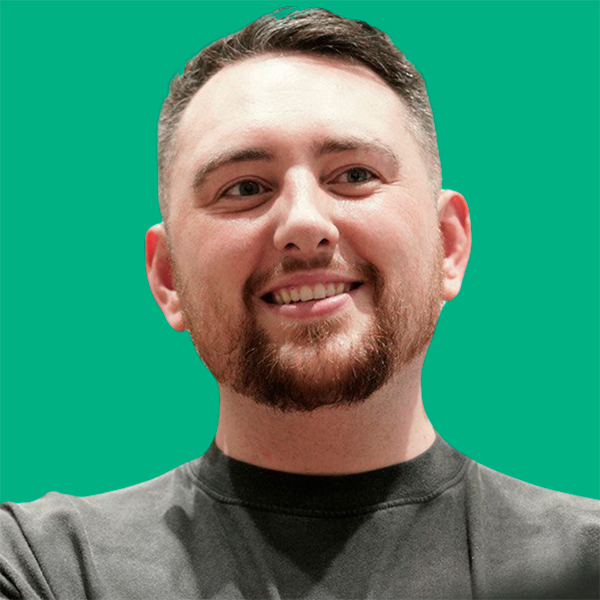
Jeremy Haynes
Owner and CEO of Megalodon Marketing
Jeremy Haynes is the founder of Megalodon Marketing. He is considered one of the top digital marketers and has the results to back it up.