How to Build a Call Funnel That Actually Scales
I hope you enjoy reading this blog post. If you want my team to just do your marketing for you, click here.
Author: Jeremy Haynes | Published March 20, 2026
Earnings Disclaimer: You have a .1% probability of hitting million-dollar months according to the US Bureau of Labor Statistics. As stated by law, we cannot and do not make any guarantees about your own ability to get results or earn any money with our ideas, information, programs, or strategies. We don’t know you, and besides, your results in life are up to you. We’re here to help by giving you our greatest strategies to move you forward, faster. However, nothing on this page or any of our websites or emails is a promise or guarantee of future earnings. Any financial numbers referenced here, or on any of our sites or emails, are simply estimates or projections or past results, and should not be considered exact, actual, or as a promise of potential earnings – all numbers are illustrative only.
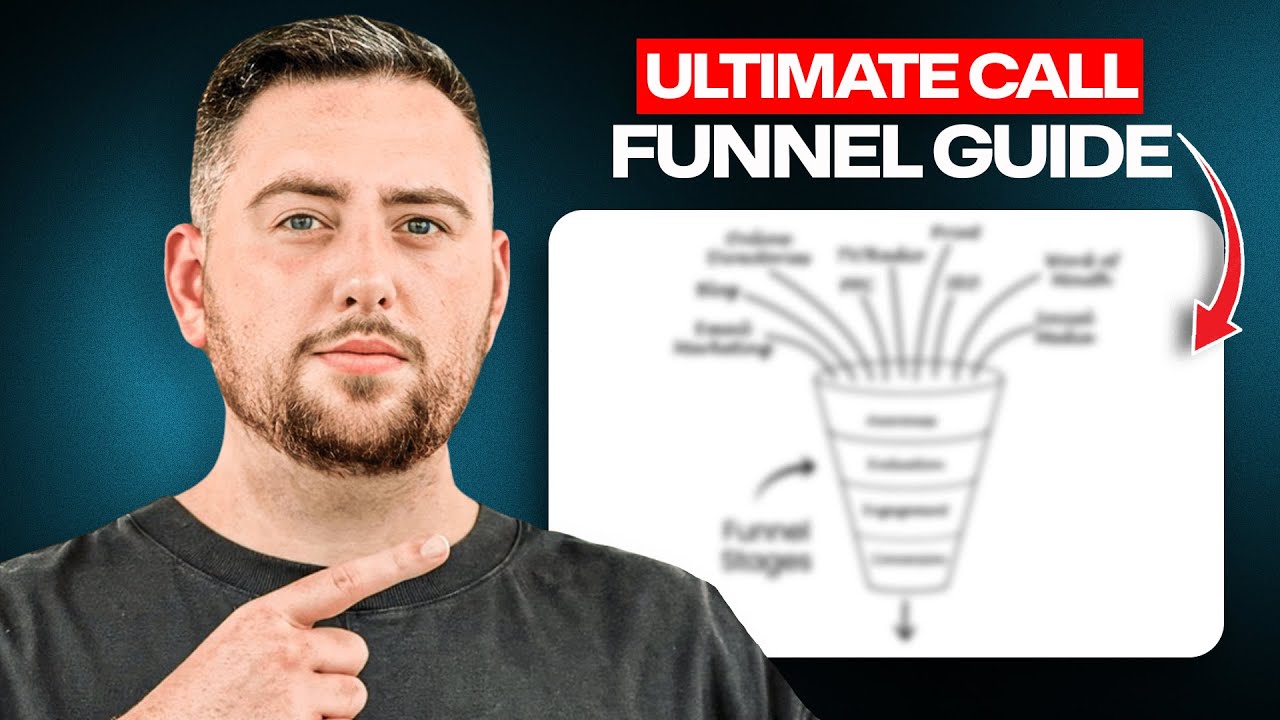
If you’re trying to scale a call funnel, there’s a specific routine I follow. It’s one of those core funnels we use again and again when working with established businesses.
The call funnel works as an operational framework. That’s why almost every high-ticket product and service business uses it. But there’s a difference between running a call funnel at one level versus building the systems to handle significantly more volume.
I’m going to walk through some lesser-talked-about operational approaches that I’ve found critical in my experience. This isn’t basic stuff. This is what the framework looks like when you’re building for scale.
If you want to go deeper on funnel systems and operational frameworks, I cover this extensively in my 7-week live comprehensive training.
Results are not typical. Your results will vary and depend entirely on your individual capacity, business experience, expertise, and level of desire. There are no guarantees concerning the level of success you may experience. The testimonials and examples used are not intended to represent or guarantee that anyone will achieve the same or similar results. We don’t believe in get-rich-quick programs. We believe in hard work, adding value and serving others. As stated by law, we cannot and do not make any guarantees about your own ability to get results or earn any money with our information, courses, programs, or strategies.
Why Financial Modeling Your Call Funnel Removes the Guesswork
The first thing you must do is financial model everything out. In my experience, most businesses trying to scale aren’t doing any math. They’re essentially guessing, which creates chaos when you’re trying to build predictable systems.
I’ve built out two different models to show you exactly how this works: one for a two-call close, and one for a single-call close.
In the two-call close model, you account for ad spend, cost per call, initial booked calls, show rate for the first call, the quantity of people who book a second call, show rate for the second call, close rate, and cash collected.
Here’s what the framework looks like in practice:
Map out your ad spend at a specific cost per call. That generates a certain number of calls.
Apply your first-call show rate to get the people who show up for that call.
Calculate how many of those book a second call.
Apply your second-call show rate and then your close rate.
Multiply deal count by your average cash collected.
After reducing ad spend, marketing fees, and sales commissions, that’s your gross profit. Expand this further for other expenses, cost of goods sold, and net profit.
The single-call close model is different: same cost per call, same show rate, but a different close rate. Typically you see different net numbers because there are fewer steps. Every additional step adds friction.
According to HubSpot’s research on sales pipeline management, reducing friction points in your sales process directly impacts conversion efficiency.
This is where math shows you the timeline. The framework lets you model when you can push from one level to the next. If you netted a certain amount, you could theoretically reinvest that plus your recouped ad spend. That puts you at a higher spend level the following month.
But what’s the probability you’re actually going to reinvest that full amount? And what’s the probability you can scale spend significantly without anything else in the model changing? You have to look at probability scenarios.
How to Forecast Closer Hiring So You Never Hit a Ceiling
Businesses often hit ceilings because they don’t forecast closer hiring needs.
My buddy Josh Troy from Wires From Strangers, one of the sales agencies I’ve worked with extensively, calls what I do “marketing knobs.” I can take spend up very quickly. But if he needs to scale the quantity of closers to handle that volume, that takes weeks.
Look at the math. When you increase monthly ad spend at a specific cost per call, your call volume increases proportionally. That creates a substantial difference in operational requirements.
If a closer works 5 days a week taking eight one-hour calls per day, that’s 40 calls per week. With about 20 calendar days in a month, you can calculate exactly how many closers you need to handle any given volume.
The forecasting piece is critical. It typically takes 3–4 weeks to recruit, vet, train, and get a closer taking calls full-time. You need to be ahead, not behind. And not all closers are going to be winners.
According to Gartner’s research on sales team scaling, the average ramp time for new sales hires ranges from 3–6 months to full productivity, which makes proactive hiring essential.
You can’t assume hiring happens on schedule. You need to forecast who you need and when so you can always continue scaling. You want ad spend and closer volume expanding together, not hitting ceilings where you’re waiting weeks for new hires.
If you’re reactively hiring after calendars fill, and it takes four weeks each time, you’d only scale a handful of times per year. That’s a slow operational cadence.
The Hammer Them Strategy: Warming Leads Between Booking and the Call
This is one of my favorite retargeting strategies, and it’s a core part of how we approach lead warming. Your sales team wants layup deals. They don’t want to sell aggressively every single call.
In most call funnels, someone sees your ad, books a call, shows up, and hopefully closes. But there’s a critical step missing between booking and the call.
Let’s say you have a three-day window between when someone books and their scheduled call. In that window, I want at least 15–20 different pieces of content hitting that person. These are pieces that make them excited, properly framed, aware, and educated.
You also want multiple emails per day. I know that sounds like a lot, but here’s the logic: people who want to talk with you have questions. They’re seeking information whether from you or from Google, and some of that information might be from your competitors.
Example: I wanted to lower my tax burden and found a company promising specific tax benefits. I booked a call nine days out to learn more. They sent me one confirmation email. That’s it. By day three of my own research, I wasn’t showing up for that call because I found information that changed my perspective.
What if they’d sent me multiple emails per day plus content? They could have served up information that addressed my concerns, increased my awareness, and made me show up ready to engage.
When you properly execute the hammer-them strategy, the operational framework covers both show-rate improvement and lead education. Warmer leads make for easier conversations.
How to Stay Ahead of Ad Fatigue When Spending More on Ads
Ad fatigue is one of the most important things to manage when spending significant amounts on advertising. As you spend more, ads fatigue faster.
Here’s the simple math: if a large percentage of annual ad spend happens in Q4, your ads will fatigue faster due to competition. The same logic applies to your spend increases.
If you have historical data showing ads performed well for a certain time period before fatiguing, and you increase your spend significantly, divide that time period proportionally. That’s your probable new fatigue timeline.
According to Meta’s advertising research, creative refresh frequency directly correlates with spend levels, and higher-spending accounts require more frequent creative updates.
The protocol is simple:
Duplicate the fatigued campaign.
Pull out all creative at the ad level.
Insert new creative.
Publish the duplicated campaign and cut off the old campaign once approved.
If you want to maintain a specific cost per call in your financial model, you must stay ahead of ad fatigue. Otherwise that cost per call will inflate and affect your monthly averages.
Why You Should Scale One Ad Channel Before Adding More
Find your best-performing ad channel and focus on it completely. In almost all instances, that’s Facebook and Instagram. Occasionally it’s Google, TikTok, or even LinkedIn.
Push into the ceiling you don’t know exists yet. Find out how big that channel can actually go before you divest attention to other platforms.
At scale, everything happens much faster: ad fatigue, closer hiring needs, customer support, all accelerate. When you split attention across multiple ad channels simultaneously, you introduce variance in customer types, statistics, and operational complexity.
If you focus all your attention on one thing, there’s a higher probability you extract maximum value from it. After you hit that actual ceiling, that’s when it becomes appropriate to divest into other channels.
How Increasing Average Order Value Compounds Your Funnel Results
When you’re generating a consistent number of customers per month at a specific price point, what’s the probability they spend more? Or that there’s something else you can sell them after they get results?
This is tremendously effective yet often ignored. Most clients want to focus on cost per call, show rates, and close rates. I immediately ask what we’re doing to increase average order value.
If you can get a percentage of customers to spend additional amounts on top of their initial purchase, that makes a difference. With a consistent customer count, extra revenue per customer adds up and reduces ad spend risk.
We actively focus on this because it works exceptionally well in building stronger funnel economics.
These are the core operational approaches I use when building call funnels for scale. The difference between those stuck at one level and those building systems for the next level comes down to execution on these frameworks.
Financial modeling gives you visibility.
Closer math keeps you ahead of hiring needs.
The hammer-them strategy warms leads before calls.
Managing ad fatigue helps maintain your cost per result.
Scaling one channel first maximizes attention.
Increasing average order value compounds everything.
This is the framework. The execution is what separates operators from everyone else.
If you want to work through these systems with direct feedback and implementation support, the Inner Circle is where I go deep on this with established operators.
Results are not typical. Your results will vary and depend entirely on your individual capacity, business experience, expertise, and level of desire. There are no guarantees concerning the level of success you may experience. The testimonials and examples used are not intended to represent or guarantee that anyone will achieve the same or similar results. We don’t believe in get-rich-quick programs. We believe in hard work, adding value and serving others. As stated by law, we cannot and do not make any guarantees about your own ability to get results or earn any money with our information, courses, programs, or strategies.
Watch the video:

Jeremy Haynes
Owner and CEO of Megalodon Marketing
Jeremy Haynes is the founder of Megalodon Marketing. He is considered one of the top digital marketers and has the results to back it up.