Jeremy Haynes Debates 10 Business Owners on Paid Ads, Pricing, and Why Most Stay Small

I hope you enjoy reading this blog post. If you want my team to just do your marketing for you, click here.
Author: Jeremy Haynes | Published March 5, 2026
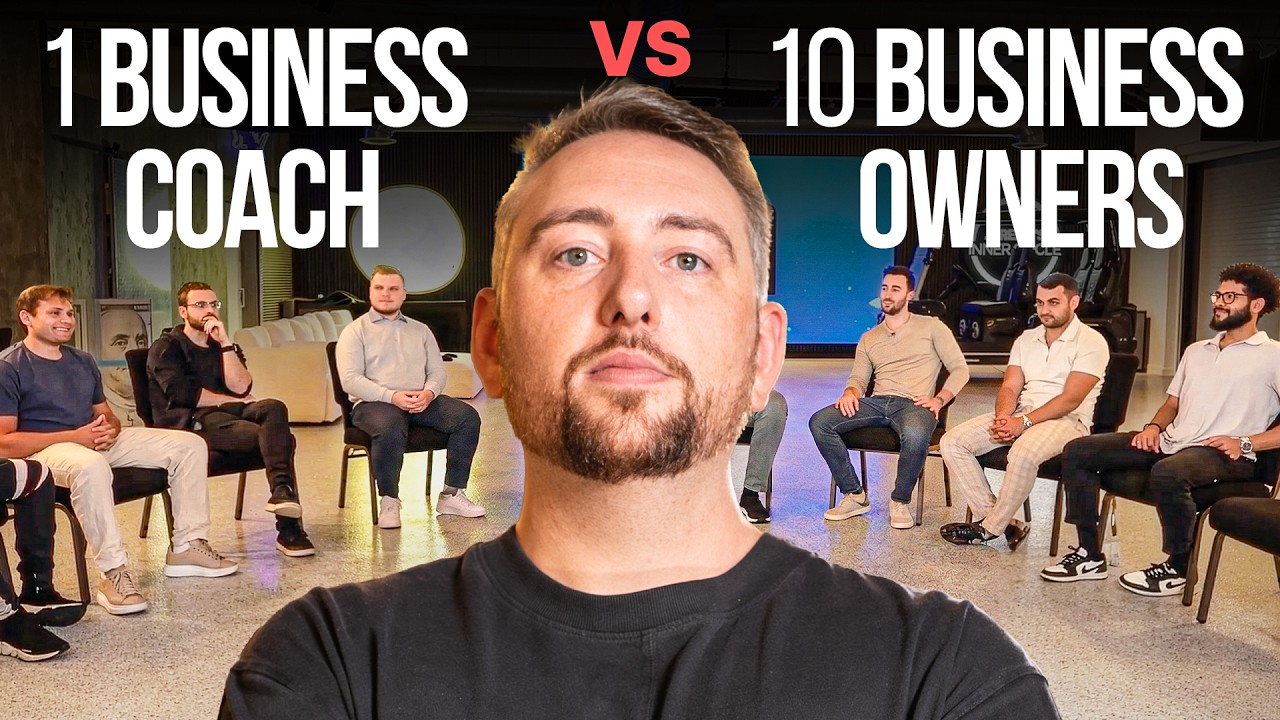
Haynes discusses the paid versus organic debate, why fulfillment without sales creates no business, how wealthy clients behave differently, and why content supports paid advertising conversion even with low initial views
Earnings Disclaimer: You have a .1% probability of hitting million-dollar months according to the US Bureau of Labor Statistics. As stated by law, we can not and do not make any guarantees about your own ability to get results or earn any money with our ideas, information, programs, or strategies. We don’t know you, and besides, your results in life are up to you. We’re here to help by giving you our greatest strategies to move you forward, faster. However, nothing on this page or any of our websites or emails is a promise or guarantee of future earnings. Any financial numbers referenced here, or on any of our sites or emails, are simply estimates or projections or past results, and should not be considered exact, actual, or as a promise of potential earnings – all numbers are illustrative only.
Jeremy Haynes gathered 10 business owners in Miami for an open debate format where anyone could challenge his perspectives on growth, pricing, marketing, and scaling. The session covered everything from the organic-versus-paid advertising argument to why most entrepreneurs sabotage themselves through energy conservation bias. What emerged wasn’t gentle business advice. It was tactical operator-level thinking delivered with the directness Haynes is known for.
The format was simple. If someone disagreed or wanted clarification, they sat across from Haynes and made their case. Topics ranged from whether new businesses should focus on organic content first to why content supports direct response advertising even when view counts stay low. Several participants left reconsidering beliefs they’d held for years.
How to Decide Between Paid Ads and Organic Marketing When Starting
The first debate tackled whether new businesses should master organic marketing before spending on paid advertising. The challenger argued that organic acts like training wheels, helping entrepreneurs prove their offer before risking ad spend.
Haynes disagreed immediately. He asked how long it took to grow an organic page from zero. Eight months. How many views per video at the start? A few hundred. Does it reach the ideal demographic? No.
The speed difference matters. According to research on small business failure rates, most businesses fail within the first few years, making time-to-validation critical. Spending months building an organic presence to an audience that doesn’t match your ideal buyer delays the feedback loop that determines whether an offer has market fit.
Haynes acknowledged the concern about first-time business owners burning money without experience. But he compared new entrepreneurs to sea turtles hatching on a beach. As soon as baby turtles emerge, they sprint toward the ocean while birds attack from above and sharks wait in the water. The survival rate is terrible regardless of the path they choose.
“They’re cooked either way in terms of statistical probabilities,” Haynes explained. The determining factors aren’t paid versus organic. They’re traits like endurance, financial backing, and willingness to keep learning when things fail.
Haynes also pointed out that making content isn’t free. Time has a cost. Someone who spends eight months building an organic presence has invested that time instead of testing quickly with paid traffic. The math depends on how someone values their time and how quickly they need validation.
Why Sales Must Come Before Perfect Fulfillment
Another participant argued that fulfillment matters more than sales when launching. He believed agencies should perfect their service delivery before ramping up client acquisition to avoid the trap of selling something they can’t deliver well.
Haynes pushed back. “How are you going for anything if you don’t sell anything?” Without sales, there’s no business. Fulfillment systems are meaningless if there’s no one to fulfill for.
He acknowledged seeing agency owners sell aggressively, close clients, then realize they have no idea what they’re doing. But even those operators can succeed if they’re resourceful. They could charge the client one amount and white-label the service to a competent provider for less, pocketing the difference while delivering results. The client gets what they paid for, and the agency generates cash to keep operating.
“Businesses need cash to exist,” Haynes said. Spending months building fulfillment systems without any sales means burning resources with no revenue. Even if the fulfillment becomes excellent, there’s no one to deliver it to.
Haynes gave examples of businesses that sold products before they existed. He worked with a client who pre-sold a cold calling training module for eight months, giving buyers a discount for waiting. People willingly paid and waited because the price was lower than it would be after launch. Ralph Lauren sells pre-orders on new shirts that haven’t been manufactured. Haynes himself pre-ordered Aqua Gloves from Shark Tank and waited two full years for delivery.
“People do what you’re saying not to do all the time,” Haynes noted. The real question is whether operators are leaving revenue on the table by refusing to charge before perfecting fulfillment.
How Wealthy Clients Behave Differently Than Budget-Conscious Buyers
Multiple participants questioned Haynes’s focus on selling exclusively to wealthy clients. One asked why he showcases cars, watches, and lifestyle content when the strategy seems like it would alienate sophisticated buyers.
Haynes explained that actual rich people don’t view expensive items as status symbols. They’re just things. Watches, cars, and real estate become hobbies and conversation topics, not flex material. His clients appreciate those things because they’re in the same financial position.
Research on pricing psychology and willingness to pay shows that price influences perceived value and consumption behavior. Haynes applies this principle directly. Someone who pays a low price for a product might never use it. Someone who pays a premium price consumes everything immediately because they’ve invested enough to take it seriously.
The operational burden differs significantly between client segments. Wealthy clients submit fewer support requests and tend to be more capable of figuring things out independently. They implement faster because they have the resources and decision-making capacity to act quickly.
One challenger mentioned working with both wealthy clients and struggling musicians. Haynes pointed out that the sophisticated business owners close faster, implement faster, and produce more consistent outcomes. The success rate disparity between segments is significant. Energy spent on clients who can’t afford premium pricing could be spent acquiring and serving clients who move faster.
Haynes teaches these client selection frameworks in his 7-week live comprehensive training called Master Internet Marketing, where he covers how to identify and qualify ideal clients before taking them on. Results are not typical. Your results will vary and depend entirely on your individual capacity, business experience, expertise, and level of desire. There are no guarantees concerning the level of success you may experience. The testimonials and examples used are not intended to represent or guarantee that anyone will achieve the same or similar results. We don’t believe in get-rich-quick programs. We believe in hard work, adding value and serving others. As stated by law, we can not and do not make any guarantees about your own ability to get results or earn any money with our information, courses, programs, or strategies.
Why Content Matters Even When Views Stay Low
An insurance agency owner asked why he should invest in organic content when his direct response ads already work. He hadn’t prioritized content creation and wondered if it was worth the effort.
Haynes explained that people don’t go straight from ad to purchase. After booking a call, they switch from scanner mode to justification mode. According to research on consumer purchase behavior, buyers conduct extensive research between initial interest and final purchase, especially for high-ticket items.
They research the company, look up social profiles, and try to determine if the business is legitimate. Content consumed during that research phase influences whether they show up to the scheduled call.
“They’re going to go look you up anyway,” Haynes said. Why not control what they find? If someone lands on a YouTube channel with one irrelevant video or a LinkedIn profile with no activity, it creates incongruence.
Haynes uses breakout videos on confirmation pages answering questions prospects actually care about. One video walks through searching the company on Google and ChatGPT to show reviews and transparency. He shows his payment processor account with a low dispute rate after years in business.
He also retargets booked leads with multiple unique content pieces before their call using his “hammer them” strategy. Short-form and long-form videos flood their feed with credibility-building material. Prospects consume it while justifying their decision to show up.
At scale, Haynes has seen that clients with organic presence on multiple platforms perform differently on direct response compared to those without content. “I don’t want to be right. I just want to make money.” The data from his testing shows content supports conversion, so he uses it.
Early organic content gets low views because it’s consumed by people coming through paid funnels, not acting as a discovery channel yet. Those low view counts represent prospects researching the business after booking. Eventually content becomes a discovery mechanism too, but the immediate benefit supports paid advertising conversion rates.
This approach is covered in detail within Haynes’s flagship program, the Inner Circle, where he works with established operators on paid advertising systems and content strategies. Results are not typical. Your results will vary and depend entirely on your individual capacity, business experience, expertise, and level of desire. There are no guarantees concerning the level of success you may experience. The testimonials and examples used are not intended to represent or guarantee that anyone will achieve the same or similar results. We don’t believe in get-rich-quick programs. We believe in hard work, adding value and serving others. As stated by law, we can not and do not make any guarantees about your own ability to get results or earn any money with our information, courses, programs, or strategies.
Why Business Owners Stay Stuck at Current Revenue Levels
Throughout the session, Haynes circled back to a core theme: most entrepreneurs hold beliefs that keep them stuck. Energy conservation bias prevents them from taking actions that would grow their businesses. They won’t make content because it feels like wasted effort. They won’t raise prices because they lack confidence in delivery. They won’t sell before fulfillment is perfect because they’re afraid of failing publicly.
One participant had been running his business for six years but still operated with the mindset of someone in early-stage growth. He’d downgraded his car, kept pricing low, and avoided risks. Haynes told him directly that updating his behavior to match his current financial position would accelerate growth.
“Your beliefs shape what you do,” Haynes explained. Beliefs cause wars. They determine every action. If someone consumes stories about info product issues and high-ticket schemes, they’ll avoid selling premium offers even when they could help more people by doing so. If they believe paid advertising only works for experienced marketers, they’ll waste months on organic content that doesn’t reach their ideal demographic.
Haynes emphasized that personality, characteristics, and identity are dynamic, not static. Traits that helped someone survive in early-stage business become anchors later. The willingness to recognize and update limiting beliefs separates operators who scale from those who plateau.
He shared his own story of moving to Miami years ago and accidentally landing in Overtown, a neighborhood featured heavily on the show “The First 48” because of its crime rate. The traits he needed to survive in a small apartment at low rent would hold him back now. Recognizing when to drop old characteristics and adopt new ones requires deep self-awareness.
“You have to be nimble enough to know when to switch and what to switch to,” Haynes said. Efficiency comes from doing less while producing more output. Time constraints force creative problem-solving. According to research on Parkinson’s Law, work expands to fill the time available for its completion. Applying aggressive time constraints forces innovation and speed.
Haynes closed by reinforcing that most operators underestimate how much their current beliefs limit future growth. The operators who consistently challenge beliefs, update behavior, and refuse to let energy conservation bias dictate business decisions are the ones who don’t stay small.

Jeremy Haynes
Owner and CEO of Megalodon Marketing
Jeremy Haynes is the founder of Megalodon Marketing. He is considered one of the top digital marketers and has the results to back it up.