How to Build a Video Sales Letter That Actually Converts High-Ticket Buyers

I hope you enjoy reading this blog post. If you want my team to just do your marketing for you, click here.
Author: Jeremy Haynes | Published March 3, 2026
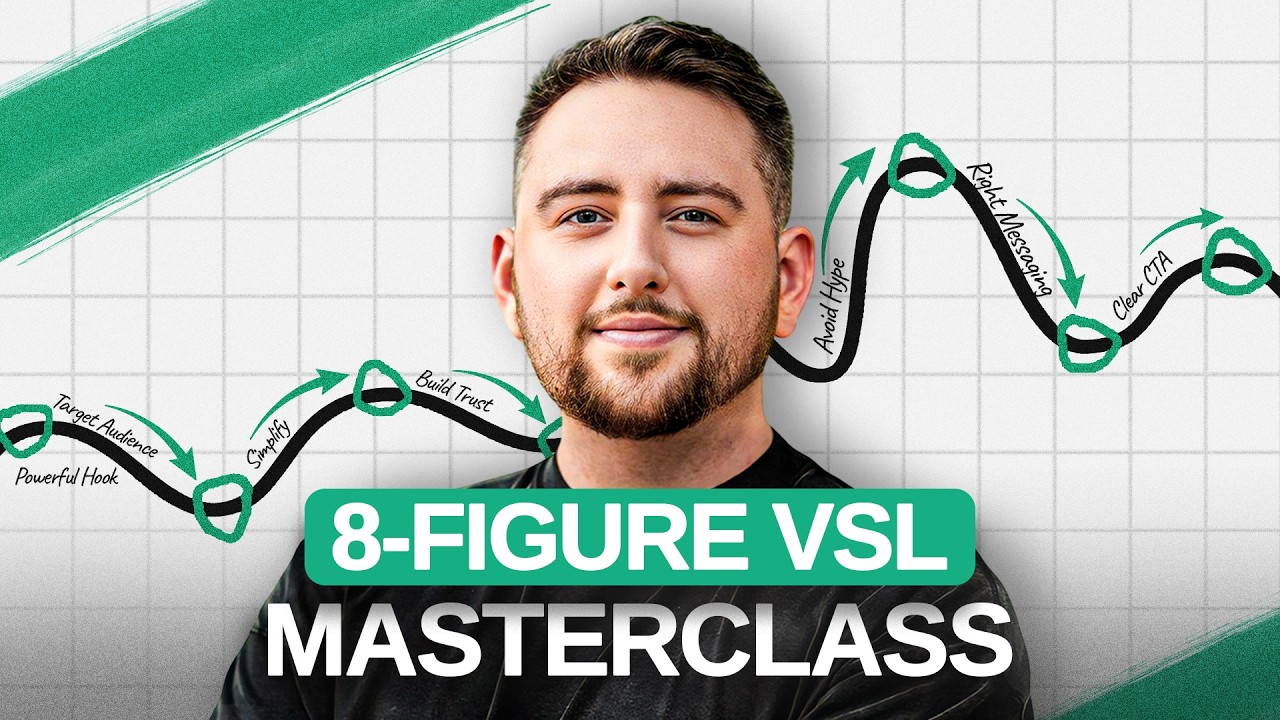
→ Download the VSL That Converts Strategy Skill ←
Earnings Disclaimer: You have a .1% probability of hitting million-dollar months according to the US Bureau of Labor Statistics. As stated by law, we can not and do not make any guarantees about your own ability to get results or earn any money with our ideas, information, programs, or strategies. We don’t know you, and besides, your results in life are up to you. We’re here to help by giving you our greatest strategies to move you forward, faster. However, nothing on this page or any of our websites or emails is a promise or guarantee of future earnings. Any financial numbers referenced here, or on any of our sites or emails, are simply estimates or projections or past results, and should not be considered exact, actual, or as a promise of potential earnings – all numbers are illustrative only.
The video sales letter is still one of the most effective conversion mechanisms you can put on a landing page, a call funnel page, or a webinar registration page. That hasn’t changed.
What has changed is how you build one depending on who you’re selling to.
If you want help building these systems with direct feedback, our flagship program includes twice-monthly one-on-one calls, weekly group calls, quarterly in-person masterminds in Miami, and a private community of operators scaling aggressively. Our 7-week live comprehensive training is built for marketers who want to master the execution side of funnels, ad strategy, and conversion systems.
Results are not typical. Your results will vary and depend entirely on your individual capacity, business experience, expertise, and level of desire. There are no guarantees concerning the level of success you may experience. The testimonials and examples used are not intended to represent or guarantee that anyone will achieve the same or similar results. We don’t believe in get-rich-quick programs. We believe in hard work, adding value and serving others. As stated by law, we can not and do not make any guarantees about your own ability to get results or earn any money with our information, courses, programs, or strategies.
There’s a massive difference between building a VSL for an affluent buyer and building one for the general public. Most people treat them the same and then wonder why their funnel doesn’t convert. In this blog, I’m going to walk through both approaches, the flow of a VSL from open to close, and the key principles that dictate whether your VSL actually does its job.
Why Your VSL Approach Has to Change Based on Who You’re Selling To
Let’s start here because this is where most people get it wrong from the jump.
When you sell to affluent buyers, the VSL framework looks completely different from what you’d build for a mass-market audience. The length changes. The tone changes. The design changes. The claims change. Everything shifts.
For affluent demographics, in my experience the ideal length sits somewhere between two and fifteen minutes. Should not go beyond that. The style needs to be extremely direct. No fluff. No unnecessary filler. All information the buyer needs to know and nothing they don’t.
One thing I need to address here that I see constantly in the market is the value stack. You know the format. You list a bunch of things included in the offer, inflate the prices dramatically, then reveal the “real” price as some massive discount. This approach isn’t even FTC compliant. When you operate at a high level, FTC compliance is at the top of your concern list. Value stacks don’t meet those standards. Beyond compliance, they just don’t work with serious buyers. Nobody sits there and genuinely believes those inflated numbers. They see right through it, and it damages trust immediately.
What works with affluent buyers is a very straightforward presentation. Concise. Direct. Authoritative. You should communicate with authentic confidence. There’s a big difference between someone saying something confidently while still sounding shaky versus someone who clearly knows what they’re talking about. The counterparty picks that up immediately.
How Presentation Design and Character Expectations Affect Conversions
This is a section that surprises a lot of people.
In my experience working across a wide range of high-ticket offers, roughly half the time the VSL that performs is a standard screen-recorded presentation. No talking head. No face on camera. Just slides with a voiceover.
Here’s what’s important about those presentations. They should not be flashy. They should not be overdesigned. In my experience, the combination that consistently works is a white background with black text, or a black background with white text. Minimal imagery. No company logos in the corner. No fancy borders or design elements.
Every time we’ve tested overdoing the design against that bare-bones approach, the simple version outperforms. I’ve gone back and tested this repeatedly because I’d rather be proven wrong and find something that works even better. But this pattern has held consistently.
My assumption on why this works comes down to trust perception. You commonly hear about the difference between rich people and wealthy people in terms of how they present themselves. The more flashy someone is, the less wealthy they typically are in the public’s perception. Whether that’s actually true or not doesn’t matter. It’s the general perception. And overdesigned presentations can come off like the person who’s trying too hard to look the part.
Now here’s the flip side. For the general public, the exact opposite applies when it comes to design.
If you use the simple white-background, black-text approach with a mass-market audience, it’s going to create immediate skepticism. The general public approaches things with a default assumption that what they’re looking at might not be legitimate. A bare-bones presentation reinforces that suspicion. For mass-market VSLs, the presentation needs to be well-designed. Professional. Polished. It signals credibility to an audience that’s starting from a place of distrust.
The character element matters for both demographics. According to Wyzowl’s research, the vast majority of consumers prefer learning about a product through video. But what you wear, how your environment looks, and how you carry yourself on camera all communicate something to the viewer before you say a single word.
In my experience, the principle is straightforward. Meet the character expectations of the person you’re selling to. If you’re in a space where the buyer expects a buttoned-up, professional presentation, that’s what you deliver. Neutral office. Clean wardrobe. Nothing overdone. If you sell to a demographic that expects a certain lifestyle associated with what you offer, make sure what they see on camera aligns with that expectation.
This same principle applies to your direct response ad creative. Look the part for whoever you’re targeting.
What the General Public Needs from a VSL That Affluent Buyers Don’t
The general public carries a lot more skepticism into the interaction. There’s a reason affluent demographics are more financially comfortable. They’re accustomed to evaluating risk. They’ve learned to trust their judgment. They’re biased toward action. They don’t need as much information. They need the right information, delivered by someone they trust, and they’ll move.
The general public is different. They need more trust-building throughout the VSL. More believable testimonials. More empathetic communication. More time.
Mass-market VSLs can run longer. In my experience, you can go as long as sixty minutes and still maintain enough retention to make the funnel work. Anything beyond that, and retention metrics start to fall off significantly. Think of it almost like a full webinar presentation placed into a VSL slot on a call funnel or sales page.
The retention graph for shorter VSLs tends to show a gradual, steady decline. For longer ones, you’ll see a sharper drop at the beginning followed by a flattening out where the remaining viewers stick through to the end. That second pattern is completely normal. The people who make it past that initial drop are the ones actively qualifying whether what you’re offering is right for them.
Here’s a critical principle that applies to both audiences. Human beings are wired to consume information until they can determine whether something is for them or not. Once they’ve made that decision, they either take the action or they leave. You should never expect that someone is going to watch your entire VSL and then show up to a sales call retaining everything. That’s not how people work.
If you see a steep, dramatic drop right at the beginning of your VSL, that’s a hook problem. Fix the opener. But if you see a gradual decline throughout, that’s normal behavior. People are self-qualifying as they consume the content, and that’s exactly what you want.
Trust assets matter significantly more for general public VSLs. According to HubSpot’s research on video marketing, VSLs work because they combine the persuasive elements of written sales letters with the engagement power of video. But for mass-market audiences, those trust elements need to be front and center. Testimonials should be highly believable. That means using them in the format they were originally captured, whether that’s a video clip, a screenshot from a social platform, or an email. Retyping a testimonial next to a stock photo with someone’s first name and last initial doesn’t cut it.
The communication style also shifts. With affluent buyers, you can be very direct. With the general public, that same directness can come off abrasive. The tone should be more empathetic. You’re still confident and certain, but you’re acknowledging where the person is coming from financially and emotionally.
The Step-by-Step Flow of a VSL That Mirrors a Real Sales Conversation
Here’s the framework I use, and it applies to both affluent and mass-market VSLs. The difference is in length, tone, and design. The flow stays the same.
The opening is the hook. It should articulate exactly what you can help the viewer with. That’s it. No fancy setup. No long story. Here’s what I can do for you, and here’s why you should stick around. If you see a big drop-off right at the beginning, it’s almost always because the opener doesn’t immediately tell the viewer why this is worth their time.
Step two is establishing why you’re the right person or company to deliver on that promise. This immediately follows the hook because it’s the natural next question in any conversation. If someone says “here’s what I can do for you” and doesn’t follow it up with why they’re credible, the viewer’s brain creates a gap. Once that gap opens, they stop listening to everything else until it’s addressed. If it never gets addressed, they leave.
This is where you share relevant background. Experience. Track record. The systems you’ve built. Anything that substantiates why you’re qualified to help. But it has to be genuine. Nobody responds to a list of media logos or vanity credentials in a real conversation. Think about what you’d actually say to someone face-to-face if they asked why they should trust you.
Step three covers the buying motives. You’re walking through the primary reasons people purchase from your business, cascading from the most common reason down to the more niche motivations. This is typically a substantial portion of the VSL because you’re explaining each buying driver and connecting it to what your offer does.
Step four is the actual offer presentation. State what you’re selling. State the price. I know there’s a whole camp of people who argue you should never reveal the price on a VSL. In my experience, stating the price up front gives you a more qualified pipeline. The people who proceed after seeing the price are the ones worth talking to. And the data your ad platforms collect from those qualified actions helps the algorithm find more people just like them over time.
Under no circumstances should you use a value stack here. State what’s included. State the price. That’s it. According to FTC advertising guidelines, advertising claims need to be truthful and evidence-based. Inflated value stacks fall into a gray area that’s not worth the risk, and they don’t work anyway.
Step five is objection handling. Pull the real objections from actual sales conversations and address them directly. Not the objections you think people have. The ones your sales team hears repeatedly. This section can be a significant chunk of the VSL, especially for general public audiences.
Step six is qualification. Clearly state who this is for and who it isn’t for. This helps the right person further identify that you’re speaking to them, and it filters out the people who would waste everyone’s time.
Step seven is the call to action. Clear. Direct. Tell them exactly what to do next. If you want to add testimonials before the final CTA, that works well for general public VSLs. Just keep them within the length parameters that match your target demographic.
How to Analyze VSL Performance and Fix What’s Not Working
Play rate is the first metric to look at. That’s the percentage of people who hit your page and actually press play on the video. A low play rate usually points to one of three things. There’s a disconnect between the ad and the landing page. The page has too much competing content below the video. Or the video thumbnail isn’t compelling enough.
In my experience, the best-performing VSL pages are simplified. Headline. Video. Application or next step. That’s it. When you add additional sections below the video that explain your offer, people scroll down and self-qualify without ever watching the video. Remove those sections and the only way to get the information is to press play. Play rates go up.
Video thumbnails matter more than most people realize. A video thumbnail, meaning the video auto-plays a few seconds as a preview, tends to outperform static image thumbnails. And those image thumbnails that say “press play” or try to trick the viewer into clicking always perform poorly.
For hosting, the analytics capabilities of your platform matter. You need to be able to see not just total views but where people are dropping off within the video. That retention graph tells you exactly what needs to be fixed. Steep drop at the beginning means your hook needs work. Steady gradual decline means the VSL is functioning normally. A sharp drop in the middle might mean you have an unanswered question creating a gap that causes viewers to leave.
The engagement metric, which combines play rate with retention, gives you the most complete picture of how your VSL is performing. Track it consistently and use it to inform every revision you make.
If you want hands-on support building and optimizing VSLs for your business, our flagship program gives you direct access through twice-monthly one-on-one calls, weekly group calls, quarterly masterminds, and a private community of high-level operators. Our 7-week live comprehensive training covers the full execution framework including VSL strategy, funnel architecture, and ad systems, with lifetime access to all future live classes and a community for ongoing support.
Results are not typical. Your results will vary and depend entirely on your individual capacity, business experience, expertise, and level of desire. There are no guarantees concerning the level of success you may experience. The testimonials and examples used are not intended to represent or guarantee that anyone will achieve the same or similar results. We don’t believe in get-rich-quick programs. We believe in hard work, adding value and serving others. As stated by law, we can not and do not make any guarantees about your own ability to get results or earn any money with our information, courses, programs, or strategies.
Watch the video:
Get my content first on Google
Add jeremyhaynes.com as a preferred source and Google shows my articles more prominently in your search results, including AI Overviews and AI Mode.


Jeremy Haynes
Owner and CEO of Megalodon Marketing
Jeremy Haynes is the founder of Megalodon Marketing. He is considered one of the top digital marketers and has the results to back it up.