How to Prepare for Meta’s New Ad Restrictions on Health and Financial Services Businesses
I hope you enjoy reading this blog post. If you want my team to just do your marketing for you, click here.
Author: Jeremy Haynes | Published February 25, 2026
Earnings Disclaimer: You have a .1% probability of hitting million-dollar months according to the US Bureau of Labor Statistics. As stated by law, we can not and do not make any guarantees about your own ability to get results or earn any money with our ideas, information, programs, or strategies. We don’t know you, and besides, your results in life are up to you. We’re here to help by giving you our greatest strategies to move you forward, faster. However, nothing on this page or any of our websites or emails is a promise or guarantee of future earnings. Any financial numbers referenced here, or on any of our sites or emails, are simply estimates or projections or past results, and should not be considered exact, actual, or as a promise of potential earnings – all numbers are illustrative only.
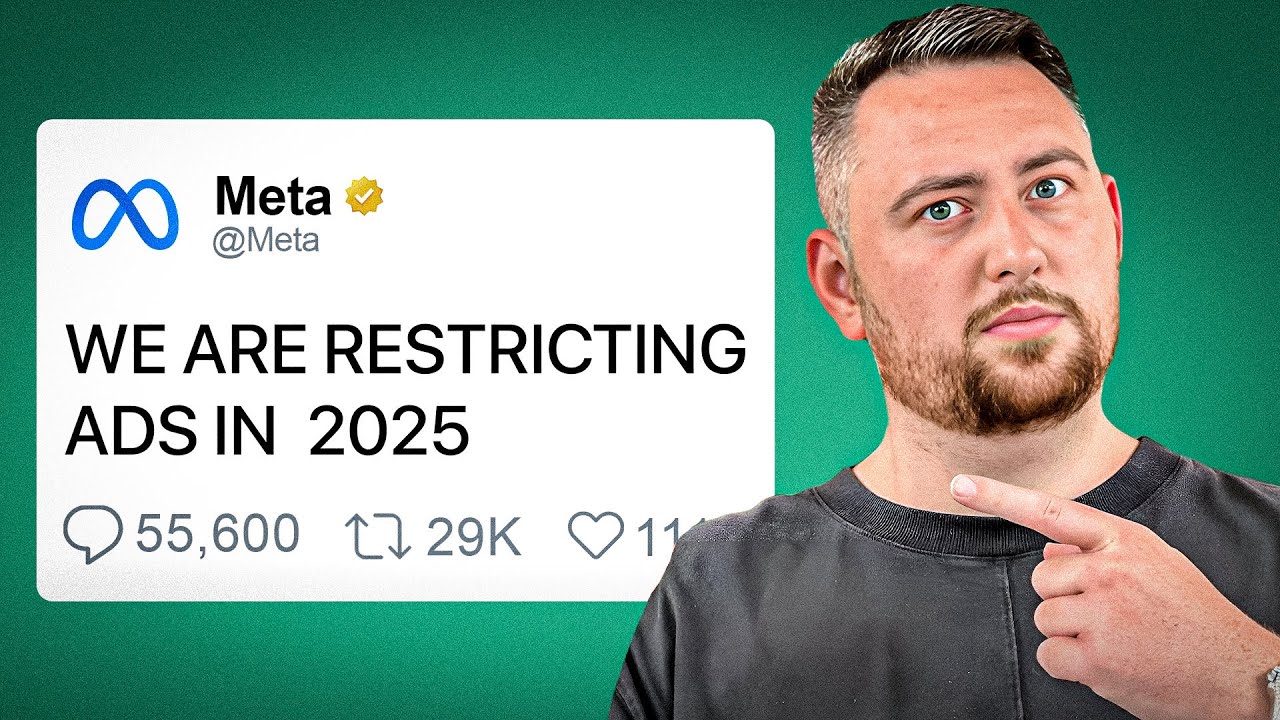
If you’re running Facebook ads in the health, wellness, or financial services space, you need to know about restrictions Meta is rolling out that could disrupt your campaigns. I’m not talking about some minor inconvenience. I’m talking about potentially losing your ability to optimize for conversions entirely.
Here is what you need to know and what to do about it. For agency operators looking to build systems that handle disruptions like this, my 7-week live comprehensive training covers how to create operational frameworks that adapt to platform changes.
Results are not typical. Your results will vary and depend entirely on your individual capacity, business experience, expertise, and level of desire. There are no guarantees concerning the level of success you may experience. The testimonials and examples used are not intended to represent or guarantee that anyone will achieve the same or similar results. We don’t believe in get-rich-quick programs. We believe in hard work, adding value and serving others. As stated by law, we can not and do not make any guarantees about your own ability to get results or earn any money with our information, courses, programs, or strategies.
Which Business Categories Are Getting Hit by Meta’s New Advertising Restrictions
The restrictions are targeting three main categories: Health, Wellness, and Financial Services businesses.
For Health and Wellness, this includes anything related to medical conditions, addiction treatment, supplements, telehealth providers, and even some course creators in the health space. Meta specifically cited arthritis, obesity, and acne as examples, but the scope is much broader.
Financial Services includes credit repair, business loans, personal loans, investment advice, wealth advisors, tax strategists, CPAs, estate planners, and credit card stacking programs. Even financial apps with sensitive user data fall under this umbrella.
According to Meta’s official advertising policies, special ad categories have always required additional compliance, but these new restrictions go further than previous requirements.
I’ve already seen this hit businesses I work with. One company in the information product space got slapped with these restrictions in early November. Full restrictions applied to their domain.
What Is the Difference Between Full and Partial Ad Restrictions on Meta
There are two levels to this situation, and one is significantly worse than the other.
Full restrictions mean zero data passes back from your domain to your pixel or Conversion API. None. You can’t optimize for any of the high-value conversion events you’re currently using. The pixel gets no feedback on who’s converting, so it essentially shoots randomly at audiences hoping something sticks.
Partial restrictions are slightly better. You lose access to bottom-of-funnel events like purchase, submit application, schedule, and complete registration. But you can still optimize for top-of-funnel events like landing page views, view content, search, and app installs.
The restrictions get applied at the domain level, not to your ad account, Business Manager, or even your pixel. That’s important for the workaround covered next.
How to Work Around Meta’s Domain-Level Ad Restrictions
When the business I mentioned got hit with full restrictions, here’s exactly what we did:
Duplicated the funnel
Changed the domain
Duplicated the campaigns
Swapped to the new domain in the ads
Launched
That’s it.
The original pixel data stayed intact. All those historical conversion events were still there. We just pointed traffic to a new domain. It took a few days for performance to stabilize back to where it was before, but we’ve been running clean for over 40 days now on the new domain.
This is not a guaranteed permanent solution. There’s a high probability they’ll eventually scan and restrict the new domain too. This appears to be an automated process using AI tools to categorize and restrict domains. But domain rotation buys you time and keeps revenue flowing while you implement other strategies. Search Engine Journal’s coverage of Meta’s AI-driven ad moderation explains how these automated systems work.
How to Condition Your Facebook Pixel with Backup Standard Events
Here is a more sophisticated approach: start conditioning your pixel right now with top-of-funnel standard events that are less likely to fall under restrictions.
We added three specific events to the confirmation page where qualified scheduled calls land: installed_app, donate, and search. I know these sound random, but according to the intel I received, these events aren’t supposed to fall under partial restrictions.
Every qualified person who schedules a call now also fires off these three backup events. So if we eventually get hit with restrictions on our current domain and don’t want to keep playing domain rotation, we can optimize campaigns for one of these conditioned events instead.
The key is training the pixel that people who trigger search, donate, or installed_app are actually our qualified scheduled calls. When we eventually need to optimize for those events, the pixel already knows what a qualified person looks like.
If you start optimizing for these events without any historical data, you’ll only get people who are likely to take those specific actions, not people who actually convert into customers. You need qualified data on those events first.
How to Appeal Meta Ad Restrictions and What to Expect from the Process
When you get hit with restrictions, you’ll receive an email notification. If you miss the email and just notice your data stopped reporting, check your Events Manager. There should be a restriction banner at the top.
You can appeal directly from the email or through the Events Manager. They claim the appeal process takes 3-7 days, but expect delays. This is a new department handling what will likely be a massive volume of appeals, and heavy AI involvement in reviewing appeals is probable.
From my experience, specific messaging in appeals works better than others. One business received partial restrictions that seemed unfair, and we successfully appealed using a particular word track.
If your appeal is denied, Meta supposedly provides guidance on what changes you could make to your messaging or business positioning to get unrestricted. I haven’t seen this play out enough times to confirm how helpful that guidance is.
Why Meta Is Restricting Health and Financial Advertisers Right Now
This isn’t Meta randomly deciding to restrict advertisers and lose revenue. Their legal department is driving this because of mounting lawsuits related to content distributed on their platforms in these specific categories.
Ads for prescription medications through telehealth, alternative controlled substances, and sketchy financial products have created real legal liability for Meta. This restriction rollout is their way of mitigating that risk and showing courts they’re taking action.
Policy changes are almost always driven by FTC rules or regulatory pressure, not arbitrary decisions. Understanding this helps you anticipate what’s coming and why. See the FTC’s guidelines on advertising practices for context on the regulatory environment driving these changes.
Additional Backup Options for Tracking and Attribution
Some third-party attribution tools like Hyros, Triple Whale, and Northbeam claim they have workarounds through their pixels. I’m not convinced these will hold up long-term against Meta’s legal department, but they’re worth implementing as additional backup layers.
Don’t rely on any single solution. You want multiple contingencies in place.
Also, start reviewing your ad creative and landing page messaging now. Toning down claims that firmly categorize you into these restricted buckets might help you avoid getting flagged in the first place or could support a successful appeal.
Based on what I’m seeing, they’re already beta testing these restrictions in small batches. The business I mentioned got hit in early November, right in the middle of Q4 when everyone wants to be maximizing revenue.
It seems they’re validating their scanning tool’s accuracy before rolling this out broadly. My best guess is you have 30-60 days before this hits at scale, but some businesses are already getting restricted now. Don’t wait.
What to Do Right Now to Prepare for Meta’s Ad Restrictions
If you’re in any of these categories or think you might be, start taking action immediately:
Get backup domains set up with duplicated funnels ready to deploy.
Add those top-of-funnel standard events (search, donate, installed_app) to your conversion pages so qualified people start hitting them.
Implement these across multiple pixels in different Business Managers to spread risk.
Review your messaging and pull back on claims that firmly categorize you into restricted buckets.
Consider adding a third-party attribution tool as an extra layer.
Make sure your media buyer knows about this and has a plan.
The businesses I’ve worked with that have strong systems and multiple contingencies in place aren’t sweating this. The ones relying on a single funnel, single domain, single pixel setup are the ones likely to wake up one day to zero data and tanking performance.
You’ve got time to prepare, but not much. Use it wisely.
For operators who want to go deeper on building systems that handle platform disruptions, my 7-week live comprehensive training covers operational frameworks for exactly these situations. If you’re already at scale and want direct access to how we handle these challenges in real-time, the Inner Circle is where we discuss this level of tactical implementation.
Results are not typical. Your results will vary and depend entirely on your individual capacity, business experience, expertise, and level of desire. There are no guarantees concerning the level of success you may experience. The testimonials and examples used are not intended to represent or guarantee that anyone will achieve the same or similar results. We don’t believe in get-rich-quick programs. We believe in hard work, adding value and serving others. As stated by law, we can not and do not make any guarantees about your own ability to get results or earn any money with our information, courses, programs, or strategies.
Watch the video:
Get my content first on Google
Add jeremyhaynes.com as a preferred source and Google shows my articles more prominently in your search results, including AI Overviews and AI Mode.


Jeremy Haynes
Owner and CEO of Megalodon Marketing
Jeremy Haynes is the founder of Megalodon Marketing. He is considered one of the top digital marketers and has the results to back it up.