How to Attract Rich Buyers Through Your Messaging Without Pulling the Wrong Crowd

I hope you enjoy reading this blog post. If you want my team to just do your marketing for you, click here.
Author: Jeremy Haynes | Published January 8, 2026
Earnings Disclaimer: You have a .1% probability of hitting million-dollar months according to the US Bureau of Labor Statistics. As stated by law, we can not and do not make any guarantees about your own ability to get results or earn any money with our ideas, information, programs, or strategies. We don’t know you, and besides, your results in life are up to you. We’re here to help by giving you our greatest strategies to move you forward, faster. However, nothing on this page or any of our websites or emails is a promise or guarantee of future earnings. Any financial numbers referenced here, or on any of our sites or emails, are simply estimates or projections or past results, and should not be considered exact, actual, or as a promise of potential earnings – all numbers are illustrative only.
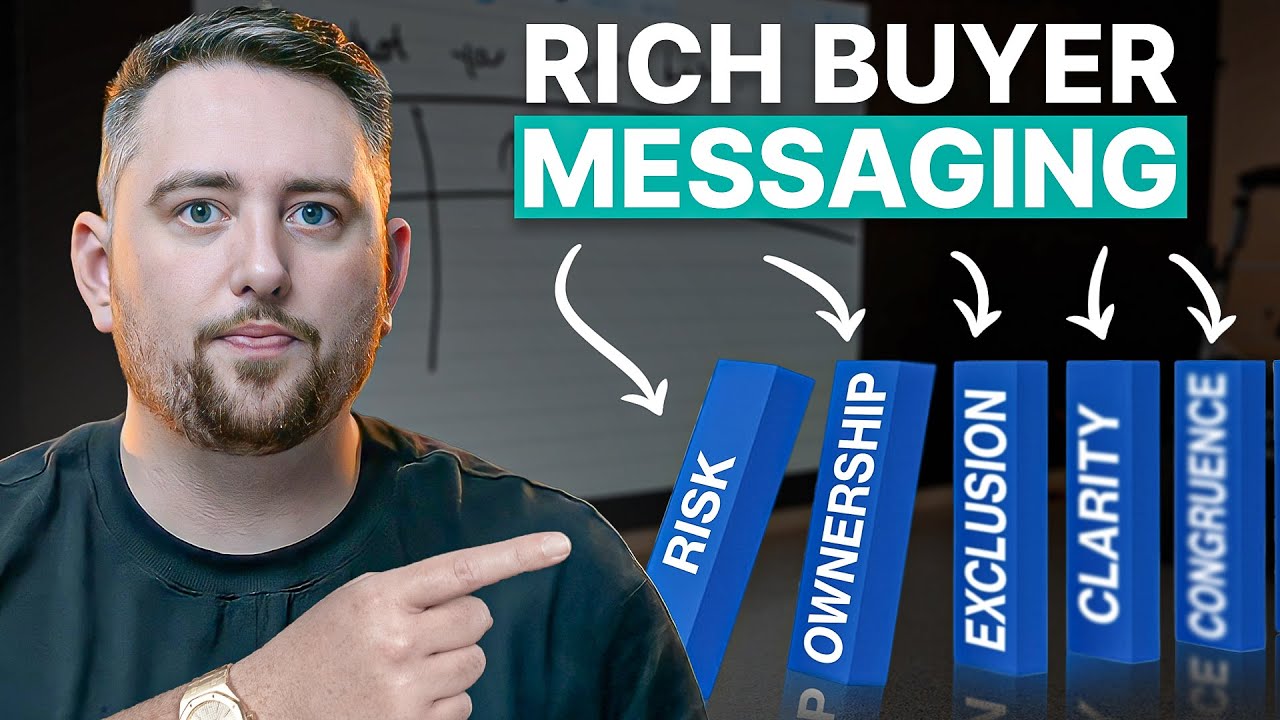
I’m going to teach you how to talk to rich people properly in your messaging. Whether it’s your organic content, your paid advertising, your funnels, your VSLs, your emails, what your sales team says, what it all looks like.
Here you’re going to learn and walk away from this with the confidence and certainty of what it takes, all the pro tips to go out there and attract rich folks through your funnel.
Let’s be honest, one of the number one variables that absolutely is challenging to deal with is a bunch of poor people coming through your funnel. Nobody likes it. Nobody has fun dealing with it.
You likely have a lot of people that are coming through currently that are like that. If you’re sitting here consuming content like this, and I will tell you point blank, you are likely unintentionally doing all kinds of things that attract these folks.
And after this piece, you’re going to have a lot more certainty of what not to do and of course what to do.
My name’s Jeremy Haynes. All we talk about around here is cracking million-dollar months. Whether it’s the first million a month or the next million a month, we got you.
All we do around here is hand down lessons from people who have been there, done that. Of course, there’s no income claims. There is no earning potential.
This is free content, my friend. We have no idea who you are, what you’re capable of, and whether you have any probability at all to go out there and make this happen for yourself.
Here’s what we do know. According to the US Bureau of Labor Statistics, there’s a 0.1% probability of ever making this happen for yourself at $10 million a year, let alone the even smaller probability of ever cracking million-dollar months or a couple million bucks a month.
As you can imagine, that’d have a point, bunch of zeros, and then a one.
So anyway, don’t get any kind of thoughts about whether you’re going to consume this and go out there and do those kinds of things. That’s not the intention of this piece.
The intention is again just to hand down lessons from people that have been there, done that, and show you what they’re doing.
Members of My Inner Circle are already scaling to $1M+ and beyond. This isn’t for beginners. It’s only for operators already at $100k+ per month who want proven strategies, speed, and focus. If that’s you, apply here.
Well, okay, here’s the first one.
Why You Keep Attracting the Wrong Buyers and How to Look Like the Right One
Birds of a feather flock together. It’s a very important lesson, a psychological principle showing that people tend to be attracted to and surround themselves with others who share similar traits and socioeconomic characteristics.
Rich folks look a particular way. Rich folks dress a particular way. Rich folks are in certain environments.
Rich folks, simply put, they behave and act a certain way.
And you’ve got to understand based on age and where you’re targeting that can dictate what character you need to be and what character you need to be putting in front of people.
I’ll give you a great example with me. I sit here and talk to you in essentially my Grand Theft Auto warehouse that I have.
Think about what this really is. I have a bunch of nice cars that I pull up outside of my office that’s got a $40,000 painted shark mural on it because my company’s called Megalodon Marketing.
I’m sitting in front of like $20,000 in toys that were given out to kids. That’s a $2,200 LED screen behind me. I have a $50,000 sound system from the people who installed the sound at Club Space and Club 11 here in Miami. Shout out to Infinite Audio.
The point I’m trying to make is I appeal to a younger, richer demographic.
The younger, richer demographic that I specifically sell to most commonly dresses like how you see me dress. And I dress this way too. They drive cars like what I drive. They wear watches like what I wear.
Sure, are there some people that we attract occasionally outside of that demographic? Yeah.
But a lot of the style of how I communicate and who I get results for best and the way that everything is built over here is got to be attracting a specific character type into it.
And if you’re not self-aware of that, imagine what that would do.
Imagine if I got frustrated with 20-something year olds and 30-something year old dudes who have fleets of supercars and use certain vocabulary, and I just don’t want to get flagged around here and I don’t want long-term risk.
So anyway, moral of the story is I say words like that. All my people say words like that.
Imagine if I was shocked when those types of people came through my funnel and instead I wanted a more like excessively corporate person to come through my funnel. I wouldn’t. I wouldn’t at all.
As a matter of fact, usually the corporate people who try in any way, shape, or form to buy my offers are some of the worst people that could possibly buy them. They get the least results. They’re so slow. They’re overly political.
And on top of that, they get offended by essentially everything I would otherwise say.
This is very important to understand. How you are and how you present yourself, that is going to attract people that are like you, talk like you, that look like you.
And if you want to attract rich folks, you don’t want to be talking to them in a dinky one-bedroom apartment with no art on your walls in a room that looks like it’s their closet for their wife.
You get what I’m saying? You have to put yourself in environments and be the character in which they would otherwise expect you to be.
And I just want to be very direct when I say this too. This does get a little nuanced as well.
If you do venture into where you’re from and how you look, like let’s use the example that you’re from a developing country that managed to climb your way out, get to the point where you are dominating and super successful inside of a first world country.
When you go out there and start advertising as you, you have a very high probability to attract that demographic that’s still over there in the developing world.
So you might just simply put have the wrong character from more of a demographic perspective.
To be honest with you, it’s very important to understand there’s rich people from all walks of life, all shapes and sizes, all colors, and all ages.
The main thing that I’m trying to emphasize with this first lesson is, and this is very important you understand this, you want to look the part, be the part.
And that’s what a lot of these lessons here relate to today.
How to Use Application Questions to Filter Out Low Quality Buyers
Here’s the second thing. You can add IQ-based questions inside of your applications to help with the pixel conditioning of them.
And these come in all different shapes, forms, and sizes.
One of the recent funnier ones is an example that I saw in my Jeremy’s Inner Circle chat was one of our longtime members, Daniel Fosio, who was saying he had recently added an application question asking essentially like a math problem.
Like, hey, if you make this much off a client and you spend this many hours off that client and it only costs this much in cost to deliver for that client, what’s your effective hourly rate?
And it was a multiple choice question. It was like it was a short form question.
He used it in a conditional logic application in order to deduct a logic point and not send that type of person back to his pixel.
That way, he’s not only attracting people who answer his financial qualifications correctly, but he’s also only sending back people to the pixel at a high enough volume to be capable of doing this and exiting the learning phase successfully that also have a particular IQ.
He claims that inside of his offers, the average IQ is upwards of 120 plus and that if somebody comes in there with just a lower IQ, that that unfortunately leads to a much higher failure rate comparatively to the success rate that he maintains now, which is consistent with research showing a link between cognitive ability and analytical decision-making, especially in financial contexts.
So we found that as an example of a necessary question.
You can also take that same logic of adding something as simple as a question inside of your application like that to help with pixel conditioning and correlate it in a more broad way to all of your messaging in general.
Think about things like this is a great qualifier. You shouldn’t even be sitting here consuming this if you don’t already make at least $100K a month.
I help rich people get richer. I don’t help people start.
Can you pull some base level of value if you’re below that income threshold from my content? Sure.
But can you pull significantly more value from it and have a dramatically higher probability of using the information and finding success with it if you’re above that threshold? Yeah.
Do we get guys that come through that already make more than a million bucks a month that we still help get richer? Yeah.
Do we have guys that are at a couple hundred K a month that we help get richer? Yeah.
Do we offer guarantees or earnings claims for that? Absolutely not.
You and I both know as a rich person that it’s a risk in almost anything you’re going to try to do to get richer. We don’t make any guarantees. We don’t in any way, shape, or form tell you you’re going to go and make a certain amount of money.
We will not offer you that certainty.
What we will offer you are tried and true, tested, proven by a lot of people that are probably just like you. Reasons, strategies, tactics, SOPs, tools, softwares, processes that you’ll likely be able to implement in your business and see some level of result with.
But is it guaranteed you get a result? Absolutely not.
Why Promising Certainty Attracts Broke Buyers and Pushes Rich Ones Away
What do poor people want? Poor people want certainty.
Poor people need certainty because they have less money to risk than rich people. Rich people have more money so they can take more risks, a pattern seen in research on financial behavior where individuals with higher income and wealth show greater willingness to engage in risk-taking and investment decisions.
And the risks that they take, they don’t need to be as certain on.
When you get richer, you’re essentially just more and more of a gambler as time goes on. But thankfully, you’re taking sophisticated gambles, not poor gambles that do have a high probability to play out.
But you know that as a rich person.
See, the poor people consuming this or the regular people consuming this that aren’t my ideal demographic that again shouldn’t be reading it are the people who would otherwise absolutely want certainty.
If they would ever consider buying something from me, they would need me to point blank say, “Hey, you in this product purchase that you’re going to make have this potential for a result and it’s really high. And like when you risk these dollars, don’t worry, you should have a lot of hope and there’s all the potential that you would need is there and you could have the certainty to pull the trigger.”
We do the exact opposite because as an example, when it comes to like an IQ question in an application, the IQ qualifier there is essentially just a qualifier of actively disclosing risk, actively disclosing that there is no probability beyond a low one that you can go out there and take this information and do something with it to make more money.
It’s like because it’s up to the person.
Every rich person sitting here is like, “Yeah, he’s totally right.” Every person who’s regular is like, “Oh my goodness, why am I even sitting here consuming this then?”
You see what I mean? It’s like that deters the wrong people and it attracts the right people.
It’s like think about it like this too and this is also really important you understand this. When a question like what Daniel Fosio was asking in his application is present and somebody answers it with the wrong answer whether they actually did the math or not, if they answer with the wrong answer it also just shows their current commitment levels.
And that’s also something you want to understand. Richer people generally carry far more responsibility. Richer people generally have much higher commitment levels comparatively to what regular people or poor people would ever otherwise have.
And this is really important you understand this as well in terms of how it can correlate to great application questions and great messaging that you can simply weave into what you do.
You have to be able to take some of the messaging lessons that we taught in one of my most recent pieces where I discussed problems, circumstances, and outcomes amplifiers.
I gave an example with a made-up VSL about how we’re going to go to Mars and how we’re probably going to have space bases and civilizations on one of Jupiter’s moons and how we’ll eventually be like a multi-solar system species.
I gave examples of all that in those other pieces and I won’t turn this into all that, but I will say this point blank.
You have to be able to relate. That’s the number one thing you have to do. You have to be able to relate.
A qualified person in the example of Daniel Fosio’s IQ-based question in his application that acts as conditional logic is perfect. It’s perfect.
A rich person would sit there and be like, “Oh, that makes sense.” The right type of person would be like, “Easy answer, right?”
The wrong person would be like, “Oh my goodness, why?” They’d probably just leave. Probably wouldn’t even answer it. And if they did try to answer, they’d probably answer it wrong.
It’s an incredible qualifier. But again, you could do that in messaging across the board as well, like the example I provided to you.
The Words Rich Buyers Use That Instantly Qualify or Disqualify Leads
Let’s go to the next one. So words that regular people don’t use. These two with my last point and this point correlate quite well together.
This is really important you understand how simple this truly is. It’s not tough at all. It’s actually quite easy.
Here’s a few. So rich people actively use words that regular people would never use.
Rich people use words like capital. Rich people use words like dry powder. You know what that means? But the wrong person consuming this, they have no clue what that means. They’re confused by this terminology in general.
Sure, they might know what capital is, but might not to the same extent that you and I know it.
Risk. Earnings disclaimers, things like that. Talking actively about what the real possibilities are of a potential offer and the success of that offer.
Even that alone can attract or deter the right or wrong type of person from coming through your funnel.
It’s very important that you weave in those small words that differentiate who it’s for and who it’s not for.
Because at the end of the day, something as simple as making an income claim. A lot of you run funnels or title content or go out there and just make content in general that’s some of the most non-compliant stuff on earth.
You have no earnings disclaimers. You have no income potential disclaimers. You have no standard disclosure of your success rates inside of what you do with your products and services that you sell and you try to sell to rich people but again you do the most basic things wrong.
Like in the headline, I remember one time this guy comes in, joins Jeremy’s Inner Circle, first thing he wanted to know, how do I attract more financially qualified people?
And I’m like, “Hey, send me your funnel.” He shoots me over the link to his funnel and the headline of the funnel is something about, hey, in his VSL he’s like, “I’ve generated over $100 million with this brand and that brand and I’m going to show you how to make $10K a month with a cleaning business.”
That’s like insane for both rich people and insane for regular people.
Regular people would consume that and be like, “What are you talking about? Why would a guy who made $100 million want to help me make $10K a month?”
And then to financially qualified people that are consuming that, they’d say the exact same thing. They’d be like, “What’s up with this guy? Something’s off.”
Everybody’s radar would be going off the charts.
And sometimes it’s as simple as you are your biggest problem in attracting the right types of people versus the wrong people coming in.
Something very important to consider.
Why Your Environment Has to Match Your Message to Attract Rich Clients
Here’s the next one. Environments that rich people relate to.
Think about this. This is half of this warehouse that we have here in Miami, Florida. Half of it.
The whole other half is where we work. Desks, offices, nice glass, coffee machines, the get richer fridge, some couches to hang out.
What you also can’t see is our ping pong table and our pool table. You can’t see the bay doors where we can pull cars in and out of here. Maybe you can see the golf cart back there.
Here’s my point. This place is awesome. You as a rich person, you relate to this. You look at this kind of environment, you’re like, “Yeah, it looks pretty cool, dude. This guy’s over here playing Grand Theft Auto in real life.”
You look at places like, as an example, the penthouse where I shoot content. Where I got the three-year lease on it.
You look at people like me when I’m being transparent even about just leasing things over 3 years instead of buying them. And you listen to those kinds of things I say.
You see the places in which I shop. You see how I carry myself and where you specifically find me.
Environments can also count as just stuff and things like the types of cars you have.
Have you ever, as an example, seen a rich person flex like a Datejust and a Gallardo from Lamborghini and think to yourself, something’s a little off there?
You know, it’s like the messaging has to match the character and the character has to be in a specific environment to amplify the character’s traits.
This is one of the number one things that people get wrong when they make content, when they make ads.
They shoot it with super boring environments. It’s like they set up tiny little studios in the corner of a room in their house with the cheap Amazon wall panel black triangle things and they put like a random light in the background and look the same as everybody else.
It’s like, guys, this is important you understand this. Rich people aren’t looking for you to be at Pelican Hill or in a mansion every time that you go shoot or a One and Only resort.
It’s like they just look for things that match the message that you’re communicating.
There has to be congruency between the message, the character, and the environment.
If one of those things conflicts with one another, it can trigger a little bit of a red flag or like a skepticism signal to start going off in the mind of a rich person.
This is really important to consider.
How Your Sales Team Appearance Impacts Rich Buyer Trust
This also correlates to kind of a sub-point that one of Jeremy’s Inner Circle members mentioned. His name’s Dawson.
Dawson was saying, you know, I have all my salespeople wear quarter zips, which I’m sure you guys all are aware of.
And that’s a great tip is how they dress, how they look.
There should be congruency across the board in this point. It shouldn’t just be the character that leads on the front end that acts and behaves and looks a particular way and is in certain environments.
It should carry through across the board.
I’ll give you a great example. My head of sales is rich enough to where the guy has a lake house. It’s a second house. That’s a lake house.
He’s got really nice cars. He’s got four kids. If you look in his environment, he’s got the $10 million plaque on his wall too from our company that ClickFunnels gave him.
It’s like he’s got the right stuff. He looks the part and he’s always wearing a polo shirt with a Megalodon Marketing logo on it.
And guess what? He did that by choice. I didn’t even have to tell him to do it.
But you would want to tell your people to do it if they’re not doing it. Whether it’s a quarter zip, whether it’s a polo, whether it’s a specific environment, you want your people to look the part.
Heaven forbid you attract rich people and then they get on the phone with some random person that’s in a one-bedroom apartment with nothing on their walls with a terrible setup.
You know, it’s like your people have to look the part too. Everything has to have congruency.
This is very important you understand this.
Why What You Associate With Shapes How Rich Buyers Perceive You
Which correlates to my next point. The law of association.
What you associate with, what you wear, what you do, what you buy, how you behave, who you’re with, the environments that you’re in.
There is a perception of each one of these things.
Like as an example, even just think of the hotels that I name. Places like the Aman, places like One and Only Resorts, places like the Four Seasons.
I, as an example, as a rich person, I think the Ritz kind of fell off a little bit after they got bought by the Marriott. I won’t mention that because I don’t think the Ritz makes sense to mention. You wouldn’t catch me there anymore.
Are there certain ones that are nice? Yeah. But to be clear, it’s like overall they degraded a lot.
My point is just based on even little things like that, you might not realize it, but the human brain is very powerful. It takes it all in.
You might only think that you are processing information that you consciously process, but all information is consumed when you’re exposed to it, a concept supported in psychology showing that both conscious and unconscious cues influence how people perceive others, including social and environmental signals.
And those little things start to become what you associate with.
Think about this as an example. I’m shooting in front of this big pile of toys that we’re giving away next weekend to all these local underprivileged people nearby that need a great Christmas still.
And me and a bunch of my rich friends, we accumulated a bunch of toys. I spent about $10K just in toys myself in this whole pile. Roughly $20K of toys currently. This is the boy pile. This is the girl pile.
It’s like think about that. What do you associate with that?
Or think about something as simple as like a Bible quote. I just on my story most recently posted a simple quote which was about having vision and how people perish without vision.
And I don’t remember the specific book and chapter and whatnot that it was a part of. It’s a powerful quote though and I liked it a lot and I pulled it right out of the Bible.
What does even me saying that right now associate how you think of me too? You see how it works?
It’s like it’s character development. Every time there’s one of those little pieces of data, even if it’s as fast as something as a short ad or as long as something like you being this far into reading this piece so far, all these things make a significant difference to all of the power and authority that you can transfer to you based on what you specifically associate with.
Something very important to consider.
How Authority in Your Tone and Language Signals Credibility to Rich Buyers
Last thing, tonality and vocabulary.
Notice how in every piece you’ll ever consume from me, I talk with true, genuine authority and certainty in what I’m sitting here talking to you about.
You’ll never find me talking about some stuff I don’t actually know thoroughly.
I talk from a place of authority because I have authority in this field. I know it extremely well. I am very good at it.
This is something that is naturally picked up on by all people that will consume your content, that will consume your ads, that will go through your emails, that will talk to your salespeople.
They will know, especially rich people, if your folks are not credible or not, or if you’re not credible or not.
What you do and what you say and how you say it is equally as important as everything else that I’ve talked about in this list here with you today.
Are there more tips? Of course there are.
Will I talk to you about them for free? No way.
It’s time for you to step up and join one of my offers.
I got Jeremy’s Inner Circle, which is perfect for rich people trying to get richer. Twice a month one-on-one calls, weekly group calls, quarterly in-person masterminds right here at the facility in good old Miami, Florida.
An incredibly active group chat, unlimited access to Jeremy AI, 30 plus well-documented SOPs on everything you need to know on getting richer.
We talk about everything. It’s not just paid ads. We talk about organic. We talk about sales. We talk about scaling. We talk about all walks of life. We talk about mindset. We even talk about spiritual topics now.
It’s a very well-encompassing program. There’s a ton of content that you also get access to when you join in.
We’re really excited to help you out if you’re the right fit. I will say it is costly, but it’s costly because we are very good at our jobs of turning money into more money.
We will not sell you if we don’t believe in our capacity to help.
Let me also be clear in saying we have an incredible program that some of you I don’t think are aware of. It’s called Master Internet Marketing. With Master Internet Marketing, you get lifetime access to live cohorts, dozens of SOPs, and an 80+ question certification exam to prove you know your stuff.
It’s a 7-week class. We have once a year a massive update of this program. And guess what? It’s a one-time cost with lifetime access to the program.
Every year that we do a new update, you don’t have to spend more money. You could come go through the entire seven weeks all over again and we update the class for whatever’s new for that most recent year that changed in the marketing world.
We look forward to helping you out one way or the other, whether it’s through one of those paid programs or right here on the site for free.
Check out some of my other pieces. And I implore you, check out some of those links available.
Talk soon, everybody.
Watch the video:
Get my content first on Google
Add jeremyhaynes.com as a preferred source and Google shows my articles more prominently in your search results, including AI Overviews and AI Mode.


Jeremy Haynes
Owner and CEO of Megalodon Marketing
Jeremy Haynes is the founder of Megalodon Marketing. He is considered one of the top digital marketers and has the results to back it up.