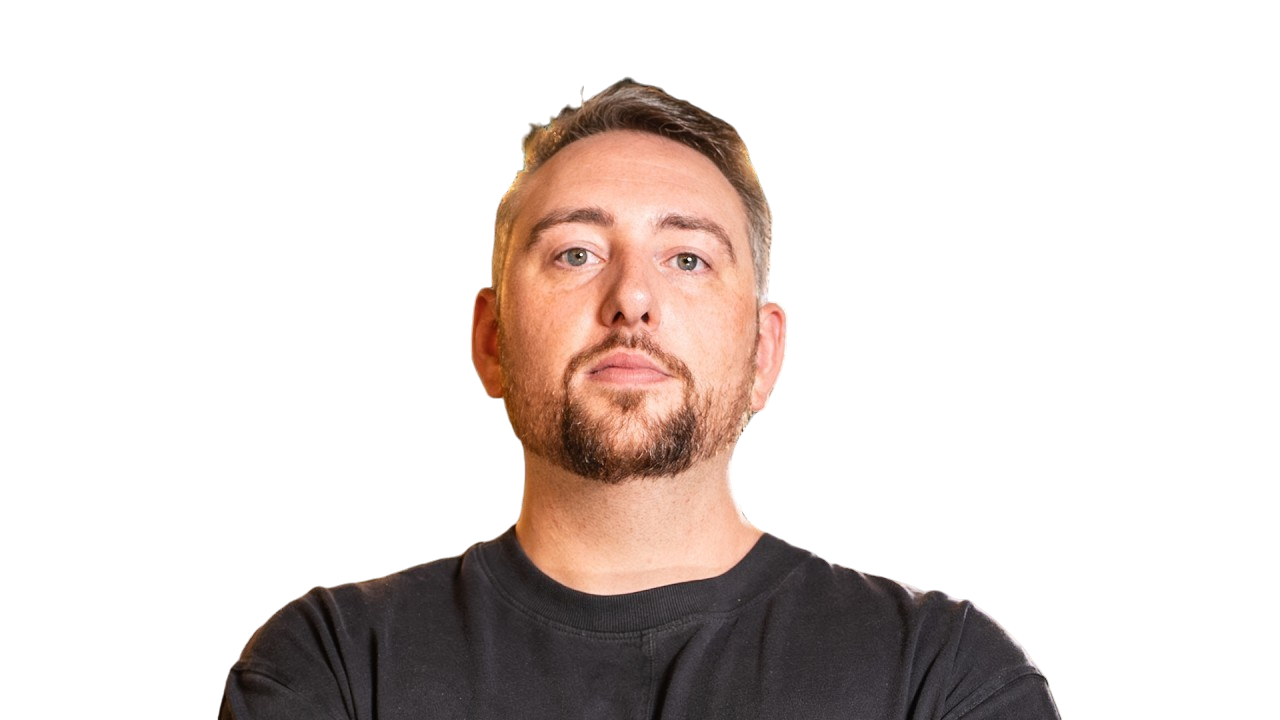
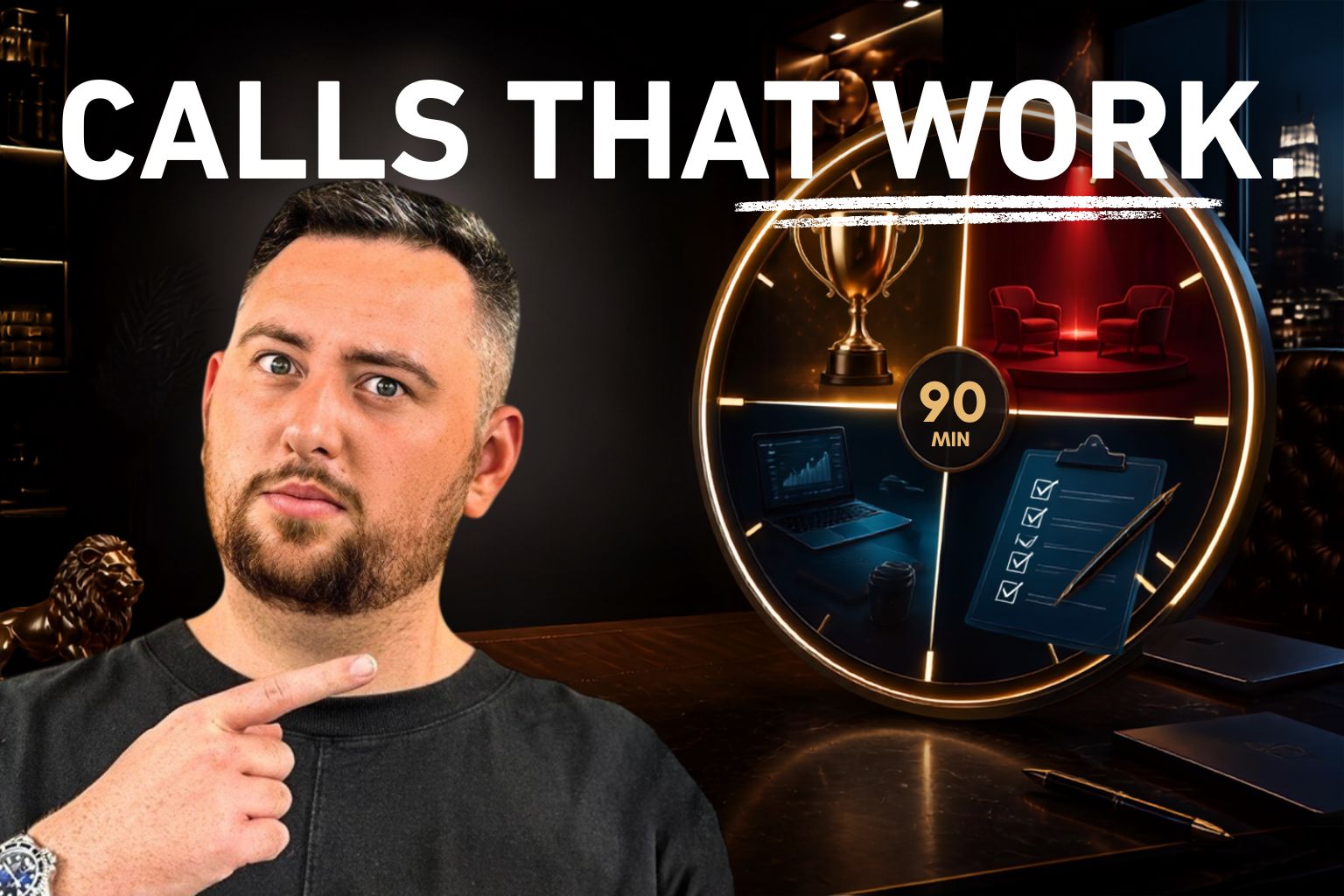
Inside My 90-Minute Group Call Structure for Execution
I hope you enjoy reading this blog post. If you want my team to just do your marketing for you, click here.
Author: Jeremy Haynes | Published August 13, 2026
Earnings Disclaimer: You have a .1% probability of hitting million-dollar months according to the US Bureau of Labor Statistics. As stated by law, we can not and do not make any guarantees about your own ability to get results or earn any money with our ideas, information, programs, or strategies. We don’t know you, and besides, your results in life are up to you. We’re here to help by giving you our greatest strategies to move you forward, faster. However, nothing on this page or any of our websites or emails is a promise or guarantee of future earnings. Any financial numbers referenced here, or on any of our sites or emails, are simply estimates or projections or past results, and should not be considered exact, actual, or as a promise of potential earnings, all numbers are illustrative only.
Group program calls create implementation when the structure makes every member prepare, participate, choose one next action, and report back on it. A useful call gives the room less space to consume passively and more chances to make decisions in public. I structure my calls around pre-call submissions, timed hot seats, live work windows, and visible commitments because those mechanisms turn a conversation into forward motion. The content still matters, but the operating rhythm determines whether anyone uses it.
Already making money? See what it takes to make a lot more.
Why Group Program Calls Fail to Create Action
Most group calls follow a familiar pattern. The person running the room teaches for most of the session, opens the floor for questions, and answers whoever speaks first. Members leave with pages of notes and no clear decision about what happens next.
The call rewards consumption, so consumption is what the room produces. Nobody had to arrive prepared. Nobody had to state a commitment. By the next session, the excitement has faded and the notes are buried under a week of work.
Your call structure is part of the product. A large meta-analysis published in the Proceedings of the National Academy of Sciences compared traditional lecturing with active learning across 225 studies. Active learning improved performance and reduced failure rates in those educational settings. A mastermind is a different environment, but the operating lesson transfers cleanly: people make more progress when they have to use an idea during the session.
That principle shapes the weekly calls in my private mastermind, Inner Circle. Members enter the room ready to work through live business decisions with other operators, and every part of the call points toward implementation.
Results are not typical. Your results will vary and depend entirely on your individual capacity, business experience, expertise, and level of desire. There are no guarantees concerning the level of success you may experience. The testimonials and examples used are not intended to represent or guarantee that anyone will achieve the same or similar results. We don’t believe in get-rich-quick programs. We believe in hard work, adding value and serving others. As stated by law, we can not and do not make any guarantees about your own ability to get results or earn any money with our information, courses, programs, or strategies.
How Pre-Call Submissions Change the Conversation
I ask members to submit an update 24 to 48 hours before the call. The form is short enough to complete and specific enough to expose where someone is drifting. Every member answers three questions:
What was your biggest win since the previous call?
What is the number one issue slowing you down?
What did you commit to last time, and what is its current status?
The first benefit is reflection. A member has to stop, review the week, and identify the real decision they need help making. That preparation prevents the first ten minutes of their turn from becoming an improvised download of everything happening in the business.
The second benefit is accountability before the meeting starts. If somebody missed a commitment, the form makes the gap visible. We can examine whether the obstacle was unclear ownership, a skill gap, poor prioritization, or a task that should have been divided into smaller pieces.
The submissions also let me build an agenda from the room’s actual needs. I can group similar problems, identify themes that will help several members, and decide which issues deserve a full hot seat. This is the same reason a strong weekly executive meeting structure begins with known priorities instead of whoever talks first.
Why Every Call Starts With Wins and Commitments
I open with a fast round of wins. We spend roughly five minutes hearing what members launched, closed, fixed, or finally decided. The round gives implementation a visible reward and shows the room what other operators are putting into motion.
Wins also reset the emotional temperature of the call. Business owners tend to arrive carrying the problem that bothered them most that morning. A quick review of progress reminds everyone that the week contained more than friction.
Then we review the commitments from the previous call. I want a direct answer: done, in progress, or unstarted. A missed commitment becomes useful information when we examine it honestly. The purpose is diagnosis and a better next decision.
Public accountability works best when the commitment is clear enough to inspect. “Improve sales” gives us nothing to evaluate. “Review ten recorded sales calls and rewrite the discovery questions by Friday” gives the member and the room a shared definition of completion.
How I Run 15-Minute Hot Seats Without Rambling
Open Q&A rewards speed and volume. The quickest person to unmute receives attention, while quieter members can disappear for an entire session. I use a rotating hot-seat schedule so every member gets focused time across a defined cycle.
A standard hot seat lasts 15 minutes. The member gets two or three minutes to frame the situation. I use another minute or two for clarifying questions, then spend five to seven minutes working through the decision. The room contributes for two or three minutes, and the member closes by stating the next action.
That time box forces everyone to separate context from noise. A study of the nominal group technique describes how a structured, facilitated meeting format can promote more even participation and reduce the inefficiencies of an unstructured discussion. My format is different, but both approaches protect the floor from being captured by one voice.
Some questions need only five minutes. I use speed hot seats for those: name the problem, make the decision, and state the action. More complicated issues keep the full slot. If the setup starts becoming a ten-minute story, I interrupt and bring the member back to the decision we can solve today.
This structure becomes even more important as a room grows. My breakdown of mastermind retention systems explains how engagement and visible progress support long-term participation. The call itself has to create those experiences every week.
Why Every Member Leaves With One Big Domino
People often ask for ten action items because a long list feels comprehensive. Then they return to a full calendar, urgent team messages, client work, and sales issues. The list becomes another source of pressure.
I reduce the output of a hot seat to one big domino. This is the single action most likely to create momentum before the next call. A member may still have supporting tasks, but the room knows which result matters most.
A meta-analysis in Frontiers in Psychology found that mental contrasting combined with implementation intentions had a small-to-medium positive effect on goal attainment. The research describes implementation intentions as plans that specify when, where, and how someone will act. That is why I push members beyond broad goals and toward a concrete move with a clear trigger.
Someone who decides to “work on the funnel” still has several places to hide. Someone who commits to writing the first 15 minutes of the webinar by Thursday has a visible action. If too many competing tasks keep blocking execution, I point them toward the same priority system I use to stop procrastination: choose the constraint, define the next move, and protect time for it.
How Live Work Windows Break Procrastination
I reserve the final ten to 15 minutes for members to start the work when the task fits the format. The room stops discussing implementation and begins implementing. That could mean changing an ad setting, outlining an email, opening the funnel builder, assigning an owner, or scheduling the decision everyone kept postponing.
The first few minutes of a task carry a surprising amount of resistance. Starting inside the call removes the need to recreate the context later. The member already has the relevant people present, the decision is fresh, and the group can resolve a small obstacle before it becomes another delay.
I have watched operators postpone a funnel launch for weeks, then share their screen and move it live during the session. The value comes from converting discussion into a first rep while attention is still concentrated.
A call should create evidence of movement before it ends. Sometimes that evidence is a completed change. Other times it is a started document, an assigned task, or a calendar block. Each version gives the member a shorter path back into the work.
Why Public Tracking Creates Useful Accountability
Every commitment goes into a shared tracker with three statuses: done, in progress, or unstarted. Members update it through their pre-call submission, and we use it as the record for the next accountability round.
Visibility changes the quality of a commitment. People choose more realistic actions when they know they will report on them. They also learn from the room’s patterns. If the same type of task stalls across several businesses, we can examine the common obstacle instead of treating every delay as a personal failure.
A string of unstarted commitments triggers a private conversation. I want to know whether the member chose the wrong priority, needs a different form of support, or has stopped making space for the work. Surfacing that pattern early gives us a chance to fix the experience before disengagement becomes normal.
The same visibility principle appears in a strong daily team management routine. People execute more consistently when ownership, progress, and follow-up live in a shared operating system.
How I Separate Teaching From Implementation
I assign each call a primary job. One week may introduce a framework. Another may center on hot seats and implementation. A deep dive can examine one problem across several businesses, while a guest session can add expertise the room does not already have.
Clear call types prevent the agenda from trying to fit a lesson, ten questions, accountability, and live work into the same 90 minutes. Teaching sessions stay focused on one framework and move into application quickly. Implementation sessions give most of the time to decisions, troubleshooting, and action.
I use a similar rhythm in Master Internet Marketing, our 7-week live comprehensive training. Each session has a defined outcome, and the learning sequence moves from understanding a system to applying it inside the business.
Results are not typical. Your results will vary and depend entirely on your individual capacity, business experience, expertise, and level of desire. There are no guarantees concerning the level of success you may experience. The testimonials and examples used are not intended to represent or guarantee that anyone will achieve the same or similar results. We don’t believe in get-rich-quick programs. We believe in hard work, adding value and serving others. As stated by law, we can not and do not make any guarantees about your own ability to get results or earn any money with our information, courses, programs, or strategies.
I run the core calls weekly for 90 minutes. That rhythm gives members enough time to execute between sessions while keeping the previous decision close enough to inspect. Sixty minutes usually compresses the hot seats, and two hours asks too much from attention. The exact cadence can change by audience, but it should match how quickly members can produce a meaningful next result.
What Happens Between Calls to Protect Momentum
The recording goes out promptly, along with an action summary that names every commitment. Members should never have to rewatch 90 minutes to remember the decision they made in the final five.
Async support gives the room a place to resolve small questions, share progress, and ask for feedback before the next session. I also send a midweek check-in when a commitment needs a nudge. A short message can bring the priority back to the surface before another week disappears.
I pay attention to quiet members too. If somebody repeatedly stays off camera, avoids hot seats, or stops submitting updates, I reach out privately. Sometimes they feel stuck and do not know how to explain it. Sometimes the mastermind has slipped behind other priorities. Either way, the pattern deserves a direct conversation.
This is where call structure connects to the broader value of high-level mastermind rooms. Access and information matter, but the real return depends on whether members keep making and implementing better decisions.
7 weeks. Real frameworks. Covering copywriting, funnels, paid ads, and conversion systems.
How to Build Calls That Members Keep Using
A productive group call has a repeatable loop. Members prepare, report on the previous commitment, receive focused input, choose one next action, and leave with it recorded. The next call closes the loop.
The Six-Part Call Loop
Use this six-step loop:
Collect a short written update 24 to 48 hours before the session.
Open with wins and a direct commitment review.
Rotate timed hot seats so access stays fair.
End every hot seat with one observable next action.
Use the final minutes to begin work that can start live.
Track commitments and follow up between sessions.
Protect the structure. Redirect tangents, limit long setups, invite quieter members, and keep every segment tied to a decision.
A useful call brings operators in prepared and sends them out moving. That separates a working mastermind from a library of information. My thoughts inside a mastermind built around hitting $1M a month, shows the larger environment around that standard. The weekly call keeps it useful.
Implementation becomes easier when the next action is specific, public, and already in motion. Build the call around that outcome, then use the content, discussion, and accountability to support it.
Results are not typical. Your results will vary and depend entirely on your individual capacity, business experience, expertise, and level of desire. There are no guarantees concerning the level of success you may experience. The testimonials and examples used are not intended to represent or guarantee that anyone will achieve the same or similar results. We don’t believe in get-rich-quick programs. We believe in hard work, adding value and serving others. As stated by law, we can not and do not make any guarantees about your own ability to get results or earn any money with our information, courses, programs, or strategies.
Get my content first on Google
Add jeremyhaynes.com as a preferred source and Google shows my articles more prominently in your search results, including AI Overviews and AI Mode.


Jeremy Haynes
Owner and CEO of Megalodon Marketing
Jeremy Haynes is the founder of Megalodon Marketing. He is considered one of the top digital marketers and has the results to back it up.