
Pitch Your Main Webinar Offer Before the Cheaper Alternatives

I hope you enjoy reading this blog post. If you want my team to just do your marketing for you, click here.
Author: Jeremy Haynes | Published October 27, 2026
Earnings Disclaimer: You have a .1% probability of hitting million-dollar months according to the US Bureau of Labor Statistics. As stated by law, we cannot and do not make any guarantees about your own ability to get results or earn any money with our ideas, information, programs, or strategies. We don’t know you, and your results in life are up to you. We’re here to help by giving you our greatest strategies to move you forward, faster. However, nothing on this page or any of our websites or emails is a promise or guarantee of future earnings. Any financial numbers referenced here, or on any of our sites or emails, are simply estimates or projections or past results, and should not be considered exact, actual, or as a promise of potential earnings – all numbers are illustrative only.
Selling multiple webinar offers does not mean starting with the cheapest thing and working your way up. I lead with the offer I actually want the audience to buy. I explain it, answer the objections, and give that offer a proper chance before introducing an alternative. Otherwise, you can spend the whole presentation preparing people for one purchase and then steer them toward something smaller.
The question is what the person needs help with. Some people want training. Others want a tool, a different level of access, or a different way to apply the same ideas.
You can account for those differences without turning the pitch into a menu of unrelated products. Start by deciding which offer deserves the main presentation.
Already making money? See what it takes to make a lot more.
The Main Offer Deserves the First Complete Pitch
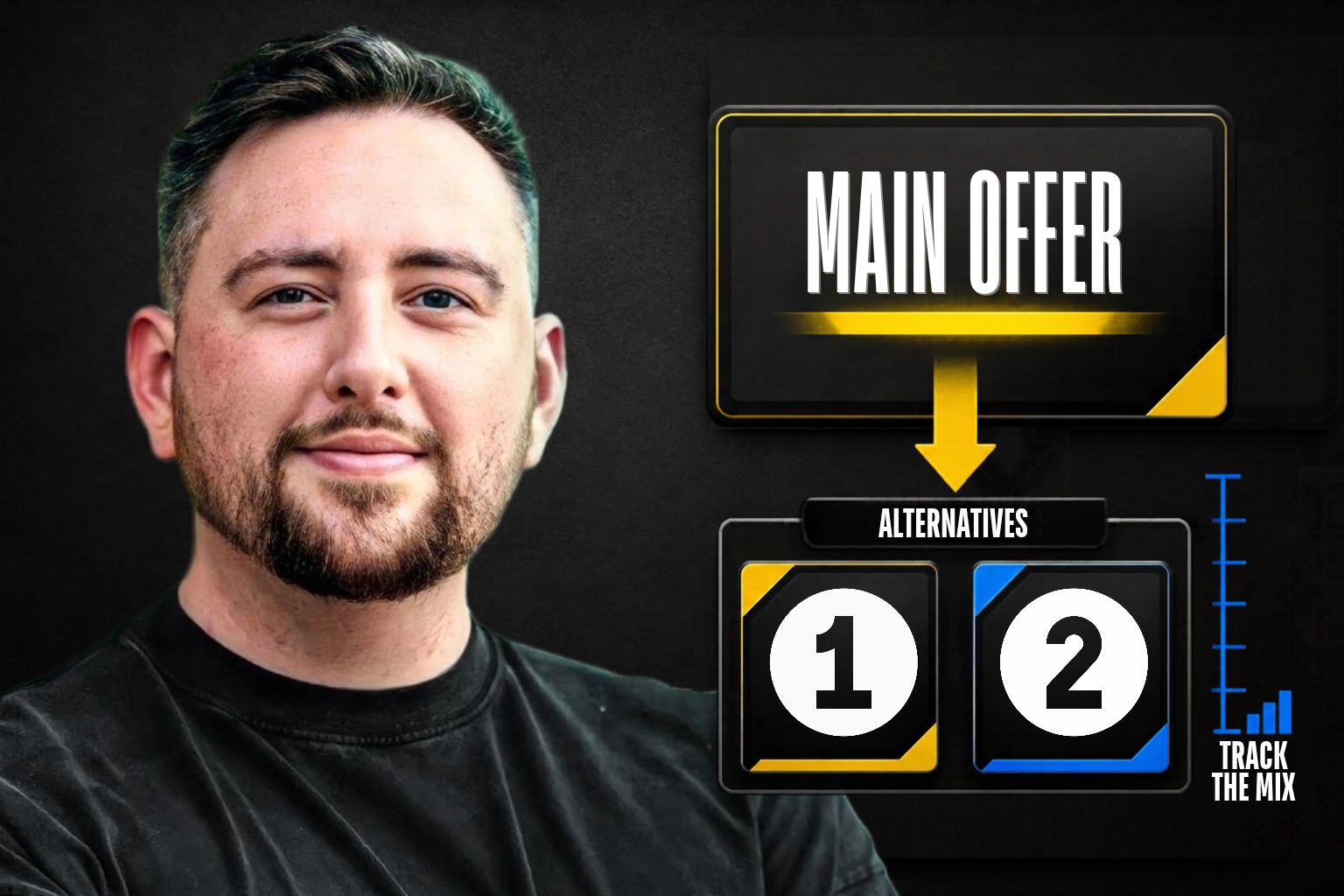
I pitch the offer I most want people to buy first, then finish explaining why it makes sense. That is the starting point for what I call the onion pitch.
The presentation should build toward that purchase. If the lesson prepares people for a particular kind of help, the offer should feel like a relevant continuation. Introducing a cheap product first simply because it is easier to buy can pull the conversation away from what the audience came to solve.
One operator asked me whether he should replace his existing webinar offer with a cheaper software purchase and rely on later upsells. I wanted him to consider another route before making that price cut. Keep the main offer in the first pitch and use appropriate alternatives for people who need something else.
That does not mean the largest price always goes first. I am talking about the offer you deliberately built the presentation to sell. Its suitability for that audience matters more than putting the most expensive thing you own at the top of a list.
The broader webinar funnel model includes attendance, retention, and the close. Offer order is a more specific choice inside that model. A second offer cannot recover people who left before hearing the first.
An Objection Is a Reason to Explain Before Moving On
Answer the person’s concern about the main offer before assuming they need a cheaper one. Moving on too quickly can leave the real buying question unanswered.
Someone may not understand how the offer applies to their business. They may be unclear about the work involved, the support included, or what happens after buying. A lower price does not answer those questions.
I handle objections, explain any genuine risk reversal, take relevant questions, and present the offer again. The explanation can approach the same purchase from another useful perspective. You do not have to repeat the same wording and hope it lands differently.
Keep the terms accurate. If a guarantee has conditions, say what they are. Do not imply that answering an objection removes every business risk or makes a result certain.
Then give people a clear next step. If the answer is to book a call, make that purpose clear. If they can buy directly, the checkout needs to match the offer you just explained.
Peel Back to an Alternative With a Clear Reason
An alternative earns its place when it fits a need the main offer does not fit. The transition should help the viewer understand that difference.
In my own webinars, I have presented broader help and then moved to training or Jeremy AI. Those purchases serve different needs. Someone who wants to train themselves or their staff may be looking for something different from an operator who wants a peer mastermind.
You need to make that distinction visible. Explain who the next offer suits, what it contains, what it leaves out, and how to take the next step. Do not describe the smaller purchase as though it delivers everything in the larger one.
That is why I call it peeling back. I complete the main pitch, then introduce a relevant alternative. I do not keep interrupting the lesson with increasingly expensive offers on a fixed timer.
A payment option is also different from another product. Stripe distinguishes products from prices, including one-time and recurring pricing. Keep that distinction clear in your own pitch so people know whether they are choosing different help or different terms for buying the same help.
What Leads the Offer Can Matter More Than a Price Cut
Before lowering the price, consider whether the buyer understands the part of the offer they want most. A different explanation can be worth testing without changing the purchase itself.
The operator I spoke with had software alongside educational material and other support. I suggested testing the software as the main reason to buy, with the other components explained as support for using it. That is different from cutting the offer down to software and hoping later purchases replace the lost value.
Describe any training required alongside the software and be precise about the tool’s capabilities. The buyer should recognize the same offer when they get access.
I hear a related preference from Jeremy AI users. Some want an answer and a useful document they can work with more than another video to watch. That preference helps me understand what they believe they are buying and how to explain it.
Learning how to make an offer easier to understand belongs before assuming the price is the only problem. If you change the message, price, and contents together, it becomes harder to know which change mattered.
I teach the wider marketing choices in Master Internet Marketing, my 7-week live comprehensive training. For this decision, separate what the buyer values from the amount you charge before deciding what to test.
Results are not typical. Your results will vary and depend entirely on your individual capacity, business experience, expertise, and level of desire. There are no guarantees concerning the level of success you may experience. The testimonials and examples used are not intended to represent or guarantee that anyone will achieve the same or similar results. We don’t believe in get-rich-quick programs. We believe in hard work, adding value and serving others. As stated by law, we can not and do not make any guarantees about your own ability to get results or earn any money with our information, courses, programs, or strategies.
More Buyers Can Still Mean a Lower Average Order
Adding a cheaper alternative can change the mix of purchases and lower average order value. A larger buyer count does not tell you whether the webinar became more valuable to the business.
That was my concern when the operator wanted to replace the main offer with a lower-priced front end. He was considering the extra volume and future upsells. I wanted the value of the initial sale kept in the decision too.
The onion pitch gives the main offer a chance before presenting alternatives. It does not guarantee that the new buyers are all additional buyers. Some people might choose the smaller purchase when they would otherwise have considered the larger one.
Look at purchases by offer, money collected, and what happens after purchase. If the new arrangement depends on later upgrades, keep those separate until they actually happen. An expected upsell is not a collected payment.
Google Analytics recommends separate purchase and refund events. With the right implementation, you can measure those actions instead of treating every click on an offer as a sale. Your payment and delivery records still matter when judging what the new mix means for the business.
The distinction between a focused offer model and a growing product menu matters here. You are trying to serve relevant buying needs, not find a way to mention everything you sell.
Make Each Buying Decision Easy to Understand
Each offer needs its own clear explanation and next step. A viewer should be able to tell what they are choosing without reconstructing the entire presentation.
State what is included, what it costs, and whether the charge repeats. If the next option removes something, explain what changed. Do not leave buyers to assume that a different price buys the same access.
Keep a direct purchase separate from an application. Buying a tool and applying for broader help are different actions. The button and the destination should match what you just asked the viewer to do.
The FTC’s report on deceptive sales interfaces highlights hidden terms, charges, and difficult cancellation paths. There is no useful reason to make a legitimate alternative harder to understand or decline.
When the questions keep returning to the same confusion, use that feedback. You may need a clearer explanation of the main offer rather than another product to pitch.
7 weeks. Real frameworks. Covering copywriting, funnels, paid ads, and conversion systems.
Stay With One Offer When the Alternatives Add Little
A webinar can stay focused on one offer when that is what the audience needs. Selling several things is an option, not a requirement.
I use the onion pitch when it is clear that people hearing the same lesson could need different forms of help. If you cannot explain the reason for the next offer, adding it can make the close harder to follow.
You can also keep answering questions about the main offer. Different buyers may need the same thing explained from different perspectives. Giving that conversation enough attention can be more useful than rushing into another pitch.
Operators can bring this choice into my Inner Circle, a peer mastermind. I want to understand who attended, what you presented, what people asked, and what they chose. That gives the offer decision a basis beyond the idea that more options must mean more sales.
Results are not typical. Your results will vary and depend entirely on your individual capacity, business experience, expertise, and level of desire. There are no guarantees concerning the level of success you may experience. The testimonials and examples used are not intended to represent or guarantee that anyone will achieve the same or similar results. We don’t believe in get-rich-quick programs. We believe in hard work, adding value and serving others. As stated by law, we can not and do not make any guarantees about your own ability to get results or earn any money with our information, courses, programs, or strategies.
Get my content first on Google
Add jeremyhaynes.com as a preferred source and Google shows my articles more prominently in your search results, including AI Overviews and AI Mode.


Jeremy Haynes
Owner and CEO of Megalodon Marketing
Jeremy Haynes is the founder of Megalodon Marketing. He is considered one of the top digital marketers and has the results to back it up.