
How to Build Systems That Let Your Business Run Without You

I hope you enjoy reading this blog post. If you want my team to just do your marketing for you, click here.
Author: Jeremy Haynes | Published April 21, 2026
Earnings Disclaimer: You have a .1% probability of hitting million-dollar months according to the US Bureau of Labor Statistics. As stated by law, we can not and do not make any guarantees about your own ability to get results or earn any money with our ideas, information, programs, or strategies. We don’t know you, and besides, your results in life are up to you. We’re here to help by giving you our greatest strategies to move you forward, faster. However, nothing on this page or any of our websites or emails is a promise or guarantee of future earnings. Any financial numbers referenced here, or on any of our sites or emails, are simply estimates or projections or past results, and should not be considered exact, actual, or as a promise of potential earnings – all numbers are illustrative only.
Most business owners hit a ceiling because they’ve built a job, not a business.
You’re the bottleneck. Every decision runs through you. Every client relationship depends on you. Every process lives in your head.
That’s not a business you can operate from a distance. It’s definitely not one you can transfer to someone else.
If you want to break through, you need to systemize yourself out of the day-to-day. You need to build operations that run without you. And you need to structure your financials in a way that actually reflects the value you’ve created.
This isn’t about motivation or mindset. It’s about execution, systems, and making your business transferable.
Master Internet Marketing, my 7-week live comprehensive training, covers these operational frameworks in depth.
Results are not typical. Your results will vary and depend entirely on your individual capacity, business experience, expertise, and level of desire. There are no guarantees concerning the level of success you may experience. The testimonials and examples used are not intended to represent or guarantee that anyone will achieve the same or similar results. We don’t believe in get-rich-quick programs. We believe in hard work, adding value and serving others. As stated by law, we can not and do not make any guarantees about your own ability to get results or earn any money with our information, courses, programs, or strategies.
Let me walk you through exactly how to approach it.
7 weeks. Real frameworks. Covering copywriting, funnels, paid ads, and conversion systems.
Why Removing Yourself From Daily Operations Matters for Business Value
Here’s what most operators don’t understand about valuation.
A business that depends on the founder is worth less. Significantly less.
If you’re the one doing the estimating, managing the client relationships, and making every operational decision, you’ve got founder risk. And founder risk impacts how buyers and investors evaluate businesses. I’ve written before about how to delegate and replace yourself in your business without losing quality or control, and founder risk is exactly the problem that process solves.
According to research from Forbes, businesses with documented systems and reduced owner dependency typically command higher valuation multiples than those where the founder remains central to operations.
The businesses I’ve worked with that operate independently all have one thing in common: they run without the founder. The owner could step away for three months, and operations wouldn’t skip a beat.
That’s what buyers look for: transferability, predictability, systems.
How to Recast Your Financials to Show Real Profitability
Most businesses run on cash-basis accounting. It’s simpler for taxes and lets you write off inventory at year-end.
But when it’s time to present your business to potential buyers or investors, cash basis doesn’t tell the growth story.
You need to recast your books to accrual accounting. This shows revenue when it’s earned, not when cash hits the bank. It smooths out the lumps and gives a clearer picture of momentum. As MidStreet Mergers & Acquisitions explains, recasting means adjusting your financials to show a normalized picture of true profitability by removing one-time and discretionary expenses that won’t continue under new ownership.
Here’s how this plays out in practice.
You recast to accrual, add back owner compensation, personal expenses run through the business, and one-time costs. This gives you a clearer EBITDA picture.
You also want to use trailing twelve-month metrics. If you’re growing, this captures momentum better than a single year.
You need to start this process six to twelve months before you’re ready to present your business to anyone. You can’t recast your books the week before you go to market.
Building Revenue Streams That Repeat Every Month
Recurring revenue changes everything.
A business with predictable monthly income has a different financial profile than one that has to hunt for every sale. According to Reliant Business Valuation, the reliability of recurring revenue models tends to increase valuation multiples relative to competitors that lack recurring revenue sources.
If you’re in e-commerce, add a Subscribe and Save option. Give customers a reason to commit to monthly deliveries with a discount or exclusive products.
If you’re in services, structure retainers or maintenance agreements that create predictable cash flow. I’ve broken down how to structure coaching retainers for recurring revenue and stronger profit margins elsewhere if that’s your model.
I’ve worked with businesses that added platforms like TikTok Shop to layer in additional revenue streams. The goal is to create multiple channels that feed consistent monthly income.
This doesn’t happen overnight. You need to build it into your model, test it with your customer base, and refine the offer until it sticks.
But once it’s in place, it completely changes how your business operates financially.
How to Build Operations That Scale Without Adding Chaos
Growth without systems is chaos.
You can’t just throw more people at the problem and hope it works out. You need structure.
Let’s talk about construction as an example, but this applies to any business with complex operations.
If you’re running multiple job sites with dozens of people, you need a manpower spreadsheet. This tracks who’s allocated to which project, when they’re available, and where you have gaps.
You update it weekly or bi-weekly. It’s not complicated, but it keeps you from overstaffing one job and understaffing another.
You also need an estimating system. If every estimate lives in one person’s head, you can’t scale. You need a documented process that anyone trained can follow.
The same goes for client relationships. If only you can talk to the client, you’ve created a dependency. Build a process where your team manages the relationship from initial contact through project completion.
These systems don’t slow you down. They’re what let you grow from 50 people to 100 without doubling your workload.
Setting Up Monthly Strategy Sessions That Keep You Ahead of Problems
You need to separate working in the business from working on the business.
Most operators spend 100% of their time in the business: putting out fires, managing projects, handling client issues.
That’s fine when you’re small. But if you want to grow, you need dedicated time to work on strategy.
Set a monthly meeting with your leadership team. This isn’t about day-to-day operations. It’s about growth, hiring, systems, and planning. This is the same cadence I cover in my breakdown of a predictable operating rhythm for growing operators.
You’re reviewing metrics, looking at what’s working and what’s not, planning for the next quarter, and making decisions about technology, like whether it’s time to implement an ERP system.
This cadence keeps you ahead of problems instead of constantly reacting.
In my experience, businesses that grow smoothly all have this rhythm. The owner isn’t buried in the weeds. They’re focused on the next phase of growth while the team handles execution.
Why Winning More of the Right Deals Beats Bidding on Everything
Here’s a mistake I see all the time.
Operators think they need to bid more jobs to grow. So they double their bid volume, hire more estimators, and hope the numbers work out.
But more bids mean more risk. You’re bidding on projects outside your sweet spot. Your acceptance rate drops. You end up taking on work that’s not profitable just to hit revenue targets.
The better strategy is to dial in your estimating process and client relationships so you win a higher percentage of the deals you bid.
You do this by systemizing your estimating so it’s accurate and consistent, by building relationships so clients trust you before you even bid, and by targeting the right projects instead of bidding everything.
This is about taking a bigger slice of the pie you’re already in, not chasing a bigger pie.
Creating Process Documentation Your Team Can Actually Follow
Most people overcomplicate this.
You don’t need a 200-page operations manual. You need playbooks for the key functions that run your business.
Start with the areas where you’re the bottleneck. What processes do only you know how to do?
Document them. Not in paragraphs, but in step-by-step instructions someone else can follow.
For example, if you’re the only one who knows how to estimate a job, write out the exact process. What information do you need? What calculations do you run? What’s the decision tree for pricing?
Same for staffing. If you’re manually assigning people to projects, document the criteria. How do you decide who goes where? What do you consider?
Once it’s documented, train someone else to do it. Then have them do it while you watch. Then let them do it on their own.
This is how you systemize yourself out of the business.
It’s not about removing yourself completely. It’s about removing yourself from the execution so you can focus on strategy.
My Inner Circle, my closed-door mastermind, works through these operational frameworks with operators at this exact stage.
Results are not typical. Your results will vary and depend entirely on your individual capacity, business experience, expertise, and level of desire. There are no guarantees concerning the level of success you may experience. The testimonials and examples used are not intended to represent or guarantee that anyone will achieve the same or similar results. We don’t believe in get-rich-quick programs. We believe in hard work, adding value and serving others. As stated by law, we can not and do not make any guarantees about your own ability to get results or earn any money with our information, courses, programs, or strategies.
What to Do Six to Twelve Months Before You Consider an Exit
If you’re thinking about an exit in the next year or two, you need to start preparing now.
Not next month. Now.
- Get your financials in order. Recast to accrual. Make sure your EBITDA is clean and defensible.
- Build or strengthen your recurring revenue. This is what changes how buyers look at your business.
- Reduce founder risk. Document processes. Train your team. Show that the business runs without you.
- Set your floor. Know what you’re willing to accept before you start negotiations.
In my experience working with businesses preparing for exits, the ones that get looked at seriously are the ones that do this work upfront. They don’t wait until they’re in due diligence to realize their books are a mess or their operations depend entirely on them.
You also need to understand deal structure. An offer isn’t what it seems if half of it is a seller note.
A seller note means you’re financing the buyer’s purchase. You get paid over time, and if the business doesn’t perform after you leave, you might not get the full amount.
If someone offers you a seller note, it should be at a higher multiple to compensate for the risk. Otherwise, you’re often better off taking a lower all-cash offer.
The Timeline for Building Systems That Actually Work
Let’s talk about what this actually looks like in practice.
If you’re currently operating and want to build systems that let you step back, you’re looking at a 12 to 24-month process. Maybe longer depending on your industry and market.
Months 1-3: Audit your current state. Where are you the bottleneck? What processes exist only in your head? What does your financial picture actually look like on an accrual basis?
Months 4-6: Start documenting core processes. Implement your leadership meeting cadence. Begin building or strengthening recurring revenue streams.
Months 7-12: Train your team on the documented processes. Refine your estimating or sales systems to improve win rates. Recast your financials and track trailing twelve-month EBITDA.
Months 13-18: Operate using your new systems. Hire strategically. Implement technology like an ERP if needed. Continue reducing founder dependency.
Months 19-24: Prepare for a potential exit if that’s the goal. Clean up your books. Get valuations. Set your negotiation floor. Go to market when you’re ready.
This isn’t a quick-fix timeline. It’s a build-a-real-business timeline.
The businesses I’ve worked with that build sustainable operations all follow some version of this path. They don’t skip steps. They don’t rush. They build systems that actually work.
Common Mistakes That Keep Operators Stuck
Let me save you some pain by pointing out where most operators mess this up.
- They try to grow before they have systems. They hire more people, take on more projects, and then wonder why everything’s on fire.
- They don’t separate working in the business from working on it. They’re so busy executing that they never step back to build strategy.
- They wait too long to document processes. They think they’ll do it “when things slow down.” Things never slow down. You have to make the time.
- They don’t understand deal structure when it’s time to consider a transition. They get excited about a big number without realizing half of it is contingent on future performance or tied up in a seller note.
- They focus on top-line revenue instead of EBITDA. People evaluating businesses don’t care about your revenue. They care about profit.
Already making money? See what it takes to make a lot more.
Where to Start Building Your Systems Today
If you’re serious about building operations that don’t depend on you, here’s what you need to do.
- Audit your founder risk. Make a list of every process and decision that depends on you. That’s your systemization roadmap.
- Get your financials in order. If you’re on cash basis, start the process of recasting to accrual. Know your real EBITDA.
- Build or strengthen recurring revenue. This changes how your business operates financially.
- Document your core processes. Start with the areas where you’re the biggest bottleneck.
- Implement a monthly leadership rhythm. Block the time. Make it non-negotiable.
- Focus on win rate over bid volume. Dial in your estimating and client relationships so you’re winning a higher percentage of deals.
This isn’t theory. These are the systems I’ve seen work in businesses that build sustainable operations.
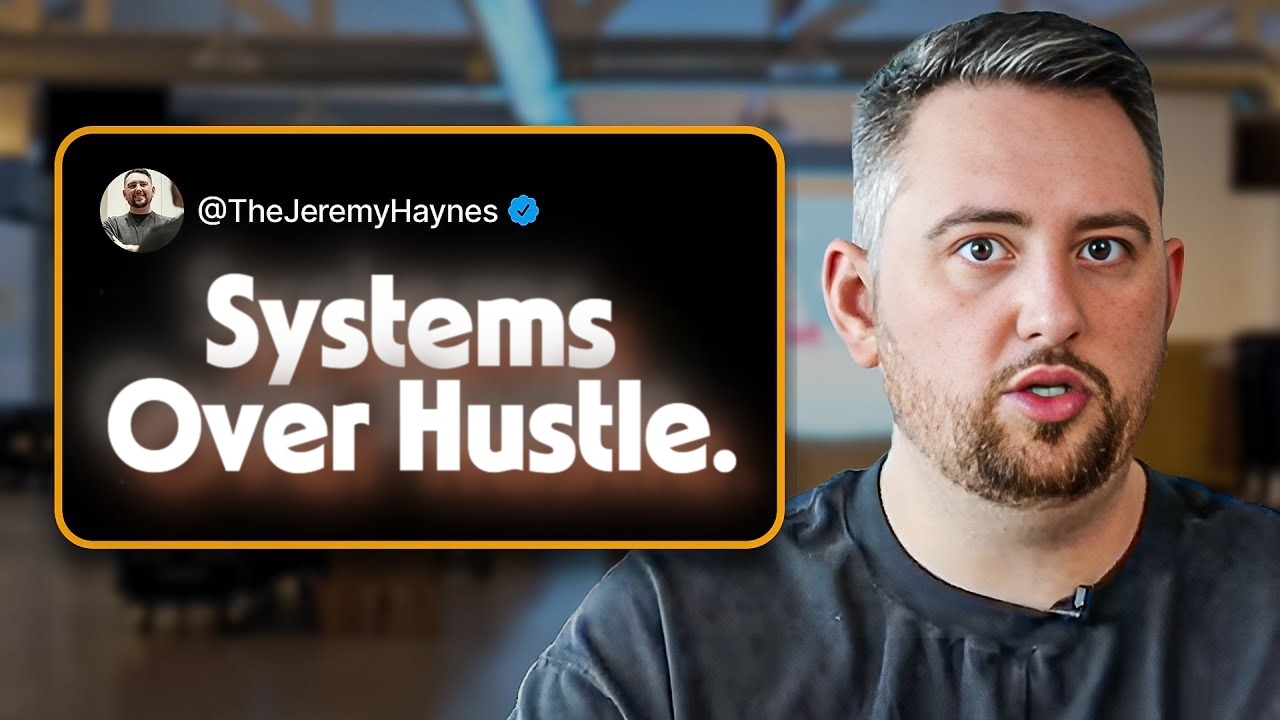
You don’t need more motivation. You need better systems.
You don’t need to work harder. You need to work on the right things.
Build a business that runs without you, shows clean financials, and generates predictable revenue. That’s what creates a transferable asset.
And that’s how you turn a good business into a valuable one.
If you’re ready to build these systems with guidance, our 7-week live comprehensive training at Master Internet Marketing walks through these operational frameworks step by step.
Results are not typical. Your results will vary and depend entirely on your individual capacity, business experience, expertise, and level of desire. There are no guarantees concerning the level of success you may experience. The testimonials and examples used are not intended to represent or guarantee that anyone will achieve the same or similar results. We don’t believe in get-rich-quick programs. We believe in hard work, adding value and serving others. As stated by law, we can not and do not make any guarantees about your own ability to get results or earn any money with our information, courses, programs, or strategies.
Get my content first on Google
Add jeremyhaynes.com as a preferred source and Google shows my articles more prominently in your search results, including AI Overviews and AI Mode.


Jeremy Haynes
Owner and CEO of Megalodon Marketing
Jeremy Haynes is the founder of Megalodon Marketing. He is considered one of the top digital marketers and has the results to back it up.