
How Two Agency Operators Built a Pay-Per-Qualified-Show Model That Removes All Risk From Financial Advisor Clients

I hope you enjoy reading this blog post. If you want my team to just do your marketing for you, click here.
Author: Jeremy Haynes | Published August 6, 2026
Earnings Disclaimer: You have a .1% probability of hitting million-dollar months according to the US Bureau of Labor Statistics. As stated by law, we can not and do not make any guarantees about your own ability to get results or earn any money with our ideas, information, programs, or strategies. We don’t know you, and besides, your results in life are up to you. We’re here to help by giving you our greatest strategies to move you forward, faster. However, nothing on this page or any of our websites or emails is a promise or guarantee of future earnings. Any financial numbers referenced here, or on any of our sites or emails, are simply estimates or projections or past results, and should not be considered exact, actual, or as a promise of potential earnings, all numbers are illustrative only.
Two operators sell qualified appointments to financial advisors and charge only after an eligible prospect attends. The same lead engine also feeds their own wealth management firm, where an internal team closes annuity deals.
The distinction between a lead and a qualified show is the foundation of the offer. The operators collect money upfront, fund the advertising, qualify retirees by assets, book the meeting, and carry the cost when somebody fails to appear. Financial advisors pay for attended opportunities instead of lists of names or calendar entries.
The model is working, but fulfillment has grown faster than the operating system behind it. Order tracking is incomplete, client-level profitability is difficult to see, and renewal timing is not measured cleanly. Better visibility would reveal how quickly the company can spend client funds, fulfill each package, and add volume without putting its own cash at risk.
Results are not typical. Your results will vary and depend entirely on your individual capacity, business experience, expertise, and level of desire. There are no guarantees concerning the level of success you may experience. The testimonials and examples used are not intended to represent or guarantee that anyone will achieve the same or similar results. We don’t believe in get-rich-quick programs. We believe in hard work, adding value and serving others. As stated by law, we can not and do not make any guarantees about your own ability to get results or earn any money with our information, courses, programs, or strategies.
7 weeks. Real frameworks. Covering copywriting, funnels, paid ads, and conversion systems.
Why Pay-Per-Show Changes the Advisor’s Risk
Financial-advisor lead generation is commonly sold as raw leads or booked calls. This offer continues through attendance and qualification. The prospect must appear and have enough verified assets to fit the opportunity.
That promise removes two frequent points of failure for the advisor: an empty calendar slot and a conversation with somebody who could never buy. Pricing can then reflect the delivered opportunity rather than the number of contacts produced.
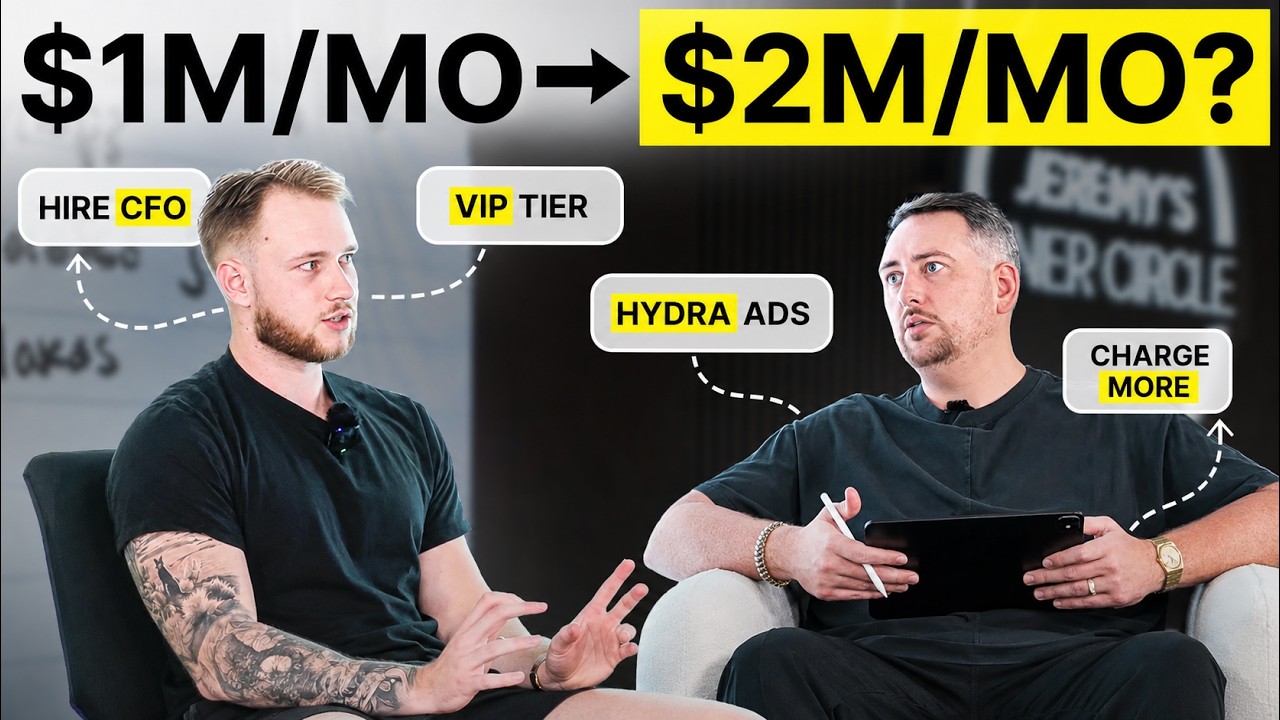
The current rate is $1,800 per qualified show, and bulk orders have reached $37,500. The buyer receives a clearer outcome, while the operators absorb advertising, qualification, and attendance risk.
Outcome-based pricing is appearing in other B2B markets as well. Intercom, for example, charges for support tickets resolved by its AI agent rather than for access alone. A Pragmatic Institute overview of outcome-based pricing explains why tying payment to value can reduce buyer hesitation and shorten the sales process.
That alignment makes the offer easier to understand, but it also places more pressure on fulfillment. Every missed show, weak qualification, or expensive acquisition falls on the vendor’s side of the equation.
How Their Meta Funnel Produces Qualified Calls
The company uses two main paths from Meta advertising: a quiz funnel and a VSL call funnel. The quiz has produced most of the volume so far, while early VSL tests are showing stronger intent and higher attendance.
Creative testing currently runs 9 to 15 ads per ad set. Winners move into a one-ad-set campaign-budget-optimization campaign for scaling. That setup can work, although stronger ads may absorb spend before the team learns much about the rest.
A Thunderdome structure would isolate the tests. One campaign contains one ad per ad set, while a three-second-video-view exclusion limits repeat exposure and forces each creative to earn spend independently. Weak ads become visible quickly, and winners can scale without competing inside the same ad set.
The financial-services category adds another constraint. Advertising to financial advisors while discussing retirement outcomes can trigger Meta’s financial special-ad restrictions, which affect age, location, and detailed targeting. Our guide to working with Meta’s financial special-ad category explains how the flag occurs and how custom conversions can preserve useful optimization signals.
Lead forms offer another test. Meta lead-form conditional questions can change the next question based on a previous response. A retiree reporting $500,000 in investable assets can follow a different qualification path from someone below the threshold. With a strong setter team behind it, that branching can improve efficiency before a call reaches the calendar.
Why 270 Clients Broke the Original Tracker
The company serves 270 active clients with very different order sizes and delivery expectations. One advisor may want three appointments a week, while another wants 30. Until recently, the operators lacked a dependable view of fulfillment across those accounts.
The first order tracker was built with AI tools. It supported the early stage, then became unreliable as order volume and exceptions increased. A developer is now rebuilding the system, and the new version is approximately 75% complete.
This is a common scaling failure. A business can accumulate customer stories and still lack representative performance data. I saw it with a 287-client agency where only about 30 customers posted wins in Slack. Management made staffing and pricing decisions from the most vocal 10% of the client base. The full diagnosis appears in the five operational gaps limiting that 287-client agency.
For this appointment business, accurate tracking has to show cost per delivered meeting, remaining order obligation, delivery speed, and the likely renewal date for every client. Those numbers determine how quickly prepaid funds can be converted into advertising while preserving enough cash to finish every order.
Why the Business Needs Financial Ownership
The operators estimate a net margin near 20% after fulfillment. That headline does not answer several important questions: how long the company fronts cash, which accounts contribute the margin, which packages create losses, and how much delivery remains against money already collected.
A CFO or senior financial analyst could connect order data with cash flow and client-level profitability. The role would build reporting that shows how much each account costs to fulfill, when renewal revenue is likely to arrive, and where pricing or service terms need to change.
A guide to when a growing company needs a CFO identifies rapid expansion and inadequate financial detail as common triggers. Both conditions exist here.
This business needs durable financial ownership rather than occasional bookkeeping analysis. Revenue roles may come first in an earlier company, but finance becomes urgent once growth outruns the founder’s ability to explain where the cash is committed. Our breakdown of the three foundational scaling hires shows where that role fits in the sequence.
How Delivery Speed Controls Renewal Velocity
Nearly 90% of clients who complete fulfillment renew, which indicates strong demand for another package. The missing number is the time between the initial order and that renewal.
Faster appointment delivery moves the client toward results sooner. When advisors close business sooner, renewal becomes relevant sooner. That improves cash velocity and can increase capacity without outside capital.
The initial order averages approximately $20,000, while some returning clients purchase packages worth $37,500. That difference suggests room for defined renewal tiers. Advisors with proven close rates and a desire for more volume should have a clear path toward a larger package.
Tracking must connect delivery time with the advisor’s downstream sales. An account receiving appointments quickly but closing none may need sales support or tighter qualification. Another account converting consistently may be ready for more volume before the original package ends.
Where a Priority-Routing Upsell Could Fit
Qualified leads currently enter a round robin shared by 90 advisor clients and four internal salespeople from the wealth management firm. That distribution treats every buyer similarly even when their ability to monetize the appointments differs widely.
High-performing clients could earn access to a priority tier after demonstrating that they close and renew. The upgraded service might include dedicated campaigns, faster routing, and tighter qualification criteria. Those benefits justify a higher package price because the client receives more control and less competition for each opportunity.
Positioning the tier as earned access protects the base offer. New clients begin in the standard pool, prove performance, and then decide whether dedicated delivery makes economic sense. This upsell and ascension framework explains how to create a premium rung without making existing customers feel downgraded.
The revenue opportunity already exists inside the current accounts. The company does not need another acquisition channel to test it.
Why Wealth Management Changes the Long-Term Value
The appointment business creates immediate cash flow and proves the lead engine. The wealth management company may become the more valuable long-term asset because it captures the economics of the annuity sale rather than stopping at the appointment fee.
The internal team uses the same retiree lead flow and is still refining its sales process. Each closed annuity can produce substantial premium and supports a different valuation story from a stand-alone lead-generation operation.
A scalable wealth management firm still requires clean financial records, documented sales and compliance processes, and repeatable acquisition. Those operating improvements support both current performance and a future transaction.
RIA consolidation remained active in 2026. FINTRX recorded 20 announced RIA deals in June 2026, representing approximately $133.9 billion in acquired assets under management. A firm with reliable books and a repeatable lead source becomes easier for a buyer to evaluate.
Already making money? See what it takes to make a lot more.
What the Next Operating Priorities Should Be
The immediate work falls into four areas:
- Establish financial ownership. Connect fulfillment obligations, client profitability, and cash timing in one reporting system.
- Improve acquisition testing. Compare the Thunderdome creative structure and conditional lead forms against the current setup.
- Build the priority tier. Offer dedicated routing and premium delivery to clients with proven economics.
- Reduce time to results. Help advisors close sooner so completed orders renew faster.
The operators have already proven that advisors will pay for attended, qualified opportunities. Their next stage depends on knowing the economics of every order and giving the strongest clients somewhere to ascend.
Inside my private mastermind, Inner Circle, established operators work through scaling decisions and operating constraints like these with peers. Master Internet Marketing, our 7-week live comprehensive training, covers the underlying systems for teams building this infrastructure from the ground up.
Results are not typical. Your results will vary and depend entirely on your individual capacity, business experience, expertise, and level of desire. There are no guarantees concerning the level of success you may experience. The testimonials and examples used are not intended to represent or guarantee that anyone will achieve the same or similar results. We don’t believe in get-rich-quick programs. We believe in hard work, adding value and serving others. As stated by law, we can not and do not make any guarantees about your own ability to get results or earn any money with our information, courses, programs, or strategies.
Get my content first on Google
Add jeremyhaynes.com as a preferred source and Google shows my articles more prominently in your search results, including AI Overviews and AI Mode.


Jeremy Haynes
Owner and CEO of Megalodon Marketing
Jeremy Haynes is the founder of Megalodon Marketing. He is considered one of the top digital marketers and has the results to back it up.