Mastering Propaganda in Business Content

I hope you enjoy reading this blog post. If you want my team to just do your marketing for you, click here.
Author: Jeremy Haynes | Published April 2, 2026
Earnings Disclaimer: You have a .1% probability of hitting million-dollar months according to the US Bureau of Labor Statistics. As stated by law, we can not and do not make any guarantees about your own ability to get results or earn any money with our ideas, information, programs, or strategies. We don’t know you, and besides, your results in life are up to you. We’re here to help by giving you our greatest strategies to move you forward, faster. However, nothing on this page or any of our websites or emails is a promise or guarantee of future earnings. Any financial numbers referenced here, or on any of our sites or emails, are simply estimates or projections or past results, and should not be considered exact, actual, or as a promise of potential earnings – all numbers are illustrative only.
Look, I’m going to be straight with you. I’m a propagandist. I’ve been using propaganda as a marketing tactic for over a decade now, and in my experience, it’s been the single most effective approach for shaping how potential buyers think before they ever reach a decision point.
Before you get weird about the word, let me clarify what propaganda actually is. It’s giving people ways to think. It’s addressing beliefs that already exist and adjusting perspectives in potential buyers. That’s it. The entire goal is to shape how someone thinks about your offer before that decision point arrives.
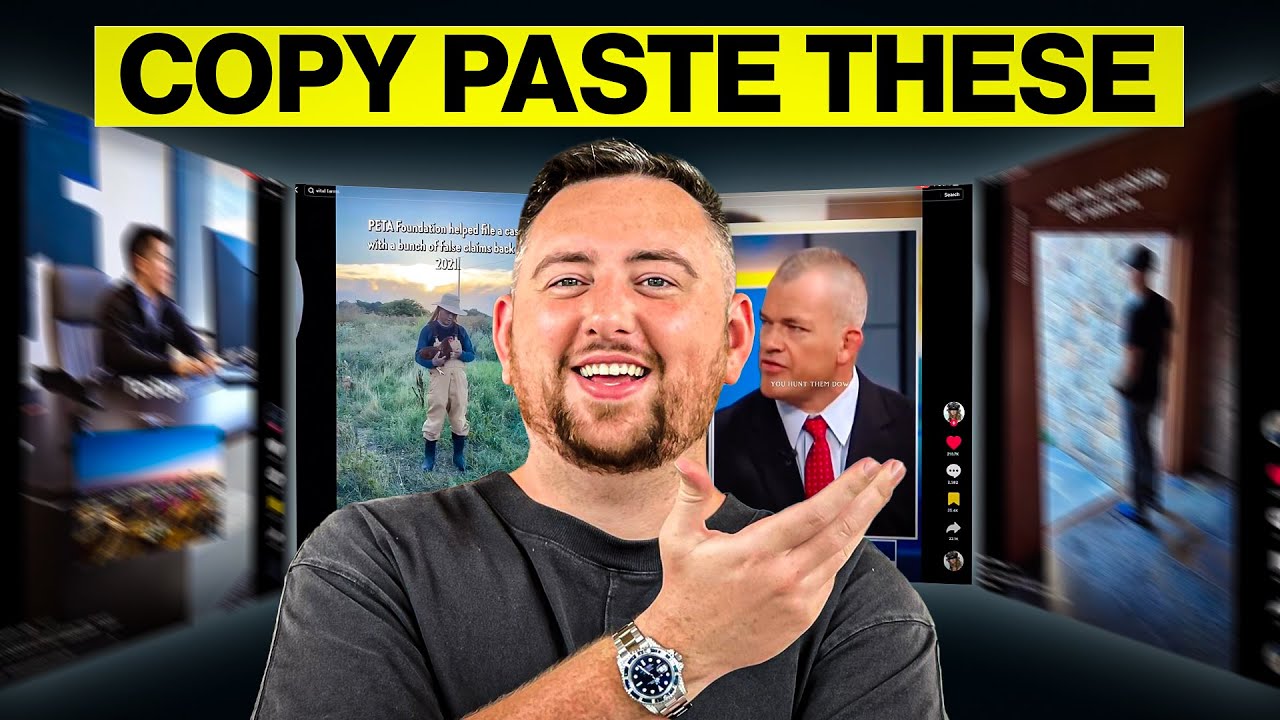
In this blog, I’m going to walk through real examples I’ve collected over the years. Some are from businesses, some are from political campaigns, some are from military recruitment. All of them are examples of propaganda done right.
If you want to go deeper on content strategy and how to build systems that support your marketing, Master Internet Marketing is my 7-week live comprehensive training where we break down these frameworks in detail.
Results are not typical. Your results will vary and depend entirely on your individual capacity, business experience, expertise, and level of desire. There are no guarantees concerning the level of success you may experience. The testimonials and examples used are not intended to represent or guarantee that anyone will achieve the same or similar results. We don’t believe in get-rich-quick programs. We believe in hard work, adding value and serving others. As stated by law, we can not and do not make any guarantees about your own ability to get results or earn any money with our information, courses, programs, or strategies.
What Is the Difference Between Direct and Indirect Business Propaganda
There are two types of propaganda in business. Direct propaganda addresses claims or issues head-on. Indirect propaganda shapes beliefs without directly confronting a specific issue.
The approach I’ve found most effective is knowing when to use each type. The choice depends on what stage of the sales process your audience is in.
Let me show you what I mean with some real examples.
How Vital Farms Used Counter-Propaganda to Respond to PETA Claims
Right now, Vital Farms is dealing with a lawsuit from PETA. PETA claims their chickens aren’t actually pasture-raised, which is the entire premise of Vital Farms’ brand positioning. This is a massive threat to their business.
What did Vital Farms do? They created counter-propaganda.
They put out a TikTok addressing every single claim one by one. They showed footage of their barns, their pastures, their farmers. They talked about their third-party certifications. They explained their farming practices in detail.
The visuals were incredible: farmers sitting with chickens, reading books to them; happy employees collecting eggs; wide-open pastures with chickens roaming freely. The barn footage showed chickens spread out, not crammed together like factory farms.
Here’s the thing though. Most people watching that content don’t even realize it’s propaganda. They just think it’s informative content from a brand defending itself. But that’s exactly what makes it effective propaganda.
When I first saw the PETA claims, I thought, “man, another brand I can’t trust.” Then I saw Vital Farms’ response and immediately thought, “okay, I was wrong. I’m going to keep buying their brand.”
That’s what propaganda does. It sways the people in the middle who haven’t fully committed one way or the other. According to Harvard Business Review research on brand trust, transparency and authenticity are among the top drivers of consumer loyalty, which is exactly what Vital Farms demonstrated with their response.
How Staged Phone Call Videos Work for Lead Filtering and Expectation Setting
There’s a private jet broker called Amalfi Jets. The guy who runs it, Colin, creates these staged phone call videos where people call in with ridiculous requests.
One example: someone calls claiming their daughter is TikTok famous and wants a free flight from New York to LA. They expect it for free because “you’ll get exposure.”
Colin calmly explains the aircraft options, the pricing, and then firmly declines the free flight request. When the caller threatens to have their daughter trash them on TikTok, Colin doesn’t flinch.
These videos get millions of views. Most people in the comments think they’re real. Even if some suspect they’re staged, it doesn’t matter because the content is accomplishing multiple goals:
It sets expectations for how customers should behave. When Colin quotes a price and the response is “don’t care, just book it,” he’s training his audience on proper etiquette for chartering jets.
It filters out bad leads before they even call. People who want free flights or discounts see this content and know not to waste their time.
It demonstrates the level of service and customization Amalfi Jets provides. In one call, someone requests a vanilla Frosty with fries, no branding, properly plated. Colin confirms they can do it without hesitation.
The content flywheel here is brilliant. Same setup every time. Same camera angle. Just different scenarios playing out. It’s repeatable, scalable, and incredibly effective at pre-qualifying leads.
How Custom Home Builders Use Detail-Focused Content to Attract the Right Clients
One of my favorite content creators is a custom home builder who showcases high-end residential projects. Every piece of content follows the same format: “Client wanted X, so here’s how I delivered it.”
He’ll walk through a bathroom where the client didn’t want to see shampoo bottles, so he built a hidden niche inside the vanity leg. Or a hidden spiral staircase through a concrete floor. Or a boulder from the excavation site that he incorporated half-inside, half-outside the great room with custom glass.
The attention to detail is insane. The production quality doesn’t need to be high because the work speaks for itself.
But here’s what’s really happening with this content: he’s not attracting regular homeowners or middle-class families. He’s attracting wealthy clients who want custom work and have the budget for it.
Every single piece of content signals who should work with him and who shouldn’t bother calling. That’s propaganda working perfectly as a filtering mechanism.
Why Framing Content as Education Makes Propaganda More Effective
During election cycles, you see propaganda at its absolute peak. Most of it is obvious, like those attack ads on TV. But the masterful propaganda is the stuff you don’t even realize you’re consuming.
I came across a piece of content that was framed as “how to win an argument.” It talked about debate strategy, finding weak points in your opponent’s logic, and not just reacting emotionally.
Then it used abortion as the example. It walked through the “abortion is murder” argument and explained why responding with “it’s not murder” is ineffective. Instead, the better argument is acknowledging it as a form of killing but arguing it’s justified, like self-defense or war.
This content had nothing to do with politics on the surface. It was about argumentation. But it planted specific ways of thinking about abortion in your head without you even realizing it.
That’s master-level propaganda. You think you’re learning debate tactics, but you’re actually being conditioned to think about a political issue in a specific way. Research from MIT on information processing shows that content framed as educational or informational is processed differently than content perceived as persuasive, which is why this approach works so well.
How Military Recruitment Uses Gaming and Social Content to Shape Perception
The U.S. military has been dealing with declining enlistment numbers, especially among younger generations. So they’ve ramped up their propaganda efforts.
Most people don’t know this, but Call of Duty has had partnerships with the U.S. Army. That’s not an accident. The game conditions young men to the sounds, weapons, and excitement of combat. It makes military service feel familiar and appealing.
But beyond gaming, there’s content on TikTok that’s designed to recruit. One example showed a soldier talking about hunting down terrorists who commit atrocities. The video had intense music, powerful imagery, and millions of views.
The comments were full of people saying things like “this makes me want to re-enlist” or “double the defense budget.” Even if it doesn’t directly lead to enlistment, it shifts public opinion in favor of military action.
That’s multi-purpose propaganda. It recruits new soldiers and sways public perception at the same time. According to Pew Research Center data, younger generations have significantly different perceptions of military service than previous generations, which is exactly why these new content approaches have become necessary.
What Propaganda Should Accomplish in Your Business Content
Every business needs to master propaganda. Not in a manipulative way, but in a strategic way that addresses beliefs, answers questions, and sets proper expectations.
Your content should be doing four things constantly:
Answering questions people have about your product or service.
Addressing objections before they become deal-breakers.
Setting expectations for what working with you looks like.
Filtering out people who aren’t a good fit.
The businesses I’ve worked with that execute this well see the sales process become much smoother. Not because they’re tricking people, but because they’re educating and conditioning their audience to make better buying decisions.
How to Build a Repeatable Content Flywheel Without High Production Quality
You don’t need crazy production quality. The custom home builder shoots everything on his phone. Colin from Amalfi Jets uses the same camera angle every time. Vital Farms just showed real footage of their farms.
What matters is consistency and repetition. You need to create a content flywheel where you can plug different topics into the same format over and over again.
For service businesses, staged calls work incredibly well.
For product businesses, showing your process and addressing claims directly is effective.
For high-ticket offers, demonstrating attention to detail and filtering out bad fits is key.
The format doesn’t matter as much as the strategy behind it.
Why Paid Distribution Matters for Getting Your Propaganda in Front of the Right People
Here’s the thing most people miss. Organic reach is great, but you can’t rely on it. Colin’s content gets millions of views organically, which is awesome. But most businesses won’t have that luxury.
That’s why you need to use paid distribution strategically. Take your propaganda content and put it in front of people at specific stages of your sales process.
Someone just visited your website? Show them content that answers common questions.
Someone abandoned their cart? Show them content that addresses objections.
Someone is a past customer? Show them content that reinforces their decision and encourages referrals.
Propaganda works when it’s deployed systematically throughout your entire sales process, not just randomly posted and hoped for the best.
How We Approach Propaganda Strategy in the Inner Circle
Businesses I’ve worked with that are trying to scale aggressively need to be absolute masters at this. That’s why in my Inner Circle, we go through literal content examples, review what members are creating, and help develop specific propaganda strategies for their business.
Results are not typical. Your results will vary and depend entirely on your individual capacity, business experience, expertise, and level of desire. There are no guarantees concerning the level of success you may experience. The testimonials and examples used are not intended to represent or guarantee that anyone will achieve the same or similar results. We don’t believe in get-rich-quick programs. We believe in hard work, adding value and serving others. As stated by law, we can not and do not make any guarantees about your own ability to get results or earn any money with our information, courses, programs, or strategies.
This flagship program is designed to help established operators who already have revenue and want to scale. We meet quarterly in person in Miami, have weekly group calls, and maintain an active group chat of operators executing at a high level.
If you’re already generating significant revenue and want to go further, that’s who this is built for. Not beginners. Not side hustlers. Established businesses ready to scale.
The Best Propaganda Feels Like Helpful Information, Not Marketing
The best propaganda doesn’t feel like propaganda. It feels like helpful information, entertaining content, or valuable education. But underneath, it’s strategically shaping beliefs and preparing people for a buying decision.
Every piece of content you create should serve this purpose. Stop making content just to make content. Start making propaganda that moves people toward a buying decision.
The examples I showed you today work because they understand their audience, address specific beliefs, and deploy content strategically. You can do the same thing in your business regardless of your industry.
Master propaganda and you’ll master marketing. It’s that simple.
For the full breakdown on building content systems that support your sales process, check out Master Internet Marketing, my 7-week live comprehensive training where we cover these frameworks in depth.
Results are not typical. Your results will vary and depend entirely on your individual capacity, business experience, expertise, and level of desire. There are no guarantees concerning the level of success you may experience. The testimonials and examples used are not intended to represent or guarantee that anyone will achieve the same or similar results. We don’t believe in get-rich-quick programs. We believe in hard work, adding value and serving others. As stated by law, we can not and do not make any guarantees about your own ability to get results or earn any money with our information, courses, programs, or strategies.
Watch the video:
Get my content first on Google
Add jeremyhaynes.com as a preferred source and Google shows my articles more prominently in your search results, including AI Overviews and AI Mode.


Jeremy Haynes
Owner and CEO of Megalodon Marketing
Jeremy Haynes is the founder of Megalodon Marketing. He is considered one of the top digital marketers and has the results to back it up.