Jeremy Haynes on Why Million-Dollar Months Are Still Small, Retirement Needs $200K Monthly, and How to Stop Testing Into Poverty

I hope you enjoy reading this blog post. If you want my team to just do your marketing for you, click here.
Author: Jeremy Haynes | Published February 5, 2026
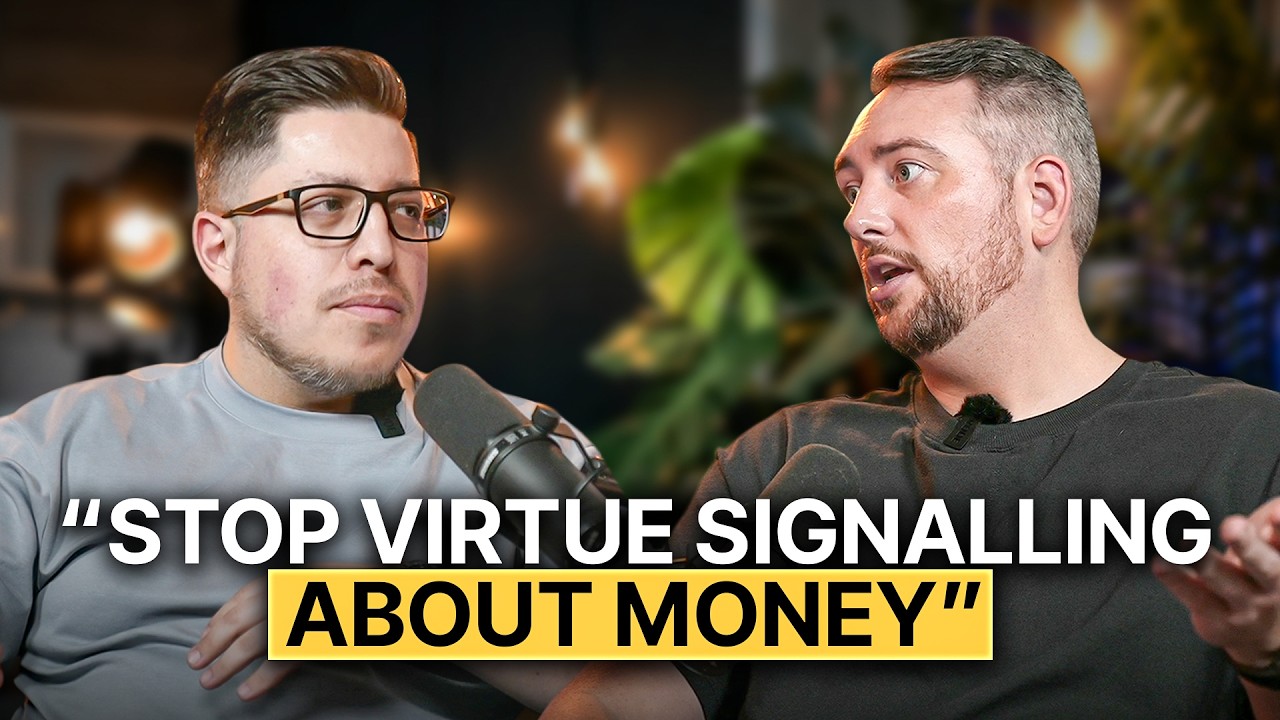
Haynes reveals his retirement math requiring $2.4M annual investment, explains why 100-300K/month entrepreneurs stall out, and breaks down the concentrated messaging strategy that took show rates from 40% to 70%
Jeremy Haynes sat down for an unfiltered conversation about a message nobody else seems willing to champion: getting seriously rich matters, and most entrepreneurs are delusional about how much money they actually need. According to the US government, businesses earning under $40 million annually still qualify as “small.” Million-dollar months, Haynes argued, aren’t aspirational targets for outliers. They’re baseline requirements for anyone serious about long-term wealth.
The conversation covered everything from why 100-300K monthly entrepreneurs consistently stall to how Haynes calculated he needs to invest $200,000 per month for 20 years just to retire comfortably. His framework challenged the virtue signaling around money and laid out specific tactics for breaking through plateaus, mastering paid advertising, and building webinar strategies that actually scale.
Why Money Dictates Every Decision You Make and Pretending It Does Not Hold You Back
Haynes opened by addressing what he sees as the core delusion holding entrepreneurs back: pretending money doesn’t control their decisions.
“I realized that nobody out there was advocating for why money matters a ton,” he explained. Everyone virtue signals about having bigger missions or operating from higher purpose. But when Haynes looked at what actually moved the needle for his clients over years of coaching, the answer was consistent. Going bigger was always the solution.
He pointed out that back in the 1800s, over 70% of Americans were small business owners. Now that number sits below 6%. The path to wealth has narrowed, but the internet and AI have made business ownership more accessible than ever. The problem isn’t capability. It’s mindset.
“Money dictates every decision you make,” Haynes said bluntly. Bank balances control choices in real time, not personal values or stated priorities. Once he became okay with wanting what he wanted and stopped apologizing for caring about wealth, everything shifted.
Why You Need to Invest Two Hundred Thousand Per Month for Twenty Years to Retire Comfortably
Haynes walked through the specific calculation that redefined how he thinks about income targets. Using the SEC’s compound interest calculator on investor.gov, he plugged in $200,000 monthly contributions over 20 years at a 10% annualized return, matching the S&P 500’s historical average.
The result: roughly $138 million accumulated by age 45. Applying the 4% withdrawal rule and factoring in 20% long-term capital gains taxes, that translates to a couple hundred thousand dollars monthly in retirement income. But there’s a catch. Dollar erosion over two decades means today’s purchasing power won’t match future dollars.
Here’s the part most people miss. To invest $200,000 per month actually requires earning $280,000 monthly after taxes. Even in a state like Florida with no state income tax, the highest federal bracket still demands about $80,000 monthly just to cover the tax burden on that investment amount.
“You technically have to sustain that over the course of 20 years,” Haynes noted. Most entrepreneurs making 100-300K monthly think they’ve arrived. They’re not even close to funding the retirement lifestyle they imagine.
Why Entrepreneurs Making One Hundred to Three Hundred Thousand Per Month Stall Out and Stop Growing
Haynes identified a clear pattern at different income levels. Entrepreneurs earning 100-300K monthly hit a dangerous zone. They can finally take care of their current selves without thinking about prices. They fly domestic first class, buy clothes without budgeting, maybe hire some help around the house.
But they’re not investing. They’re not helping anyone outside their immediate circle. They’re selfishly benefiting only themselves in the present moment, ignoring their future self entirely.
“Those guys start to stall out,” Haynes explained. They lose the aggressive action that got them there in the first place because they feel comfortable. The discomfort that drove early growth disappears.
Entrepreneurs at 300-750K monthly start reaching self-actualization. They want to unlock more potential and begin tapping into new motivational drivers. Million-dollar-month operators have completely different reasons activating them. Multiple factors make them feel small constantly, creating sustained motivation to keep scaling.
The interesting part is how responsibility plays into this. As people age and accumulate obligations, they often view increased responsibility as an anchor preventing risk. Haynes flipped that logic. “If you earned more, you’d be able to risk more comfortably.”
Why Paid Leads Are Not Garbage You Just Have Not Learned Concentrated Messaging Yet
One of Haynes’s most pointed lessons addressed the persistent complaint that social media leads are garbage compared to organic leads. His diagnosis was simple: most entrepreneurs are terrible at sales and even worse at concentrated messaging.
Organic leads work because they consume months of content before buying. Someone might watch five months of YouTube videos, consuming hours of 20-minute to hour-long presentations. By the time they’re ready to convert, they’re a laydown deal.
Paid ads flip that sequence. The call happens first. The lead arrives cold, uneducated, with unknown interest levels. Most entrepreneurs try running the same call funnel that works organically and wonder why paid traffic fails. They’re missing the entire back-end selling system.
“You have to learn to concentrate a message,” Haynes said, comparing it to concentrated coffee. You can’t deliver five months of content in the two to three days before a sales call. But you can compress the core message into a single sentence, a one-minute video, or a two-minute clip that creates the same resonance.
When entrepreneurs fail at paid advertising, they’re really admitting they haven’t mastered which moments matter, how to stack multiple touchpoints, and where to deploy concentrated messaging across confirmation pages, email sequences, retargeting, and setter outreach.
Haynes shared a recent example from his Inner Circle. A member named Sam increased show rates from 40% to 70% using pain-based messaging after a weekly group call. The strategy revolves around taking prospects to “the pit,” surfacing something they’ve only heard in their own heads and saying it out loud for the first time.
“Messaging can sometimes make the difference,” Haynes noted. But it’s not the only lever. Sometimes it’s back-end selling systems. Other times it’s correcting how AI and large language models frame the business in buyers’ minds. One client sold products at $17,000 and $26,000. When prospects Googled pricing, Google’s AI overview pulled a decade-old podcast and estimated costs at $5,000 to $7,000. Prospects showed up with completely wrong anchors.
How to Run Weekly Cold Webinars and Monthly Warm Webinars Without Mixing Audiences to Pad Stats
When the conversation turned to webinars, Haynes laid out the critical distinction between cold and warm audience approaches. The host mentioned planning 24 webinars for the year split between both audiences.
Haynes immediately recommended increasing cold frequency. “You could typically do a weekly cold audience webinar,” he explained, versus once monthly for warm audiences unless social presence is growing rapidly. The math matters. Twelve webinars per year to a warm audience represents just 3.2% of the year.
Here’s where most people mess up. They mix cold and warm audiences in the same webinar to pad stats. Haynes didn’t hold back. “When you mix cold and warm together, you’re measuring your dick length from your ass. It’s not the real length and you know it.”
Separating the two completely reveals what messaging cold audiences actually need versus warm. Reminder sequences differ. Pre-webinar emails differ. The entire presentation structure might require different approaches.
On webinar offers specifically, Haynes broke down how structure impacts scaling ability. If someone spends $20,000 on ads, closes 20 people at $1,000 monthly plans, they break even. Scaling the next month means fronting cash.
But if two people pay in full at $15,000 each and ten people take the payment plan at $1,000 monthly, suddenly there’s $40,000 collected. Now there’s room to sacrifice some return on ad spend toward growth and punch the next webinar higher.
“I’d rather have a two to one ROAS spending $500,000,” Haynes said, comparing it to 20 to one ROAS at $1,000 spend. Volume beats efficiency when scaling is the priority. Most entrepreneurs test their way into poverty because they optimize for metrics that keep them small.
Haynes walked through the “onion pitch” concept, where you pitch the preferred outcome first, handle objections and risk reversals, then peel back and offer alternatives. Payment plans. Funding options. Drop sells. Hermozi’s $100M launch used this exact structure because his audience was large enough that pitching one way would miss entire demographics.
Haynes closed with a simple truth about becoming a world-class marketer. He got there by spending a tremendous amount of money. “There’s no other way to get up the elevator besides just standing on more money that you’ve spent and reflecting on those lessons.” It’s like standing on different floors of a Miami skyscraper. He can describe the 90th-floor view from where he stands now, but everyone else starts on the ground floor. The only way up is burning cash, taking action, and accumulating compounded experience. After over a decade and helping hundreds of high-level entrepreneurs across dozens of niches, his perspective keeps expanding daily. The lesson isn’t complicated. Go spend money. Take action. Reflect on what happens. Pursue new information to unlock ideas you don’t even know exist yet. Treat yourself like a computer needing a software update, and keep feeding in new data until the entire worldview shifts.
Get my content first on Google
Add jeremyhaynes.com as a preferred source and Google shows my articles more prominently in your search results, including AI Overviews and AI Mode.


Jeremy Haynes
Owner and CEO of Megalodon Marketing
Jeremy Haynes is the founder of Megalodon Marketing. He is considered one of the top digital marketers and has the results to back it up.