High Ticket Closing Psychology: Handle Objections And Lift Show Rates

I hope you enjoy reading this blog post. If you want my team to just do your marketing for you, click here.
Author: Jeremy Haynes | Published April 30, 2026
Earnings Disclaimer: You have a .1% probability of hitting million-dollar months according to the US Bureau of Labor Statistics. As stated by law, we can not and do not make any guarantees about your own ability to get results or earn any money with our ideas, information, programs, or strategies. We don’t know you, and besides, your results in life are up to you. We’re here to help by giving you our greatest strategies to move you forward, faster. However, nothing on this page or any of our websites or emails is a promise or guarantee of future earnings. Any financial numbers referenced here, or on any of our sites or emails, are simply estimates or projections or past results, and should not be considered exact, actual, or as a promise of potential earnings – all numbers are illustrative only.
Most people think high-ticket closing is about having the perfect script or knowing the right closing technique. That’s not it at all.
The real game is psychology. And most of the battle is won or lost before you ever get on the call.
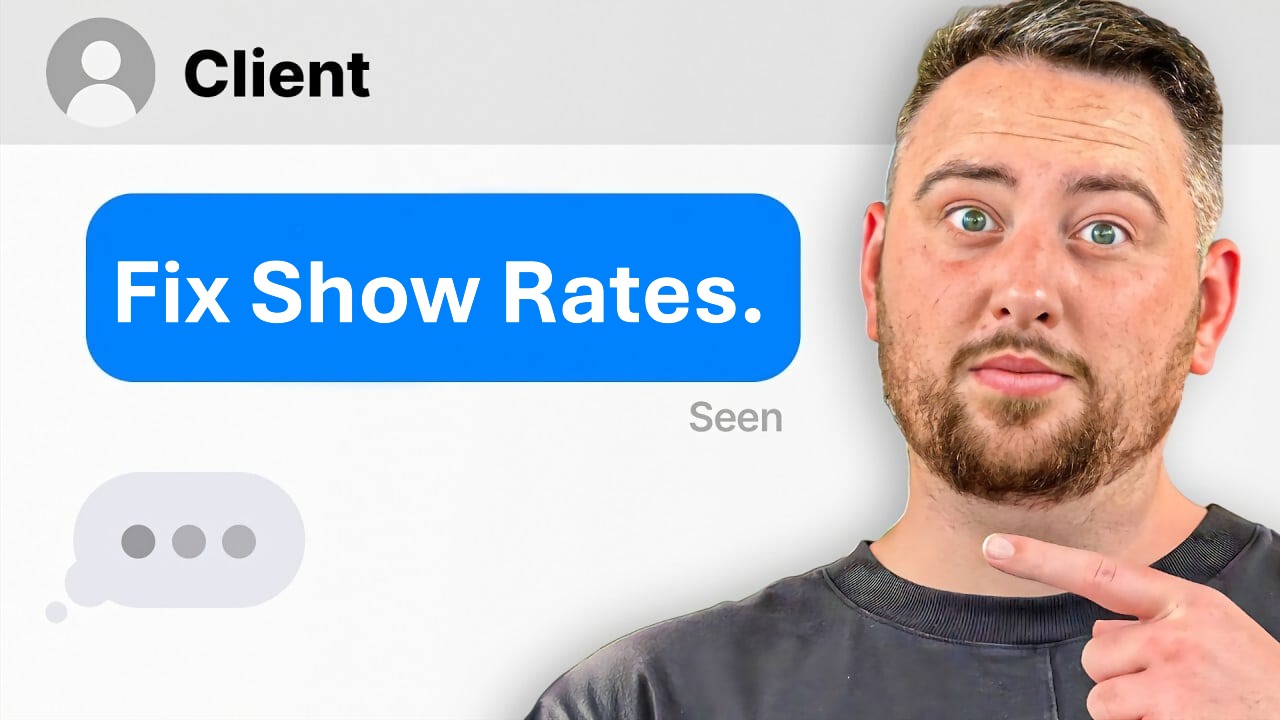
Here’s what I mean. If you’re booking sales calls but people aren’t showing up, you have a psychology problem. If people are showing up but not buying, you have a different psychology problem. And if you don’t understand the difference, you’re going to keep spending on ads and wondering why your funnel doesn’t convert.
Let me break down exactly what’s happening in your prospect’s brain from the moment they book a call to the moment they either buy or bail. And more importantly, what to do about it.
In my experience working with agency operators through our 7-week live comprehensive training, the gap between booking and closing is where most revenue gets lost. Not in the ads, not in the offer. In the psychology between those two points.
7 weeks. Real frameworks. Covering copywriting, funnels, paid ads, and conversion systems.
Why People Book Sales Calls but Don’t Show Up
Here’s what most people miss.
If you’re running a high-ticket funnel and getting half your booked calls to show, you’re leaving money on the table. Not just some of your potential revenue. A substantial portion of it.
The gap between booking and showing is almost entirely emotional. People book calls when they’re at a peak emotional state. They just watched your VSL or read your sales page or got off a discovery call with your setter. They’re fired up. They can see the possibility.
Then reality sets in.
Between the time they book and the time the call happens, doubt creeps in. “Can I really afford this?” “What if it doesn’t work for me?” “Maybe I should just figure this out on my own.” “They’re probably just going to hard-sell me.”
This is what I call commitment decay. The motivation that got them to book starts degrading immediately unless you do something to reinforce it.
Most people do nothing. They send a calendar confirmation and maybe an automated reminder email. That’s it.
And then they wonder why their calls don’t show.
According to research on the commitment and trust theory of online purchase decisions, trust and commitment are the two variables that most directly predict whether a buyer follows through, and both take a measurable hit when nothing reinforces the relationship between the moment of interest and the moment of action. This is a documented pattern in high-consideration purchases.
How to Build a Pre-Call Psychology Stack
If you want better show rates, you need to build what I call a pre-call psychology stack. This is a series of touchpoints between booking and showing that reinforces commitment and builds anticipation instead of letting doubt fester.
First thing is your application. Most people treat the application like a formality. Just collect contact info and maybe ask a couple qualifying questions.
Wrong approach.
Your application should be a commitment device. You want questions that force the prospect to confront their pain and articulate their desired outcome in their own words. This creates cognitive consistency pressure. Once they’ve written down their goals and admitted what it’s costing them not to solve this problem, not showing up creates internal conflict.
Here are the questions I use: “What’s this costing you every month you don’t solve it?” “On a scale of 1-10, how committed are you to changing this in the next 90 days?” “What have you already tried and why didn’t it work?”
These aren’t just qualifying questions. They’re psychological anchors.
Next is the confirmation video. Immediately after someone books, they should get a personalized video from you or your closer. This doesn’t have to be custom for every single person, but it should feel personal. Even a 60-second Loom where you acknowledge their application, express genuine interest in their situation, and set expectations for the call.
This does two things. One, it activates reciprocity. You gave them something personal, so they feel a subtle obligation to reciprocate by showing up. Two, it humanizes the interaction. You’re not just a calendar link anymore. You’re a real person who’s actually paying attention to them.
Then there’s the homework play. This is one of the most effective show rate boosters I’ve found. Between booking and the call, assign them a small task. “Watch this 12-minute training before our call so we can skip the basics and go deep on your specific situation.”
This does three things. It filters out people who aren’t serious. If they won’t watch a 12-minute video, they’re not going to implement a real system. It pre-frames the call as high-value. And it creates sunk-cost investment. Once they’ve done the homework, they’re way more likely to show because they’ve already invested time.
Your reminder sequence matters too. SMS outperforms email by a mile for show rate reminders. Here’s the cadence that works: confirmation text immediately after booking, reminder 24 hours before with a quick value-add like a testimonial, another reminder 2-3 hours before with the Zoom link, and a final check-in 5-10 minutes before if they haven’t joined yet.
The key is to make these reminders personal. Pull their specific stated goal from the application and reference it in the message. “Looking forward to talking about how to [their specific goal] tomorrow at 2pm.” This signals that you’re paying attention, even if the sequence is partially automated.
Last piece is scarcity of access. Frame the call as limited and earned, not freely available. “Based on your application, you’ve been approved for a strategy call” hits different than “Here’s your calendar link.” It shifts the dynamic from “they’re trying to sell me” to “I earned access to this.”
What Actually Happens in Your Prospect’s Brain When They Consider Buying
Let’s talk about what’s actually happening in your prospect’s brain when they’re considering a high-ticket purchase.
High-ticket decisions trigger loss aversion way more intensely than small purchases. When someone’s looking at spending several thousand dollars, their brain processes that through the amygdala, which is threat detection, not just the prefrontal cortex, which is logic.
There’s actual neuroscience research on this. Behavioral economics research on the pain of paying shows that handing over money activates the insular cortex, the same region tied to the experience of physical pain and disgust, and that this pain signal competes directly against the reward centers weighing the pleasure of acquisition. Higher price equals more pain equals more resistance. This is why payment plans work. They reduce the per-instance pain signal.
But here’s what most people miss. At the high-ticket level, prospects aren’t just buying a product or service. They’re deciding to become a different person. The sale is really about whether they believe they can become that person.
Think about it. If someone’s buying a high-end coaching program to scale their business, they’re not just buying the coaching. They’re deciding to become the kind of person who runs a larger operation instead of staying where they are. That’s an identity-level decision.
And the biggest competitor isn’t another offer. It’s doing nothing. Status quo bias is real. People disproportionately prefer their current state, even when change is objectively better. Your job as a closer is to make the pain of staying the same greater than the pain of change.
This is what we cover in depth in our Inner Circle mastermind, where operators learn to build systems around actual buyer psychology instead of scripts.
Results are not typical. Your results will vary and depend entirely on your individual capacity, business experience, expertise, and level of desire. There are no guarantees concerning the level of success you may experience. The testimonials and examples used are not intended to represent or guarantee that anyone will achieve the same or similar results. We don’t believe in get-rich-quick programs. We believe in hard work, adding value and serving others. As stated by law, we can not and do not make any guarantees about your own ability to get results or earn any money with our information, courses, programs, or strategies.
How to Handle Objections Without Sounding Like You’re Handling Objections
Objections aren’t rejections. They’re requests for help resolving internal conflict.
There are four universal objections in high-ticket sales. Money, time, spouse or partner, and “I need to think about it.” Everything else is a variation of these four.
But here’s the thing. What they say is usually not what they actually mean. The surface objection is different from the root objection.
When someone says “I can’t afford it,” what they often mean is “I’m not convinced this will work for me” or “I’m afraid of making the wrong decision.” When they say “I need to talk to my spouse,” sometimes that’s real, but often it means “I’m not confident enough in this to defend it to someone else.”
The framework I use is isolate and resolve.
First, acknowledge. “I totally understand, and honestly I’d be concerned if you didn’t think carefully about this.” You’re validating their concern, not dismissing it.
Second, isolate. “Just so I understand, if money weren’t a factor, is this something you’d want to move forward with?” This separates the real obstacle from the smoke screen. If they say yes, you know the objection is real. If they hesitate, there’s something else going on.
Third, resolve the actual objection, which is often different from what they first said.
For money objections, the most effective reframe is cost of inaction. Instead of justifying your price, redirect attention to what they’re already losing by not solving the problem.
“You mentioned you’re leaving money on the table because of this problem. The real question isn’t whether you can afford this. It’s whether you can afford another year of that gap.”
This works because of loss aversion. Research on loss aversion, tracing back to Kahneman and Tversky’s original prospect theory work, shows people experience the pain of a loss as psychologically about twice as powerful as the pleasure of an equivalent gain. You’re reframing the purchase from a cost to a prevention of loss.
For the spouse objection, never dismiss it. Validate it. Then offer two paths. One, invite the partner to a brief three-way call. Two, equip your prospect to sell the partner by giving them a clear summary they can relay.
I usually ask, “When you talk to your wife, what do you think her main concern will be?” Then we role-play the conversation and I arm them with answers. Often this objection is actually a confidence issue in disguise. They’re not sure they believe in it enough, so they defer to the partner.
The “I need to think about it” objection requires deconstruction. “Totally fair. Can I ask, what specifically do you want to think about? Is it more about the financial side, whether this is the right fit, or something else?”
This forces specificity. “I need to think about it” is vague by design. It’s an escape hatch. Getting them to name the actual concern gives you something you can work with.
If they truly can’t articulate it, it’s usually fear of making the wrong decision. Address that directly. “It sounds like you believe this could work, you’re just not sure. What would need to be true for you to feel confident?”
Why You Should Address Objections Before Your Prospect Even Raises Them
Here’s something most closers get wrong. They wait for objections to come up and then try to handle them reactively.
Better approach is to address objections before the prospect raises them. This is way more effective because once an objection is verbalized, the prospect feels social pressure to defend it. It becomes their position.
But if you handle it before they say it, they feel understood instead of sold.
During your pitch, address the top three or four objections directly. “Most people I talk to have two concerns at this point. The investment and whether they’ll actually have time to implement. Let me address both.”
Then you handle them while you still have momentum, not after you’ve lost it.
This is what I call seeding. You’re planting the answers before the questions even come up. And it works because you’re controlling the frame instead of reacting to theirs.
This same pre-framing logic works even better when you push part of it into async follow-up. I’ve written separately about how text and email closing gives prospects room to process an objection without the on-the-spot pressure of a live call, which is often when the real “yes” actually happens.
How to Structure Your Sales Call Around Psychology, Not Scripts
The structure of your sales call matters just as much as what you say.
First thing is discovery. You need to establish three things. Where are they now? Where do they want to be? What’s been stopping them?
The gap between current state and desired state is the sale. The bigger and more emotionally vivid you make that gap, the more urgency they feel.
But here’s the critical part. The prospect has to articulate the gap themselves. If you tell them, it’s a pitch. If they say it, it’s their truth.
Ask questions that make them confront the cost of inaction. “What happens if nothing changes in the next six months?” “What’s this costing you, not just financially but in terms of stress, time, opportunity?”
Let them talk. In my experience, top performers talk less than half the time and listen more. In high-ticket, you should probably listen even more during discovery.
Then there’s future pacing. This is where you walk them into their future state in vivid detail. “Imagine it’s 90 days from now. You’ve implemented this system. How does that change your day-to-day? What does that mean for your family, your stress level, your options?”
This activates the brain’s reward system and makes the future state feel real and attainable. The brain struggles to distinguish between vividly imagined experiences and real ones. So when you paint that picture clearly enough, it reduces the perceived risk of the investment.
Your tonality and pacing matter too. Slowing down during key moments signals confidence. Speeding up signals excitement. Dropping your tone signals authority.
And here’s something counterintuitive. Detachment improves close rates. If you’re needy or desperate for the sale, prospects can feel it. The person with less attachment to the outcome holds more perceived power.
Saying “I’m not sure this is the right fit for you” is paradoxically more effective than “This is perfect for you.” It triggers reactance and makes them want to prove they’re a fit.
Building genuine trust before you even reach this stage of the call makes all of it easier. I go deeper on the specific trust assets that shorten high-ticket sales cycles in a separate piece, but the short version is that a prospect who already trusts you walks into discovery with less to defend.
When the Problem Isn’t Your Closing, It’s Your Offer or Your Leads
Sometimes the problem isn’t your closing technique. It’s your offer.
If you’re getting tons of objections, if people are constantly saying they need to think about it or they can’t afford it, you might have an offer problem, not a closing problem.
An irresistible offer reduces objections dramatically. If the offer is compelling enough that people feel like they’d be making a mistake by saying no, you don’t have to be a master closer.
This is about value stacking, risk reversal, and guarantees. It’s about making the dream outcome clear, increasing the perceived likelihood of achievement, and reducing the time and effort required. Getting more of these calls to end in a pay-in-full close instead of a payment plan usually traces back to this stage, not the closing conversation itself.
Sometimes it’s also a lead quality problem. If you’re closing at a rate that feels lower than it should be, look upstream. Are you attracting the right people? Is your setter qualifying properly? Are you talking to people who actually have the problem you solve and the budget to solve it?
You can’t close your way out of a bad offer or bad leads. Fix those first.
Already making money? See what it takes to make a lot more.
What to Do After Someone Says Not Yet
Not everyone buys on the first call. That’s fine. What you do after a “not yet” matters.
Follow up without desperation. If someone says they need to think about it and you’ve handled the objection properly, give them a clear next step. “Let’s reconnect in 48 hours. I’ll send you a quick summary of what we discussed and you can let me know if you have any other questions.”
Then actually send that summary. Make it clear, logical, and easy for them to share with a spouse or business partner if that’s part of the equation.
But know when to let go. If someone’s not a fit or genuinely can’t afford it, pushing harder doesn’t help anyone. You’re looking for people who are ready, willing, and able. Two out of three isn’t enough.
The psychology of high-ticket sales is about understanding what’s happening in your prospect’s brain at every stage. From the moment they book to the moment they buy or don’t.
Most of the game is won before you ever get on the call. If you fix your show rates, you fix your revenue problem. If you understand objections as requests for help instead of rejections, you handle them better. And if you build your offer and your process around real psychology instead of hype, you close more and serve better.
That’s the difference between a closer who converts at one rate and one who converts at a higher rate. It’s not the script. It’s the understanding of what’s actually happening under the surface.
If you’re serious about building systems that work around actual buyer psychology, our 7-week live comprehensive training covers these frameworks in depth. We work with operators who want to build closing systems that don’t rely on being the best talker in the room.
Results are not typical. Your results will vary and depend entirely on your individual capacity, business experience, expertise, and level of desire. There are no guarantees concerning the level of success you may experience. The testimonials and examples used are not intended to represent or guarantee that anyone will achieve the same or similar results. We don’t believe in get-rich-quick programs. We believe in hard work, adding value and serving others. As stated by law, we can not and do not make any guarantees about your own ability to get results or earn any money with our information, courses, programs, or strategies.
Get my content first on Google
Add jeremyhaynes.com as a preferred source and Google shows my articles more prominently in your search results, including AI Overviews and AI Mode.


Jeremy Haynes
Owner and CEO of Megalodon Marketing
Jeremy Haynes is the founder of Megalodon Marketing. He is considered one of the top digital marketers and has the results to back it up.