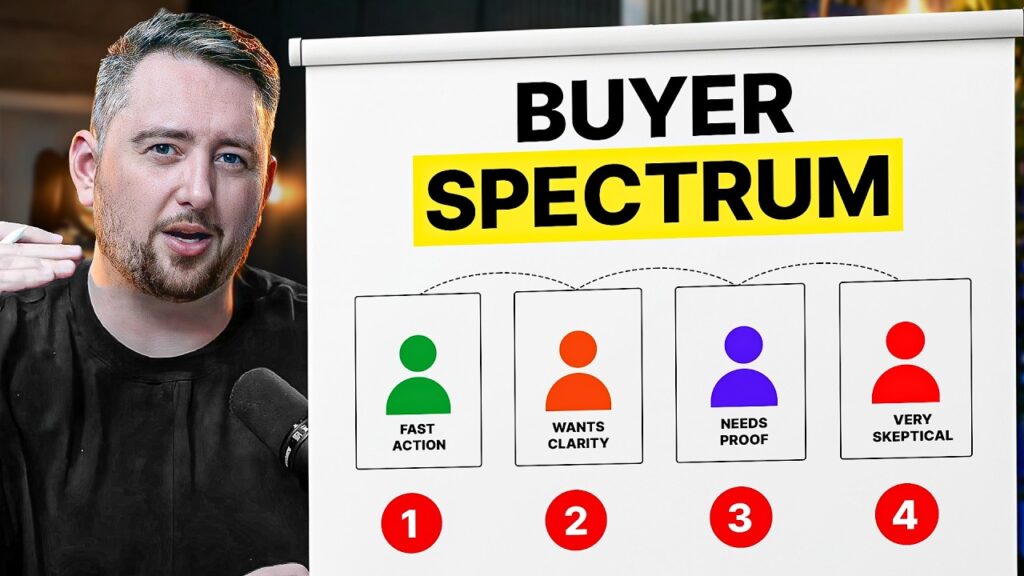
Interest Spectrum
The interest spectrum is the range from completely disinterested to highly interested that prospects fall across when it comes to your offer or solution. On one end, people don’t even know they have a problem you solve. On the other end, they’re actively searching for exactly what you offer and ready to buy immediately. Most of your market sits somewhere in the middle with varying degrees of problem awareness, solution awareness, and urgency to solve it. Understanding where someone falls on the interest spectrum determines what content they need, how you should communicate with them, and whether they’re worth immediate sales effort or need nurturing first.
Why One Message Doesn’t Fit All
The biggest mistake in marketing is creating one message and blasting it to everyone regardless of where they fall on the interest spectrum. Someone at the low end needs you to create awareness and desire they don’t currently have. Someone in the middle needs help understanding why your solution is better than alternatives. Someone at the high end just needs clear next steps and reasons to buy now versus later. When you match your message to their position on the spectrum, conversion rates increase dramatically because you’re giving people exactly what they need rather than forcing everyone through the same generic pitch.
Moving People Up The Spectrum
Your marketing should be designed to systematically move people up the interest spectrum from not interested to highly interested. This happens through educational content that creates awareness, proof and case studies that build belief, comparison content that positions your solution favorably, and urgency mechanisms that convert interest into action. The businesses that scale efficiently understand that most people enter at the bottom of the spectrum and need time and multiple touch points to move up. They’re not trying to immediately convert cold audiences. They’re building systems that warm people up progressively until they’re ready to buy.