
The Customer Handoff That Makes a Business Partnership Useful

I hope you enjoy reading this blog post. If you want my team to just do your marketing for you, click here.
Author: Jeremy Haynes | Published October 14, 2026
Earnings Disclaimer: You have a .1% probability of hitting million-dollar months according to the US Bureau of Labor Statistics. As stated by law, we cannot and do not make any guarantees about your own ability to get results or earn any money with our ideas, information, programs, or strategies. We don’t know you, and your results in life are up to you. We’re here to help by giving you our greatest strategies to move you forward, faster. However, nothing on this page or any of our websites or emails is a promise or guarantee of future earnings. Any financial numbers referenced here, or on any of our sites or emails, are simply estimates or projections or past results, and should not be considered exact, actual, or as a promise of potential earnings – all numbers are illustrative only.
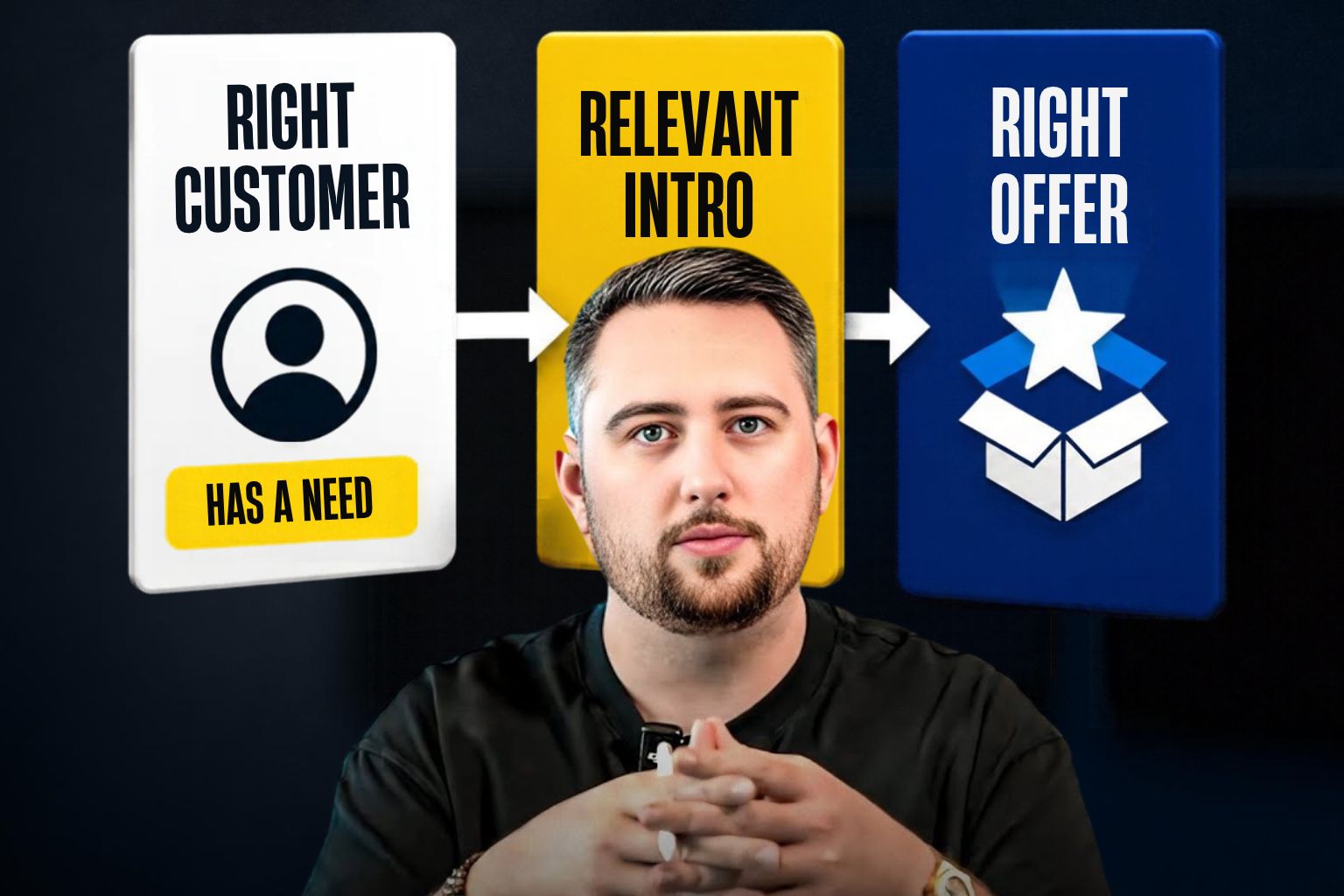
Serving the same type of customer does not automatically make two businesses good partners. Strategic partnerships with complementary businesses need a clear handoff. I want to know what happened in the customer’s business that makes your offer useful now, and whether the other company is in a position to recognize that moment.
Without that answer, you can spend time planning content swaps and referral arrangements that send you people who are interested but nowhere near the decision you help with. The business category looks right. The timing is wrong. Your sales team ends up explaining why the person needs a problem they do not have yet.
Start with the customer’s next useful step. Then look for a business that already sees that need developing. That gives the partnership a reason to exist beyond the fact that both owners would like more leads.
7 weeks. Real frameworks. Covering copywriting, funnels, paid ads, and conversion systems.
Why the Same Customer Can Still Be the Wrong Fit
Two companies can serve similar customers while helping them at different stages. A shared industry tells you less than the decision the customer is trying to make.
Look at who buys your offer and why they buy it. What situation made the purchase relevant? What had they already attempted? What needed to be in place for them to use the service?
Now compare that with the partner’s customers. Are those people dealing with the same situation, or do they merely have the same job title? A founder exploring an idea and a founder trying to improve an established sales process may both appear on the same audience list.
That difference matters when you choose the collaboration. The first person may need education and time. The second may be ready to discuss implementation. Sending both into the same conversation can make the partnership look weak when the real issue is the handoff.
A complementary offer needs a complementary moment in the customer’s journey. The fact that the businesses do different work is only part of the fit.
Borrowed credibility can help someone take you seriously. It still leaves you responsible for showing why your offer applies to their situation. The wider collaboration approach needs that customer-level connection to produce a useful next step.
What Makes Your Offer Useful After the Partner’s Work
Identify the change that makes your offer useful after the partner has helped the customer. It should be something the customer can recognize without being pushed into another purchase.
Maybe the customer has put a tool into use and now needs help with the process around it. Maybe a planning engagement has made an execution problem clear. The relationship becomes useful when the next service addresses a real need left by that progress.
Describe that need in plain language. What is the customer struggling to do? What part can the partner handle? What part would your business take responsibility for?
Keep the offers distinct. If the partner already provides the service you want to introduce, the issue may be a competitive overlap rather than a complementary handoff. Discuss that directly before presenting a united explanation to customers.
Do not manufacture a missing step to justify the arrangement. The customer’s original purchase should remain useful on its own terms. Your offer should make sense because another need exists, rather than because the first business withheld something essential.
A partner webinar can explain how the services relate. Before choosing that format, make sure you can describe the relationship clearly without the event doing all the persuasion.
How to Recognize a Customer Who Is Ready
A customer is ready for an introduction when there is a relevant need and they are open to discussing help. Completion of the partner’s service alone does not prove either.
Ask the partner what they hear from customers who reach that point. Do people request help with a specific task? Do they explain a limitation in the current setup? Are they already looking for another service?
Those conversations give you better information than a list of everyone who has purchased. They reveal the language customers use and the situation behind the potential introduction.
You can record the stage in the system you already use. HubSpot supports lifecycle stages for contacts and companies. A CRM label can organize the record, but the label is only useful when the team agrees on what it means.
Keep source, current need, and readiness separate. Someone can be a customer of the partner without being a qualified opportunity for you. Someone else may be ready to talk before they finish every part of the first engagement.
Give the partner a plain description of who belongs in the conversation. Avoid a complicated scoring exercise if a specific customer problem would do the job more clearly. The person making the introduction should understand the reason for it.
Why the First Conversation Should Test the Handoff
The first conversations should tell you whether the proposed handoff exists in practice. Interest between two business owners is not the same as interest from their customers.
Listen for whether the person recognizes the problem you expected. Can they explain what they need help with? Do they understand why they were introduced? Does your offer address that need?
If every conversation begins with confusion, inspect the introduction. The partner may be describing your service differently from how you deliver it. You may also be assuming customers have progressed further than they have.
Do not rush to fix that with a discount or a bigger referral payment. First find the point where the customer’s experience and your expectation diverge. A pricing incentive will not necessarily make an irrelevant next step useful.
The warm introduction needs enough context that both sides understand the conversation. Ask the customer before sharing their information, and keep the context to what is appropriate for that introduction.
For the marketing education around offers and sales processes, explore Master Internet Marketing, my 7-week live comprehensive training. The particular partner handoff still needs to be tested against the customers and services involved.
Results are not typical. Your results will vary and depend entirely on your individual capacity, business experience, expertise, and level of desire. There are no guarantees concerning the level of success you may experience. The testimonials and examples used are not intended to represent or guarantee that anyone will achieve the same or similar results. We don’t believe in get-rich-quick programs. We believe in hard work, adding value and serving others. As stated by law, we can not and do not make any guarantees about your own ability to get results or earn any money with our information, courses, programs, or strategies.
What the Customer Should Hear From Both Businesses
Both businesses should describe the same next step and its purpose. The customer should not receive one promise from the partner and a different offer from your sales team.
Agree on what your service covers and who it fits. Share accurate materials the partner can use to understand the offer. Correct claims that go beyond what the business can support.
Also make the relationship clear. If there is compensation behind a recommendation, review the relevant disclosure requirements. The FTC explains why unexpected material connections can matter to how a consumer evaluates an endorsement.
A paid relationship can still produce a useful introduction. The explanation needs to be honest about the offer and the relationship. Do not invent a personal success story for the partner to repeat.
Let the customer understand what happens after they express interest. Will someone contact them? Will they choose an appointment? Will they receive information first? The handoff should fit the decision rather than force every person into the same path.
The introduction should make the next conversation easier to understand. If the customer has to reconstruct why the businesses connected them, the partnership has left important work undone.
How to Tell Whether the Handoff Is Actually Useful
Evaluate the customer conversations and the outcomes after the introduction. Counting names sent across will tell you activity, while leaving fit and follow-through unresolved.
Record where the introduction came from, the need described, the next step accepted, and what happened afterward. Keep declined or premature introductions visible too. They help explain where the proposed connection needs improvement.
If people arrive through a shared resource or event, Google Analytics campaign parameters can identify tagged traffic sources. Connect that information to the relevant sales records rather than treating a visit as a qualified buyer.
Watch the difference between the partner’s explanation and the buyer’s explanation. If those consistently differ, revisit the readiness criteria. The partner may be making a sincere recommendation before the customer is in a position to use it.
A refusal is useful information when it tells you the offer was early, irrelevant, or already covered elsewhere. You do not need to push through every objection to make the partnership look productive.
Give the partner enough appropriate feedback to improve future introductions. Respect the customer’s privacy and avoid sending unnecessary details. The goal is to understand the handoff, rather than create a shared database of everything each business knows.
When to Deepen the Partnership or Change the Connection
Deepen the relationship when the customer need, introduction, and delivery hold up in practice. If the connection is weak, change it before adding more promotion.
Sometimes the right customers are there but the next step is too large. They may need a useful explanation before a conversation. Sometimes the offer is relevant later, after work the partner has not completed yet.
You may also find that the audiences share a category but very little buying intent. That is a reason to reconsider the relationship. More content or a larger campaign can send more people through the same mismatch.
Keep the commercial arrangement separate from this fit decision. Agreeing on how to reward introductions does not prove the introductions will be relevant. Once the handoff makes sense, work through the responsibilities and terms with the appropriate review.
A relationship can also become too important to the lead flow. Keep other acquisition routes visible so one partner’s change in priorities does not become your entire growth plan. A referral-heavy acquisition mix has different constraints from a channel you can directly fund and manage.
Partnerships can complement paid traffic and content. Treat them as a real contribution to the business, with costs and work attached, rather than describe them as free leads that will keep arriving indefinitely.
Already making money? See what it takes to make a lot more.
Build Around the Next Problem the Customer Recognizes
A useful complementary partnership gives the customer a clear next step at a relevant moment. Start with that moment before choosing a webinar, creating a shared resource, or agreeing to exchange introductions.
You should be able to explain what the partner helps with, what changes afterward, and why your offer becomes useful. Then test whether customers recognize that need and want the introduction. Their response gives you something concrete to improve.
Make the relationship easy for the customer to understand. Each business should deliver its own promise, the introduction should be optional, and the next offer should earn its place by addressing a real problem.
Operators considering my Inner Circle can review the current mastermind details if they want a peer setting for business conversations. Bring the actual buyer journey when discussing a partnership. A shared industry is less useful than a clear account of who needs help and why now.
Results are not typical. Your results will vary and depend entirely on your individual capacity, business experience, expertise, and level of desire. There are no guarantees concerning the level of success you may experience. The testimonials and examples used are not intended to represent or guarantee that anyone will achieve the same or similar results. We don’t believe in get-rich-quick programs. We believe in hard work, adding value and serving others. As stated by law, we can not and do not make any guarantees about your own ability to get results or earn any money with our information, courses, programs, or strategies.
Get my content first on Google
Add jeremyhaynes.com as a preferred source and Google shows my articles more prominently in your search results, including AI Overviews and AI Mode.


Jeremy Haynes
Owner and CEO of Megalodon Marketing
Jeremy Haynes is the founder of Megalodon Marketing. He is considered one of the top digital marketers and has the results to back it up.