
How to Build Scalable Fulfillment System with 3 Percent Churn at Seven Figures Monthly

I hope you enjoy reading this blog post. If you want my team to just do your marketing for you, click here.
Author: Jeremy Haynes | Published November 17, 2025
Earnings Disclaimer: You have a .1% probability of hitting million-dollar months according to the US Bureau of Labor Statistics. As stated by law, we can not and do not make any guarantees about your own ability to get results or earn any money with our ideas, information, programs, or strategies. We don’t know you, and besides, your results in life are up to you. We’re here to help by giving you our greatest strategies to move you forward, faster. However, nothing on this page or any of our websites or emails is a promise or guarantee of future earnings. Any financial numbers referenced here, or on any of our sites or emails, are simply estimates or projections or past results, and should not be considered exact, actual, or as a promise of potential earnings – all numbers are illustrative only.
One question you’ll definitely have and rightfully so on your way to million dollar months or tacking on that next million month is fulfillment related questions. You’re going to want to be excellent and extremely efficient as you fulfill.
That way you can remain lean and high profit.
An illusion of a lot of smaller people who have never hit these kinds of numbers is that getting to a larger number isn’t going to be as profitable. And that’s a justification for those little small fries to stay small.
But as you grow, getting bigger can absolutely destroy you if you aren’t efficient and lean and trying to keep a few of the best practices that we’ll talk about today in mind as you start to fulfill when scaling up.
For all those who don’t know, my name’s Jeremy Haynes. Welcome if you’re new. All we talk about around here is cracking that first million a month or adding that next million a month.
We don’t make any income claims, though. We have no idea who you are and whether there’s any probability for you to go out there and make money with anything that we can teach and talk about.
So we don’t make any kind of claims. All we do is hand down lessons from people who have been there, done that. Everything is completely up to you.
The US Bureau of Labor Statistics claims that there’s a zero point one percent probability of ever hitting ten million dollars a year, let alone a million a month, which would obviously be a smaller probability.
So long story short, no income claims, no earning potential, just lessons.
And of course, if you’re already following along, welcome back. Absolute pleasure to have you here with us today. Without further ado, let’s get started.
If your business is already generating $100k+ per month, My Inner Circle is where you break through to the next level. Inside, I’ll help you identify and solve the bottlenecks holding you back so you can scale faster and with more clarity.
Real Churn Numbers: 3.5 Percent Annual Churn at $10K Monthly Recurring Offer
This question comes up quite frequently and I’ll use the context of what we do over here in my organization at Megalodon Marketing.
Allow me to go into a few different payment processors we have. I’m going to tell you my month-to-date churn rate.
First of all, in terms of the total quantity of people, there is one hundred sixty eight active subscribers on this specific offer. Last month’s churn was two point five six percent month to date.
Today’s churn in terms of today’s date, which is late October at this time I’m creating this, four percent total churn rate.
If I do our year to date, our year to date last year sat at eight point four five percent. This year’s churn rate is at four percent.
We are substantially more scaled up this year compared to what we were last year.
Just to put that in perspective, if we go to my all-time churn rate, our all-time churn rate again currently sits at that four percent. Generally, it sits at three point five.
According to industry research, the average B2B SaaS churn rate is 3.5%, with voluntary churn at 2.6% and involuntary churn at 0.8%, making our performance aligned with top-tier industry benchmarks.
To be clear, we had to kick out three new people. We had sixteen new people join a recurring offer that we have in a month, and I’d say three of those people were wrong. And we kicked them out. We refunded them as a result of that.
So that artificially inflated my churn a bit, but again, generally, we sit at about a three percent, three point five total churn.
Now to be clear, historically, it’s been higher because historically I didn’t have the lessons and the best practices that I’ve implemented into my business since.
So again, these lessons I’ve learned them from clients over the years who operate at scaled levels. And in addition to that, I’ve learned a few the hard way myself.
Digital Leverage: Why Digital Versions of You Scale Better Than Hiring More Staff
So the first thing I want to make extremely clear is digital leverage.
Now digital leverage, especially when we’re creating this right now, comes in all different shapes, form, and sizes. Let me be clear on a few of them.
First one that I have specifically for my offer is I call digital Jeremy. So right now while I sit here and talk to you, you’re interacting with digital Jeremy.
Obviously while I’ll create it in real time, I’m real life Jeremy, of course, but digital Jeremy is the one that you’re literally interacting with and learning from right now.
Really put that into perspective. Scroll down a little bit. And depending on the time that you consume this specific content, there may be dozens of views, there may be thousands of views, hopefully more than that.
But to be clear, that means that just like you sitting here right now, there’s however many other people have viewed this at the time you just saw that stat that have also interacted with digital Jeremy.
Real life Jeremy took time to sit down, capture this moment, and now it lives on forever as long as we keep that content online.
There’s a lot of power in that if you really think about it because there’s not just this one iteration of digital Jeremy that you’re sitting here consuming right now.
Think about how truly many digital Jeremys there are in this given moment. There’s digital Jeremy for every single piece of content that you can see on my channel literally right now.
There’s digital Jeremy in the form of tweets. Digital Jeremy in the form of the stuff we post on LinkedIn. I think LinkedIn’s a hellscape. I’ll never log into there.
Anyway, Digital Jeremy’s also on Instagram right now getting in front of high couple hundred thousand and maybe low millions of people over the course of a month.
Digital Jeremy is talking to people right now in all the course content and education company material that we have. Digital Jeremy is in written form in all our SOPs that people are probably sitting here reading literally right now while I sit here and talk to you.
Digital Jeremy is in our onboarding materials. That’s somebody who likely just bought is going through literally right now. Digital Jeremy is in the form of our emails holding somebody’s hand and walking them through something that they need to do.
Digital Jeremy comes in many different ways, but here’s what I do know. Digital Jeremy saves real life Jeremy from having to do all the things that Digital Jeremy’s doing right now at one time.
Really think about that. Because as soon as you do actually think about it and you put some serious thought into it, you’d put a lot more serious thought and time into it because of how much leverage there is just in that one action.
AI Clone of Yourself: 30K Messages, Thousands of Conversations, Saves Hundreds of Hours
One recent iteration and arguably one of my favorite iterations is incorporating what we call Jeremy AI into our different offers that we have.
I remember I think it was earlier this last week I was talking to somebody on a one-on-one call where they were asking me is having an AI clone of yourself valuable and worth the cost.
I answered with absolutely and then I started sharing my screen. And I’m not logged into that software on this, so I can’t show you. But maybe we can grab a screenshot and throw it in here for how much time it’s created, how many messages it’s answered, and how many conversations it’s had.
In terms of messages, if I’m not mistaken, I think it was in the thirty thousands. Again, I might be mistaken, but long story short, it was only a couple hundred users. It was like four hundred something users, I think, at the time that I last looked that were having active conversations with it.
In terms of the total conversations, that was in the low tens of thousands.
Really think about that. I’ve had that tool since February of this year while I sit here and create this. It’s been less than a year and it’s saved me from that amount of conversations. It’s saved me from that amount of messages.
In terms of that statistic that it claims of the time created, I assume that means literally time that it’s otherwise saved me that I would have otherwise had to spend answering those questions.
Jeremy AI is awesome. We get incredible feedback from it at the highest levels of our inner circle members, clients to the lowest levels and more entry level people that are inside of some of my lower tier offers and programs that have access to it.
It’s sweet. But why is it sweet? Well, here’s kind of the interesting thing that creates a lot of leverage for us as time continues to pass.
Everything I do is generally documented. Whether it be one-on-one calls, consulting calls, client calls, whether it be training content, whether it be SOPs for my internal organization, for members of our communities, for students, for clients, generally every single thing that I do, including all my communication on platforms.
Did you know you can export every single message you’ve literally ever sent, every voice note you’ve literally ever sent on all platforms like iMessage? You can do this, you could do this on Telegram, you could do this on your social channels.
And you can import all those. All this becomes assets. You’ve probably heard that phrase like data is the new oil. Data is the new oil. Well, this is a great example of that in real time.
In this case, my specific Jeremy AI bot that we have is trained on tens of millions of data points. And it continues to grow. Literally every single day I work, every single day I continue to accumulate more training content, more information, more messages.
And all that gets exported at the end of every day and imported into it to train in the following day. So our AI is literally one day behind real Jeremy.
And the ability to interact with it is in message. So you can text it, you could call it, you can have video calls with it. And it saves real Jeremy from having to do those things.
This is very important you understand this because at the end of the day, most organizations from what I’ve seen and experienced, they don’t have digital leverage. They don’t have digital versions of themselves.
If they do, it’s very poorly built out. Like meaning there’s very little of it that exists. Creating more and more digital Jeremys like an army of digital Jeremys is something that I keep top of mind throughout every single day because I’m attempting to create more leverage for myself.
What Digital Leverage Means: Everything Scalable Goes in Offer, Finite Things Get Removed or Priced Up
What does digital leverage mean? So let me put this in perspective every time. Like let’s use my new half circle product. It’s half the cost of Jeremy’s inner circle. It doesn’t include one-on-one calls. It doesn’t include in-person mastermind access.
It includes everything else, though. It includes everything else. Why? Because everything else is scalable. Everything else is something that I, real Jeremy, don’t have to be involved with. And therefore, it’s something that we can sell to people.
Now to be clear with the half circle, we still have a ton of qualifications. Because we still put you inside of the Jeremy’s inner circle group with all the other really high level people. And we’re not going to let a bunch of unqualified folks in there just so I can make more money.
We still protect the asset. But again, it just doesn’t include the things that are finite.
And this is another key thing that you really have to understand. You have to know what is finite ahead of time.
Understanding Finite Resources: One on One Calls, In Person Events, Your Time
Just recently, we had one of my newer inner circle members, his name’s Ben. We gave Ben a million dollar a month trophy. He spoke at our recent Q4 mastermind here at our facility in Miami where I’m talking to you right now.
Ben had talked about the fact on stage that one lesson that he learned was he couldn’t include one-on-one in his offer. He said the one-on-one wasn’t scalable. So he chose to take it out entirely in order to scale the offer that much more.
And that was a great decision for him. That took him from like two hundred thousand a month to a million a month. That was one of the lessons he shared in what got him his trophy.
But here’s the thing. When you look at Jeremy’s inner circle in comparison, I leave the finite things in there and we just crank up the price because we know it’s finite.
So I’ll give you a great example of this. Way back in the day in 2019, Jeremy’s Inner Circle was only fifteen hundred bucks a month. It didn’t include everything that it has today. And it wasn’t as valuable as what it is today because it was at the very start of it.
And once we had enough people join, we cranked it up to two thousand a month. And then enough people joined, we went to three thousand a month and then four thousand a month and then five thousand a month and then six thousand a month.
And in the month where we were charging six thousand a month, we still had sixteen new people join.
As you can imagine, from a math perspective, that’s not sustainable. I literally have to increase the price as a friction point.
We used to not have an annual commitment on the inner circle. You could technically call it month-to-month back in the day. Now it’s an annual commitment. We won’t sell you unless you commit on being there for a year.
Why? Because again, we are actively trying to get more people to say no because too many people say yes. We are very good at our jobs, which is a whole different point I’ll talk about here shortly.
But for now, what I want you to understand is I crank the price up for two reasons. Too many people join in and we need to slow down the quantity of people that join in.
As a result, the churn again sits at about a three point five percent annualized churn. Very rarely does anybody actually drop out. And obviously the quantity of people that join far exceed the quantity of people that drop out.
And there’s a limitation on the amount of one-on-one time. It’s finite. And there’s a limitation on how many people I can fit here at the facility.
So as a result of that, the price has to go up.
In both Ben’s example and in my example, we’re both aware that what we are selling has a finite component to it. He chose to remove his finite component. I did the same in the half circle offer in Jeremy’s half circle, which is again an amazing program.
We removed the part that was finite from that and now people can join into it and there’s a lot more people. We can sell as many people as we want into that. Now we’ll still qualify and vet, make sure they’re the right people.
But in the full Jeremy’s inner circle, yeah, I mean, the price on that went up. At the time I literally sit here and create this right now, we added, we went up to ten thousand a month on that, if you can believe that.
And guess what? Right after we went to ten thousand a month, we still had another person joined in two days later.
It’s like the thing is when the price goes up, I want you to understand this. As the number of people that have joined in grows, and as I’ve gotten paid more, I find more ways to be capable of delivering.
You know, magically more calendar space opens up from me when I get paid more money. It makes it more worth it to do more one-on-one.
Scaling Physical Space: When to Increase Price vs Get Bigger Facility for Masterminds
In addition to that, here is a perfect example with this facility. I had to get this facility after our Q3 mastermind. So I had less than three months between the Q3 mastermind and the Q4 mastermind to get this into what you see it as today to be able to host that October event.
In July, we had the Q3 mastermind. I realized, wow, we’re in trouble. We got to get a bigger place.
That week, I got this place and then literally two and a half months, put a good couple hundred grand into this piece and got it to the point where we could do that event mid-October for our Q4 mastermind.
Well I did that and I endured all that time and effort and I had the money to be able to do it because we charged substantially more money to the finite resource that we offer being in person for a mastermind.
And again, at ten thousand a month, if I have to go through the process again, it is not in any way, shape, or form something I’m enthusiastic about.
But if you give me a handful more people that pay ten thousand a month and that number continues to grow month over month over month, I’ll endure the process of going and getting a bigger facility again.
I’ll endure the cost, the time and the effort, the twelve to fourteen hour days, the infinite amount of contractors I had to deal with, the stress of it all because I’m getting paid well to do it.
And that’s what you have to understand about things that are finite. Number one, you got to either remove them or you have to be able to charge more as the resource becomes more scarce.
Think about it like that. Anybody who’s kept a finite resource in their offer over a broader duration of time and does not increase the price and/or does not remove it obviously smacks into a ceiling where they feel underpaid, overworked, and it doesn’t feel worth it.
Every time I got to do more of anything that’s finite and I’m getting paid more to do it as time goes on, I feel zero negative emotion from having to do that.
A Players Stallions and Donkeys: Three Types of Staff and Why You Want Stallions
It kind of brings me to my next point. So first of all, A players. I hate working with losers. I hate it. I hate being around C players. I hate donkeys.
Let me backtrack a little bit because y’all might not actually understand this terminology of donkey. It’s not just a derogatory term. There’s actual story behind it.
So it was I think 2017 or 2018. I had this event out in Beverly Hills and we got a big old house and we had a bunch of speakers come to it. We had about one hundred fifty people attend and we had seven, eight and nine figure earners who were making money get on stage and tell us some lessons, what they do to get there.
And one guy in particular, his name is Anthony. And Anthony gets on stage. He’s one of the nine figure guys. And he starts giving this lesson surprisingly about staff out of all things, which is surprisingly a commonality you see amongst the highest earners. They talk about this the most.
Anyway, long story short, he starts saying that there’s three types of staff. He says there’s stallions, camels, and donkeys.
Stallions he articulated as exactly what a real life stallion is. Powerful, strong. Give it a direction to go and get out of its way. You do not want to be in the way of a stallion. You want to be able to contain a stallion at best.
In the context of staff, he compared stallions to A players where all you got to do is give them a goal, give them a direction, give them what they need to get there, and they’re on their way.
Don’t bug them in between. Just ask them if they need help as they go and they’ll probably tell you to back off because they’re doing it just fine.
A players, you don’t need a lot of A players to have a lot of power. That’s the best part about A players. They cost a lot more. Stallions are expensive. They cost a lot more is what Anthony was saying.
But again, they’re always worth it because they’re self-reliant and they’re extremely powerful and they do the work of what many horses would do in one massive stallion.
Then he talked about camels. Now he didn’t talk about camels in a negative way. Camels are just a different animal. Camels are people who require a leader to tell them where to go and kind of hold their hand along the way.
If you think of a real life camel, you’ve probably never seen a real life camel just doing something on its own. Usually, when they’re on their own, they just kind of sit around and do nothing. They don’t do anything. They just lay around.
They’re very self-reliant, but they don’t do anything when they’re not being led somewhere.
Now comparatively, when they’re being led, that’s why they’re in the deserts. They are extremely reliant for extremely long durations of time over long distances. But again, somebody has to take them in a specific direction and consistently encourage them, be there, be present in order for them to go in that direction to get from A to B.
Camels are reliable. You want some camels too. But you got to remember camels require you to treat them like a camel. They require you to lead them. You can’t treat a camel like a stallion, and you can’t treat a stallion like a camel.
And then Anthony talks about donkeys and he gets to this point where he says, “Most of you likely haven’t experienced a donkey outside of a zoo.”
He goes, “Donkeys are not very productive animals. That’s why you very rarely ever see them on farms. Donkeys are like a novelty animal. If you go to buy a donkey, they’re some of the cheapest animals that you could technically buy because they’re extremely frustrating to work with. They’re extremely frustrating to manage.”
You generally have to beat a donkey to get it to do whatever you want it to do, not a reliable creature, not a reliable animal, not something that you generally want to have when you’re attempting to be your most productive in a place in a setting like a farm.
As an example, I’m sure that you have some donkeys that you can reflect on that are either unfortunately in your current staff that you’re tolerating or people that you’ve unfortunately had to work with in the past.
Donkeys are something that you want to become intolerable of.
In the words of Anthony, he claims that donkeys can obviously be very catastrophic for organizations. If a stallion’s around a donkey, it can make the stallion think less of himself because a stallion thinks, well, why am I not around a bunch of other incredibly powerful creatures?
Incredibly powerful creatures love to be around other incredibly powerful creatures. And as a result of that, they generally act and are more productive and more powerful.
So anyway, long story short, A player talent is something you want to obviously consider when it comes to fulfillment.
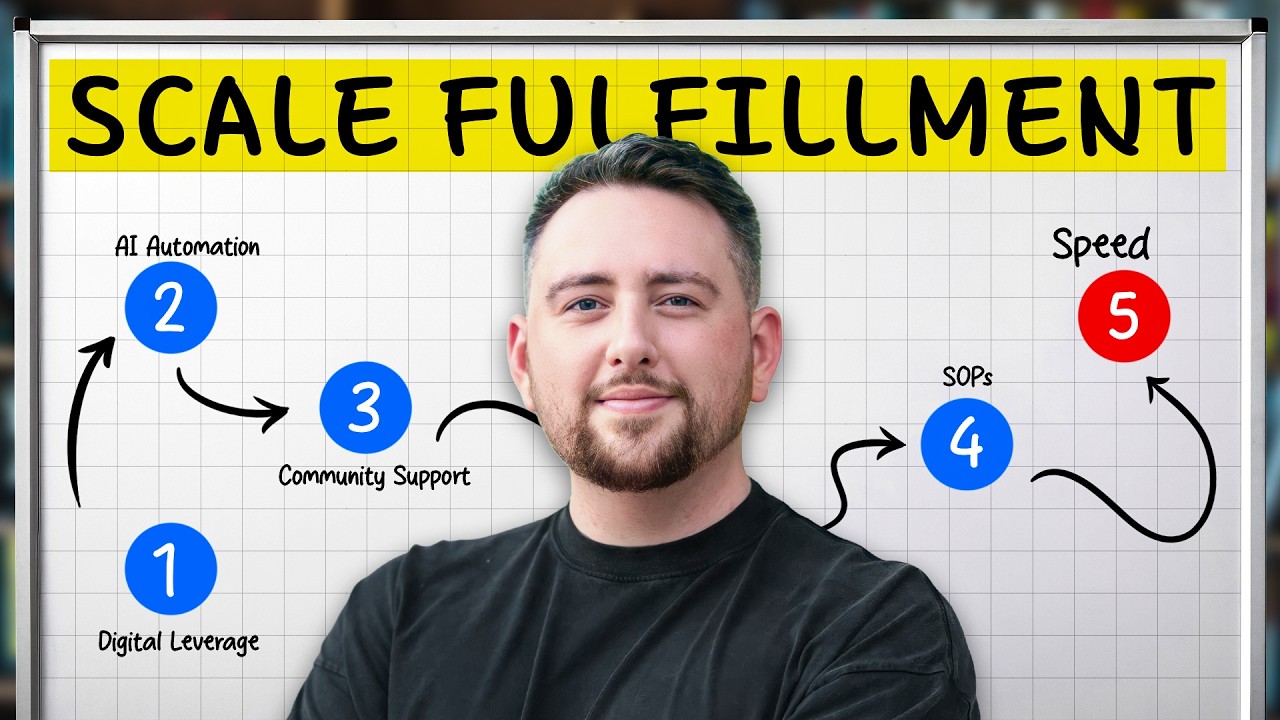
Core of Fulfillment: Speed, Outcomes, Consistency Are Three Variables That Matter
Fulfillment is very simple to understand. The intention of fulfillment is to get the outcome that the person who paid you paid you for. That’s all it is. Don’t over complicate it further than that.
When you look at the outcomes that people paid you for, they obviously want the result as fast as they can get the result.
Now you need to be able to optimize around two things. Speed and the actual outcome.
And when you look at these two things and you simply consider what are the best ways to be able to accomplish the outcomes my people pay me for, and you factor in, well, they want the outcome fast, they might also want the outcome consistently.
So as an example with any recurring product, that’s why our churn rate is so low. That’s why we’ve gotten it lower as every year continues to go on because we continue to optimize around these three variables.
These three variables are critical to think with when you’re hiring A player talent. When you’re looking at what to digitize, when you’re going to create your version of digital Jeremy or your version of AI Jeremy, you want to make sure you factor in what is necessary for me to do in order to get people the outcome they want as consistently as they want it and in the fastest way of getting it.
And at the same time being able to for you from a consistency perspective maintain being able to do it.
When you think like this with fulfillment, everything generally becomes pretty obvious. Like what this generally leads to is clarity on the offer itself.
Sometimes people ask me questions at a high level where they’re like, “What should I actually include in my offer?”
And I’m like, “Well, what do people want? What are people hiring you for as an outcome?”
And then what are the highest probable things that you could give that person or do for that person for them to get the outcome?
Inner Circle Offer Breakdown: Why $10K Monthly Includes One on One, AI, Group Calls, SOPs
It’s like this is why as an example in Jeremy’s inner circle, it’s a recurring offer. And like I said, we crank the price to ten thousand a month. Why do people still confidently pay ten thousand a month or why do people pay half of that for the half circle?
Because it’s an awesome resource that does its job extremely well. It’s a very very good example of what I’m sitting here talking to you about.
Not to pitch you, but it’s kind of a multi-purpose thing because you’ll understand what comes with it. But I want you to understand from the perspective of why I’m going to talk to you about this is mainly so you actually can reflect and think, okay, everything in this person’s offer just helps people get the outcomes in a consistent way and fast.
So in the main inner circle, it’s one-on-one calls. That’s one component. And guess what? Not everybody books one-on-one calls because not everybody needs them because you can also DM me whenever you need.
And generally about three to four times a day, I’ll go in and I’ll have full-blown conversations with people in DMs. That way you can get the questions that you need answered.
But guess what? I sit down in real life, like again, you’re interacting with digital Jeremy right now, but real life Jeremy’s the one creating this. Real life Jeremy isn’t answering messages right now.
So what else do we include? Jeremy AI. You can message Jeremy AI. He’ll give you an answer instantly. You can talk on the phone with Jeremy AI.
And guess what? Like I said, it’s really good. It’s really good. We get consistently great feedback from people that it answers in very similar ways, if not the same way that I would answer myself.
It can hold people accountable. It can call you out. It can also just tell you every single answer that I’d be able to tell you. And honestly, generally in a lot more depth on an ongoing basis compared to what real Jeremy will tell you because real Jeremy optimizes around efficiency.
Jeremy AI optimizes around depth and making sure that you continue the conversation with them. Something to consider.
Outside of those things, those are technically what we call Jeremy components of the offer. Now we talk about some of the more scaled things outside of Jeremy AI are weekly group calls.
So what is the value of the weekly group call? It’s not just random stuff we talk about. This is really important you understand this. It’s the farthest thing from random content.
There’s patterns that happen in the group all at once where people have a collective problem. We don’t have something for it yet. Weekly group call, we’ll talk about it in depth. We’ll give the people what they need and then collectively as a group, they move on to the next problem.
Happens like clockwork. You solve an issue for them and as we know, some people don’t know this, it’s an infinite amount of problems. There’s no world where you all of a sudden reach a point where there’s no more issues.
You have to consistently solve problems. We know that there’ll consistently be a new problem that we don’t have training material for yet that we will craft new training material for.
We know that that new training material will then solve their problems and then we’ll go back and we’ll look and identify what the next problem is and repeat that same cycle all over again.
Multiple Consumption Methods: Video, Written SOPs, AI, Group Chat for Same Outcome
Now there’s one other component to this specific pattern that I want to make extremely clear that we do. Again, in Jeremy’s Inner Circle is a great example.
We don’t just give one version of a consumable for it. As soon as we have a weekly group call, you can talk to Jeremy AI about it. You can message real Jeremy about it. You can go into the group chat and ask questions about it.
And there’s a bunch of other people like you who have been there, done that, or alongside of you right now having the same issues, and y’all can talk about it there too.
We don’t just stop there. We have SOPs generally on these same things. So we have written versions of all this stuff.
You understand my point? So we have multiple consumables and multiple ways to help achieve the outcome. That way we’re not forcing somebody into the same box.
You remember that game that you had when you were a little tiny baby and it had the little shapes and it gave you an opportunity to try to fit those shapes into the right corresponding shape?
Like you had a cylinder. Technically that might be able to go into all three of these, but you’d logically put it in the circle. You had a little cube, you’d put it in the square.
My point is, it’s the same thing here. You probably have a handful of different types of buyers that are inside of your offer at a given time.
And you constantly trying to bias towards what you exclusively do to learn things or what you exclusively would think needs done to have the fulfilled outcome that they bought is likely a deficiency.
What you’d instead want to do is you’d want to have multiple ways for the same outcome to occur.
So back to my offer stack that I’m telling you about. The weekly group call solves that problem. Then it gets turned into a bunch of other stuff. The SOPs. We have so many SOPs. Dozens and dozens and dozens of SOPs.
And they’re not short little SOPs. A handful of them are. A majority of them are dozens of pages. Some of them are over a hundred pages. These are super in-depth.
Now why? Well first of all, they can read them. They can give them to their staff. They can also throw them into an LLM of their preference to take the concept of that training material and put it into a place they prefer.
Again, it goes back to the shape analogy. You understand?
So here’s my point. Outside of all that, one-on-one, the ability to DM me, Jeremy AI, weekly group calls, all the SOPs, we have more because there’s more ways that we can get people outcomes and results. And we want that probability to exist at the highest rate possible.
We have our quarterly masterminds. The masterminds, it’s incredible to me when I get in front of all these people at once and I say, “All right, guys. I’m going to cover this lesson real quick. I did a weekly group call on this. How many of you watched it?”
Like half the room will raise the hand. The other half won’t. Sometimes it’s less than half. Sometimes a third of the room will be like, “Yeah, I watched that one.” The other two thirds didn’t.
What’s that go to show you? It goes to show you that the information has to be presented in multiple ways. It goes to show you that the outcome has to be able to get produced in more than one way.
The consumption has to occur in more than one way. It’s a big deficiency to only have one way.
We get the opportunity to network. People break into pods. They make lifelong friends. They do business with each other. They get the opportunity to ask questions to each other. They get to approach people from all income ranges and learn so much.
They get to talk to me for an extended period of time. They get to meet me in person. They get to come to the facility and learn from all the people that we put on stage in front of them.
They get to have great food too. They get to travel to Miami. We do that four times a year.
Of course, if you can’t come, doesn’t matter. We got three different 4K cams mounted to the ceiling with incredible audio to be able to live stream it. If you can’t watch it live, who cares. You can watch the recording.
If you can’t watch the recording because that’s too inefficient for you, talk to Jeremy AI about the recap. You see what I’m saying?
You want to optimize around efficiency.
Efficiency Problem: Why You Need Multiple Ways to Consume and Achieve Outcomes
So here’s the thing. One big issue that generally happens time and time again when you look at fulfillment is there’s a lack of efficiency.
There’s a lack of you trying your best to get people outcomes in super in-depth ways and to also be able to say whatever you’re trying to say in very simple terms.
There’s people who don’t even watch these pieces. They just take the content and they read an executive summary version of it from ChatGPT in some Chrome extension or maybe ChatGPT itself or whatever other LLM they have.
Some of y’all aren’t consuming this on the regular speed. Some of y’all are watching this on two X or three X speed. Good for you.
My point is, some of y’all aren’t even consuming these entire pieces. Some of y’all consume a couple minutes of them and are like, “Yep, that’s all I need and I’m out.”
And that’s what I’m trying to articulate to you at all points in your fulfillment process. You have to be optimizing around the outcome, the speed of that outcome, and the consistency of that outcome.
And that generally means that you got to factor in efficiency to it. You can’t just have super in-depth assets. You can’t just have super long ways to produce results.
You got to have ways that cut that out and save the other person as much time as possible and still be able to achieve it. You get what I’m saying?
The masterminds, the live streaming of those masterminds, the recording of those masterminds. That leads into the next point, which is a massive course vault.
Massive. If I’m not mistaken, it’s more than a thousand pieces now because we got all the weekly group calls. We got all the mastermind talks. We have dozens of other modules.
Backend selling systems. We have modules on personal brand university. We have modules on sell the agency from Mr. Judge Grant. We have modules in there for so many different things.
Sales training modules, little AIs, all kinds of different functions from different LLMs. We have so much random stuff. The master internet marketing classes. There’s so much content.
And every single piece below each piece, we have the time codes for that content. So somebody could go in there, be curious, watch content that way, or they can talk to what we call the content finder bot.
So when you look at efficiency, there’s plenty of different ways to think of efficiency, but one way that I like to think of it, especially nowadays, our AI tools, our content finder bot’s a great example of that.
Every single piece, every single SOP, every single financial model we have, whatever it is, it is inside of our content finder bot. You can just tag the content finder bot and say, “Send me everything on messaging. Send me everything on recruiting closers. Send me everything on this complex random topic.”
And it’ll pull every single individual training and every single SOP that covers that specific topic and give you a little summary and the link to access it.
That’s an example of an AI tool that optimizes around efficiency. That way we don’t have to just tell people, hey, go into the training portal, go to this module, navigate for this specific piece, which might be nine pages deep because that specific module might have a ton of content in it.
That’s inefficient. Efficiency is use the content finder bot, go to the channel, tag it, it’ll find it for you.
Even more efficient than that, again, back to Jeremy AI. You can just talk to Jeremy AI about it. It’s the fastest and most efficient way to get answers.
Active Community Chat: Why Telegram with Search Function and Media Organization Works
Another thing in the offer stack, our active, very active community chat. Jeremy’s inner circle is one of the most active community chats I’ve ever participated in for a mastermind group.
It’s insane. I bet when I stop this, I’m probably behind like forty messages. A lot happens in that group. It’s not necessarily tough to keep up on, but you have to stay active in it to truly get the most value out of it.
But here’s the other cool part. We host it in Telegram. Why? Because Telegram has efficiency tools. You can click on the group name at the top of the chat. Everything’s organized, whether it be media, files, voice notes.
You can have a search function to go and look up. Just the other day, a person comes in there, he had a question about gamma docs, because we use gamma docs as a way to build trust assets and sales assets as an alternative consumption mechanism to use in the sales process.
This person comes in, no one was talking about gamma. He asks a question, doesn’t really get an answer. I tell him, I’m like, “Hey man, use the search function at the top of the group. Type gamma in.”
There’s a long history of a ton of conversations related to gamma. He goes back, uses that search function, reads through all those historical conversations, actually responds to one of them, and immediately starts the conversation again relative to what he specifically had that wasn’t previously talked about.
But he was able to catch up on the history of that conversation because it’s stored in a place that’s efficient, easy to use, and functional.
Guess what? This is also really important to understand. A lot of value comes from the group chat itself and the other members, not just me.
Although I’m the biggest perpetrator of resources in the group, people contribute resources and value to it all the time because it’s a mastermind group. And that’s a concept of a mastermind.
Now just to be clear, we follow these same principles when we look at our agency side too. Everything that we do as a marketing agency is also optimized around these same outcomes.
Speed, efficiency, the outcomes, consistency in the result, it’s the same stuff, just the client’s less involved.
So when we move up the ladder to a done for you offer, obviously there’s less involvement from the client and we optimize even more around their efficiency and even more around the speed and volume of outcome that we can produce.
Bloated Staff Problem: Why 27 Staff Three Offices Leads to Burnout and Refunds
Here’s my whole point with this. Generally, when people are trying to fulfill, they don’t think with any of this and they end up with an extremely bloated staff that’s terrible to run and be a part of.
I was a victim of that back in the day. I had over twenty seven staff. I had three offices and I put them on opposite coasts of the United States. One was in Beverly Hills, one was in Miami, and I’d fly back and forth literally every week.
It was exhausting. I’d go to bed at like three, four in the morning, wake up at eight AM and have to do it all over again. I felt like a professional babysitter, slightly better paid.
I had so many people ask me questions all the time. My to-do list never ended and it compounded against me. My stress was extremely high. Chronically fatigued and exhausted and chronically overstressed.
My point is that game came to an end. I had abruptly had to let go of a majority of those people had people I had to pay out. Had a hundred plus thousand and refunded deals that we fired because we couldn’t deal with it. It was too stressful of a game.
And you know why I stumbled into that position? Because every time that I had something that I needed help with, I wouldn’t think with efficiency, I would just hire somebody to do it.
And after we’d hire somebody to do it, if it was maybe a one-off thing for them to do, but we hired them on the payroll, we would need to justify their payroll.
So we’d go sell more people into that specific service, which might not even be the best thing for us to sell.
Sales Team Problem: Why Sales Team Incentives Run Your Business and Inflate Expenses
A lot of people, I’ll give you a great example of this with your sales teams. Your sales team ends up running your business. Their incentive is close more people because they get paid on a gross percentage of revenue and you obviously get paid on a net percentage of revenue as the business owner.
And so what ends up happening is your sales people will constantly tell you, “Oh, we’re about to have so and so quit because we can’t fill their calendars. If you don’t have the money or if you don’t have the willingness or you’re too stressed or whatever it is to fill their calendar up or not profitable enough to fill their calendar up and you choose not to fill their calendar up, great.”
That’s the better decision than sacrificing the dollars to fill their calendars just to keep somebody on the staff.
Efficiency would mean that you have to make hard decisions that are sometimes emotional and involve people. It’s a tough thing to get to. It dehumanizes you a little bit.
Here’s the good news. Where we’re at now in this day and age, you have a ton of tools, mainly AI tools, that can infinitely provide more efficiency than what most human beings ever could.
The best role to typically hire for nowadays when it comes to fulfillment is somebody who’s knowledgeable and capable of leveraging AI tools to be able to deploy them on your business’s behalf so you can avoid payroll costs and inflating expenses.
If you optimize around profitability from the beginning, that generally means that you’re optimizing around a lean team, low payroll, efficiency, leverage through digital tools, AI, and all of these different things that are available to you nowadays to avoid bloating your overall expense.
Research shows that labor costs can account for as much as 70% of total business costs, making payroll optimization critical for maintaining profitability.
Income fluctuates, expenses generally stay the same because most people cling to the status of their expenses. There’s emotion in your expenses. It’s tough to let it go.
So therefore, you’d want to avoid the expenses in the first place and try to optimize around the efficiency of it all.
Three Master Variables: Speed, Outcomes, Consistency Plus Efficiency Master Principle
When you officially get to the point where you master these three variables: speed, outcomes, consistency, and you couple all of that with the master underlying principle of efficiency, it’s really hard to mess up fulfillment.
Your offers become clear, what to do becomes clear, and instead of hiring people, you deploy tech. You deploy digital versions of you, and you start to leverage what all the possibilities are to us made available through AI nowadays.
When you think with these kinds of things, this content goes over some of my favorite lessons when it comes to fulfillment best practices.
Of course, there’s many more, but I’m not going to teach you those for free. I withhold those for the people who actually spend money with me.
You can find information for two different things. Number one, Jeremy’s inner circle. Even if you want the half circle that I talked about in this blog where it cost half as much, you still got to go through Jeremy’s inner circle application.
Check it out. There’s a VSL that’s very descriptive. I start by saying the price of ten thousand a month and I go into depth about the half circle and what comes with the full inner circle and how to justify it.
There’s also a bunch of content you can consume from members and their experience and some of what they’ve generated as results.
And there’s also a massive disclaimer to remind you even that program after you pay us doesn’t have any guaranteed income earning claims or earning potential. We just simply give you resources lessons from people who have been there done that so you can turn around and try them yourself to get results in your life and business.
The other offer is what’s called Master Internet Marketing. Phenomenal program. We update it annually. We just recently did the entire update. We rebuilt the class from the ground up. It’s phenomenal.
Seven weeks of extremely in-depth classes. They’re generally about three to five hours of class. It’s a couple dozen, sometimes a couple pieces in between each class. Sometimes SOPs that we need you to consume.
That way you come out the other side a true master of internet marketing. You can preview week one of the past cohort. So not the most recent cohort, but the past cohort’s live class to get an idea of how it is and whether you are going to benefit from that type of education product.
And of course, whether you take any of those actions or not, go check out more content. Follow along, like the content, comment your feedback on this.
If you like this style, I’m happy to make more of them. I have a lot of fulfillment lessons I can hand down to you.
But I generally try to talk to you specifically about the lessons related to scaling up because in almost all instances, scaling up will solve a lot of your fulfillment problems too, because you’ll have more money to make it all easier and exploit a lot of these things that we’ve talked about.
Because here’s what I didn’t tell you. The time, effort, and cost of doing a lot of these things can also be excessive. And generally, the solution is still the same.
Get substantially wealthier. So I hope you go out and do that.
Speed. Outcomes. Consistency. Efficiency. Those are the four variables that determine whether your fulfillment is world class or garbage.
Digital leverage beats human labor. AI tools beat bloated teams. Multiple consumption methods beat single delivery.
Remove finite resources or charge more for them. Never let them sit at a fixed price as demand grows.
A players are expensive but worth it. Donkeys will destroy your culture. Know the difference.
Most fulfillment problems are actually pricing problems. Most pricing problems are actually efficiency problems. Most efficiency problems are actually leverage problems.
Build your army of digital yous. Automate everything that can be automated. Hire humans only for what can’t.
That’s how you fulfill at scale without losing your mind.
What I can teach you isn’t theory. It’s the exact playbook my team has used to build multi-million-dollar businesses. With Master Internet Marketing, you get lifetime access to live cohorts, dozens of SOPs, and an 80+ question certification exam to prove you know your stuff.
Watch the video:
Get my content first on Google
Add jeremyhaynes.com as a preferred source and Google shows my articles more prominently in your search results, including AI Overviews and AI Mode.


Jeremy Haynes
Owner and CEO of Megalodon Marketing
Jeremy Haynes is the founder of Megalodon Marketing. He is considered one of the top digital marketers and has the results to back it up.