The Campaign Starter Kit I Hand Every New Client Before Launch

I hope you enjoy reading this blog post. If you want my team to just do your marketing for you, click here.
Author: Jeremy Haynes | Published July 21, 2026
Earnings Disclaimer: You have a .1% probability of hitting million-dollar months according to the US Bureau of Labor Statistics. As stated by law, we can not and do not make any guarantees about your own ability to get results or earn any money with our ideas, information, programs, or strategies. We don’t know you, and besides, your results in life are up to you. We’re here to help by giving you our greatest strategies to move you forward, faster. However, nothing on this page or any of our websites or emails is a promise or guarantee of future earnings. Any financial numbers referenced here, or on any of our sites or emails, are simply estimates or projections or past results, and should not be considered exact, actual, or as a promise of potential earnings, all numbers are illustrative only.
Most campaigns fail before they even launch.
Not because of bad strategy. Not because of weak creative. Not even because of targeting issues. They fail because the foundation was never built.
In my experience working with agency clients, the difference between a campaign that runs smoothly and one that burns budget comes down to what happens before the first ad goes live. The operators who understand this build sustainable systems. The ones who skip it wonder why their ads don’t work.
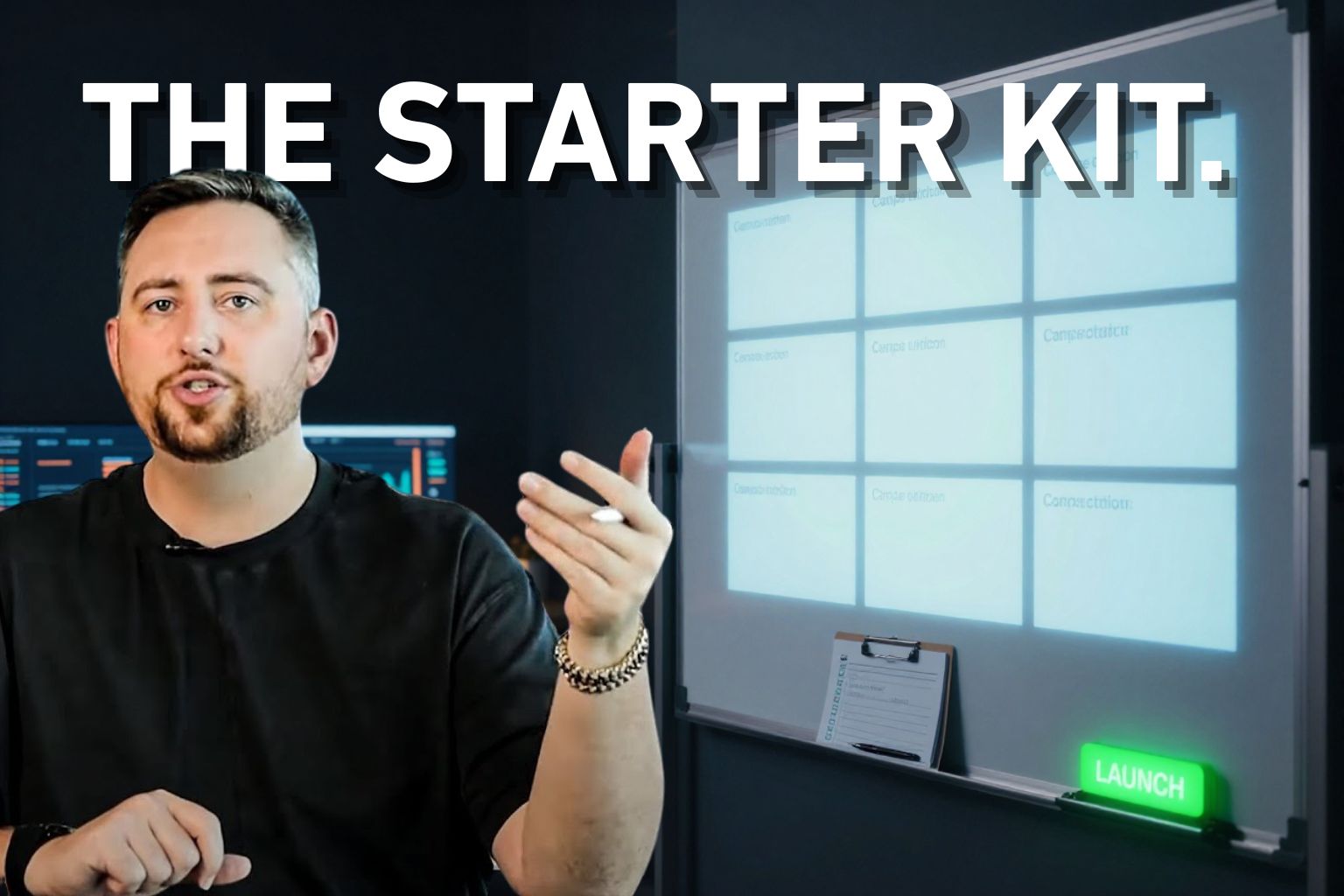
This is the exact operational framework I use when setting up paid media campaigns at Megalodon Marketing. It’s not theory, it’s what actually gets built before any campaign of ours goes live, and it’s the same starter kit we walk operators through building themselves inside Master Internet Marketing.
7 weeks. Real frameworks. Covering copywriting, funnels, paid ads, and conversion systems.
Results are not typical. Your results will vary and depend entirely on your individual capacity, business experience, expertise, and level of desire. There are no guarantees concerning the level of success you may experience. The testimonials and examples used are not intended to represent or guarantee that anyone will achieve the same or similar results. We don’t believe in get-rich-quick programs. We believe in hard work, adding value and serving others. As stated by law, we can not and do not make any guarantees about your own ability to get results or earn any money with our information, courses, programs, or strategies.
How to Build an Offer That Works in Paid Traffic
Before we talk about pixels or creative or budget, we need to talk about what you’re actually selling.
Most businesses think they have an offer. What they actually have is a product with a price tag. That’s not the same thing.
A campaign-ready offer has four components: the core product or service, the value stack that makes it a no-brainer, the risk reversal that removes friction, and the urgency mechanism that creates action now instead of later.
If your offer is “buy my thing for this price,” you’re going to struggle. The market doesn’t care about your thing. It cares about the transformation, the outcome, the problem you solve.
Here’s how I audit an offer before spending money on traffic. Is it specific? Does someone know exactly what they’re getting? Is there urgency built in, or can they come back next month? Is there a guarantee or risk reversal that makes the decision easier? Is the value clearly higher than the price?
If you can’t answer yes to all of those, your offer needs work. Case study data from conversion research firm Invesp backs this up directly: across multiple client tests, sharpening the value proposition alone drove conversion increases ranging from 17% to 90%, with no other changes to the page.
What Account Access You Need Before Launch Day
Once the offer is locked, we move into the operational layer. This is the boring stuff that nobody wants to deal with, but it’s non-negotiable.
I need access to everything. Ad accounts, business managers, analytics platforms, your CRM, domain verification, payment methods on file. If I’m running Meta ads, I need admin access to the ad account and the business manager. If it’s Google, I need full access to the Google Ads account and Google Analytics 4.
Most clients think they have this handled. Then I get in and find out the pixel is firing twice, the payment method expired, or nobody has admin access because the person who set it up left the company two years ago.
Get this sorted before we start. I’m not hunting down logins or waiting for your IT guy to approve access requests while your launch date slips.
Domain verification matters more than people think. If your domain isn’t verified in Meta Business Manager, your ads can get disapproved for no reason. If you’re running Google Ads and your Google Business Profile isn’t claimed and optimized, you’re leaving performance on the table.
Payment methods need to be current, with high enough limits that we’re not hitting spending caps mid-campaign. I’ve seen campaigns pause at the worst possible time because a credit card declined.
This isn’t glamorous work. But it’s the difference between launching on time with clean data and scrambling to fix infrastructure issues while your competitors are already running.
Why Your Tracking Setup Matters More Than Your Ad Creative
If you can’t measure it, you can’t optimize it. And if your tracking is broken, you’re making decisions based on bad data.
Every campaign needs the platform pixel installed correctly. Meta Pixel for Facebook and Instagram. Google Tag for Google Ads. TikTok Pixel if we’re running there. These need to fire the right events at the right time. Getting this right is the same discipline behind pixel conditioning to train your ad pixel for higher-quality leads, since a pixel that’s firing on the wrong events teaches the algorithm to find the wrong people.
For most businesses, that means at minimum: page view, add to cart or lead form submission, and purchase or conversion. If you’re e-commerce, you also need view content and initiate checkout. If you’re lead gen, you need form start and form submit.
But here’s what most people miss: the pixel alone isn’t enough anymore. Since Apple’s iOS 14.5 privacy changes rolled out, we’ve lost significant tracking data on Meta if we’re only using the browser pixel. You need Conversions API set up, which sends data server-side so it’s not blocked by browser restrictions. This isn’t optional. This is table stakes now.
Google Analytics 4 needs to be configured with custom events that match your conversion actions. UTM parameters need to be consistent across all campaigns so you can track performance by source, medium, and campaign in GA4.
If you have a CRM, we’re setting up offline conversion imports so the ad platforms know which leads actually closed. This creates a feedback loop that teaches the algorithm what a valuable customer looks like, not just what a lead looks like.
Test everything before launch. I’ve seen too many campaigns go live with broken tracking, and by the time we caught it, we’d already spent budget with zero usable data.
How to Build Your Audience Targeting Structure
Now we get into who we’re actually talking to.
I build audiences in tiers: cold, warm, and hot. Cold is people who’ve never heard of you. Warm is people who’ve engaged with your content, visited your site, or are on your email list but haven’t bought. Hot is past customers or people deep in your funnel.
First-party data is the foundation. If you have an email list, a customer list, or website traffic, we’re using it. Custom audiences built from your own data almost always outperform interest-based targeting, especially for retargeting and lookalike modeling. That’s not just a hunch: industry data on first-party targeting shows companies using it well see roughly 25% higher conversion rates on average compared to relying on third-party signals.
Lookalikes should be built from your best customers, not all customers. If you upload your entire customer list and it includes one-time buyers who never came back, you’re teaching the algorithm to find more of those. Instead, segment by lifetime value or repeat purchase behavior and build lookalikes from the top segment.
Interest and behavior targeting still has a place, especially at the top of the funnel when we’re testing new cold audiences. But the landscape has shifted. Meta’s Advantage+ and Google’s AI-driven targeting have made broad targeting more effective than it used to be.
I’m not saying ignore targeting entirely. I’m saying the days of hyper-specific interest stacking are mostly over. The algorithm is better at finding your customer than you are, as long as you feed it good conversion data and strong creative.
Exclusion audiences get overlooked constantly. If someone already bought, we don’t need to keep showing them acquisition ads. If they’re an employee or a known refund abuser, exclude them. This saves budget and improves performance metrics.
Why You Need Multiple Ad Formats and Creative Variations
Creative is the new targeting. The algorithm handles delivery. Creative controls who responds.
At launch, I want at minimum three creative concepts, each in multiple formats. That’s static images, short-form video, and long-form video if applicable. If we’re on Meta, carousel ads and UGC-style content usually perform well. This gives us nine to twelve ad variations right out of the gate, enough to test meaningfully without overwhelming production. The same testing logic is laid out in more depth in the Facebook ad creative testing strategy for budgets from $500 to $30K-plus daily.
Creative diversification matters because different formats resonate with different segments of your audience. Some people stop for a bold static image. Others need to see a founder-led video or a customer testimonial before they click.
Hook testing is one of the highest-value tactics I use. Same video body, different opening three seconds. The hook determines whether someone stops scrolling. The body and CTA determine whether they convert.
Ad copy follows proven frameworks. Problem-Agitate-Solution works. AIDA works. Before-After-Bridge works. What doesn’t work is generic brand speak that sounds like every other ad in the feed.
Creative fatigue is real. On Meta, you’ll typically see performance drop after one to two weeks on the same creative in the same audience. That’s why we plan a creative refresh cadence from day one. If you’re not producing new creative regularly, you’re going to hit a ceiling.
What Your Landing Page Needs to Match Your Ad Message
Sending traffic to your homepage is a mistake. I don’t care how good your homepage is.
Every campaign needs a dedicated landing page, built with the same discipline we use for call funnels that convert wealthy clients, that matches the ad. If the ad talks about a specific offer, the landing page headline should reflect that exact offer. Message match matters.
The page should have one clear call to action. Not five different things someone can do. One. If you want them to book a call, the entire page should be built around booking that call. If you want them to buy, the entire page should drive to purchase.
Social proof needs to be present. Testimonials, case studies, logos of brands you’ve worked with, reviews, trust badges. Whatever builds credibility in your market.
Speed is non-negotiable. Research from Google and SOASTA on mobile page performance found that as load time goes from one second to 10 seconds, the probability of a mobile visitor bouncing increases by 123%. Most paid traffic is mobile. If your page is slow, you’re burning money.
The funnel type depends on your business model. E-commerce usually runs traffic straight to product pages or collection pages. Lead gen businesses use lead capture pages with form fills or calendars. High-ticket service providers often use application funnels or webinar registrations.
Thank-you pages are underutilized. After someone converts, that’s the highest-intent moment you have. Use it. Offer an upsell, confirm next steps, get them to book a call if they haven’t already.
How to Calculate Your Campaign Budget Based on Your Goals
Budget questions come up every time. How much do I need to spend?
It depends on your goals, your margins, and what you’re optimizing for. But here’s the framework I use.
Reverse-engineer from your revenue goal. If you need a certain number of new customers this month, and your landing page converts at a specific rate, and your ad click-through rate is at a certain level, you can calculate exactly how much traffic you need and what that traffic will cost based on estimated CPMs. This makes budget conversations data-driven instead of arbitrary.
For most campaigns, I split budget roughly into prospecting, retargeting, and retention or existing customer campaigns. That ratio shifts based on business maturity and funnel stage.
Meta recommends about 50 conversion events per week per ad set to exit the learning phase. If you’re not hitting that, your budget is probably too low or your audience is too narrow.
Target metrics should be based on your unit economics. If your average order value is a certain amount and your margin is a specific percentage, you can afford to spend up to your margin to acquire a customer and break even. Anything below that is profit. Anything above that is a loss.
In my experience, businesses that know their numbers scale faster and more profitably than businesses guessing at what good looks like.
Scaling happens two ways: horizontal and vertical. Horizontal is new audiences, new creative, new placements. Vertical is increasing budget on what’s already working. Most businesses should do both, but horizontal first until you find consistent winners.
What Metrics to Track and How Often to Review Them
The last piece of the starter kit is how we communicate results.
I set up a dashboard that shows the metrics that actually matter. Not vanity metrics. Not impressions or reach unless those are tied to a business outcome. This is the same principle behind the 8-metric morning dashboard that runs a $1M operation: fewer numbers, watched daily, beats a long report nobody reads.
For most campaigns, that’s: spend, impressions, click-through rate, cost per click, landing page views, cost per landing page view, conversions, cost per conversion, and return on ad spend or revenue attributed.
Leading indicators like CTR and hook rate tell us if the creative is working. Cost per landing page view tells us if the audience is right. Conversion rate and cost per acquisition tell us if the funnel is working.
We review daily during the first week, then move to weekly optimization calls and monthly strategy reviews once the campaign is stable.
The first 30 days are a learning phase. We’re gathering data, testing creative, and optimizing based on what the market tells us. Businesses I’ve worked with that understand this don’t panic when week one doesn’t deliver immediate results. The ones that expect overnight outcomes usually kill campaigns before they have a chance to work.
Realistic expectations matter. If you’re launching cold traffic to a new offer, expect weeks two through four to perform differently than week one as the algorithm learns and we optimize based on real data.
This is what we cover in depth in the 7-week live comprehensive training at Master Internet Marketing, where we walk through the entire campaign setup process step by step.
Results are not typical. Your results will vary and depend entirely on your individual capacity, business experience, expertise, and level of desire. There are no guarantees concerning the level of success you may experience. The testimonials and examples used are not intended to represent or guarantee that anyone will achieve the same or similar results. We don’t believe in get-rich-quick programs. We believe in hard work, adding value and serving others. As stated by law, we can not and do not make any guarantees about your own ability to get results or earn any money with our information, courses, programs, or strategies.
Already making money? See what it takes to make a lot more.
Why Execution Beats Strategy Without Infrastructure
This starter kit isn’t sexy. It’s not a hack or a shortcut. It’s the operational foundation that makes everything else possible.
The businesses that take this seriously get results. The ones that skip steps waste budget, get frustrated, and blame the platform or the media buyer when the real issue was they never built the foundation.
If you’re about to launch a campaign, use this as your checklist. If you’re working with an agency or a media buyer and they’re not asking for most of this, you’re probably not working with someone who knows what they’re doing.
Execution beats strategy when the strategy isn’t built on solid infrastructure. This is that infrastructure.
If you want help implementing these systems in your agency, check out our mastermind, Inner Circle, where we work directly with agency operators on their campaign infrastructure.
Results are not typical. Your results will vary and depend entirely on your individual capacity, business experience, expertise, and level of desire. There are no guarantees concerning the level of success you may experience. The testimonials and examples used are not intended to represent or guarantee that anyone will achieve the same or similar results. We don’t believe in get-rich-quick programs. We believe in hard work, adding value and serving others. As stated by law, we can not and do not make any guarantees about your own ability to get results or earn any money with our information, courses, programs, or strategies.
Get my content first on Google
Add jeremyhaynes.com as a preferred source and Google shows my articles more prominently in your search results, including AI Overviews and AI Mode.


Jeremy Haynes
Owner and CEO of Megalodon Marketing
Jeremy Haynes is the founder of Megalodon Marketing. He is considered one of the top digital marketers and has the results to back it up.