
How Native Ads and Programmatic Display Fit High-Ticket Offers

I hope you enjoy reading this blog post. If you want my team to just do your marketing for you, click here.
Author: Jeremy Haynes | Published September 18, 2026
Earnings Disclaimer: You have a .1% probability of hitting million-dollar months according to the US Bureau of Labor Statistics. As stated by law, we cannot and do not make any guarantees about your own ability to get results or earn any money with our ideas, information, programs, or strategies. We don’t know you, and your results in life are up to you. We’re here to help by giving you our greatest strategies to move you forward, faster. However, nothing on this page or any of our websites or emails is a promise or guarantee of future earnings. Any financial numbers referenced here, or on any of our sites or emails, are simply estimates or projections or past results, and should not be considered exact, actual, or as a promise of potential earnings – all numbers are illustrative only.
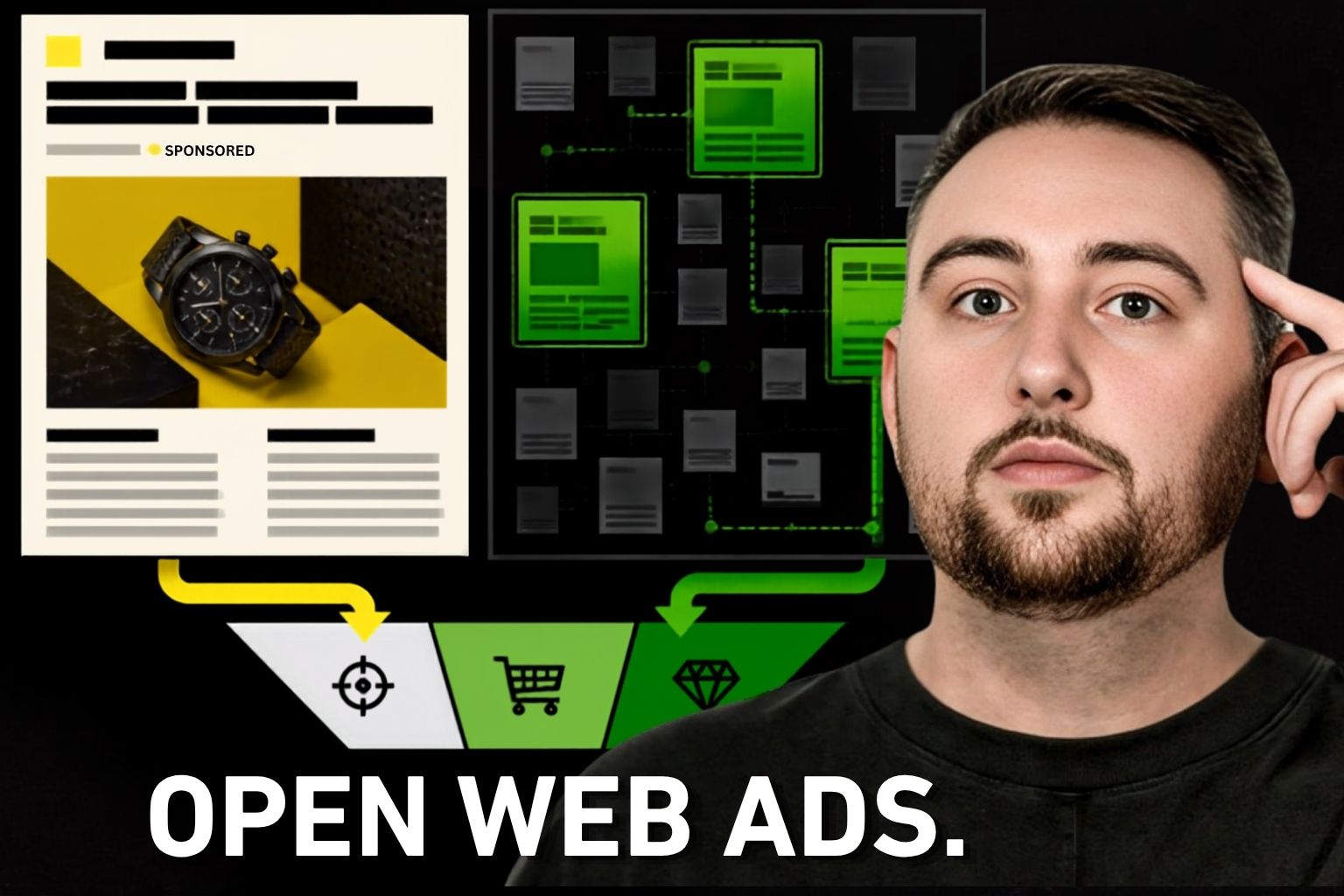
Native ads and programmatic display can support a high-ticket offer, but they solve different problems. Native is usually a cold-traffic education play built around a strong article or advertorial. Programmatic display is often more useful for retargeting, controlled reach, and reaching buyers in relevant publisher environments.
Neither channel should be added simply because Meta or Google feels expensive. The business needs a clear job for the channel, a funnel that already converts, and tracking that follows the buyer beyond the first click. Otherwise, cheaper impressions only create a less obvious place to lose money.
This is the decision I would make before opening another ad account. Decide whether you need new cold demand, more touches with warm prospects, or better reach into a specific context. Then choose the channel and funnel around that job.
Already making money? See what it takes to make a lot more.
Native and Programmatic Solve Different Problems
Native ads appear inside publisher environments in formats that resemble nearby recommendations or editorial content. The click usually needs to continue into a useful article, advertorial, or another educational page. The buyer is browsing content, so the message has to earn attention before asking for a larger commitment.
Programmatic display gives an advertiser a way to buy inventory across websites and other digital environments through an automated buying platform. Google’s Display & Video 360 overview describes campaign, audience, creative, inventory, and reporting functions inside one buying system.
The operational difference matters. Native can introduce a problem and move a cold reader into deeper education. Programmatic display can keep a message visible to known visitors, reach pages with relevant subject matter, or buy selected inventory. Treating both as generic sources of cheap clicks removes the reason to use either one.
Choose the channel by the job it has to perform, not by the price of the impression.
Native Traffic Needs an Honest Editorial Bridge
A cold reader leaving a publisher page rarely has enough context to book a serious sales call immediately. The next page has to continue the thought that earned the click. That is why native traffic commonly uses an advertorial or long-form educational page before the application.
The page should explain the problem, show the reasoning behind the offer, address the buyer’s likely objections, and make the next step clear. It still needs to identify itself honestly as advertising when required. The Federal Trade Commission’s native advertising guidance says commercial content should not mislead people about its nature and that necessary disclosures must be clear and prominent.
That rule improves the strategy. A useful advertorial should hold attention because the argument is strong, not because the reader was tricked into believing an independent newsroom endorsed the offer. The headline, disclosure, body, and call to action should all tell the same truth.
The educational bridge also needs to match buyer readiness. My article on building a buyer-ready funnel explains why a funnel must educate and filter before it hands a lead to sales. Native traffic makes that work even more important because the click begins in a content-browsing mindset.
Programmatic Works Best With a Defined Audience
Programmatic display becomes easier to evaluate when the audience is already defined. Site visitors, people who reached a key funnel page, and prospects who engaged with a meaningful piece of content give the campaign a clear starting point. The message can then respond to where the buyer stopped.
A visitor who read an article needs a different message from someone who reached the application page. Repeating one generic banner to both groups wastes the behavioral signal the business already has. The retargeting grid for warm traffic shows how to segment people by what they actually did instead of treating every visitor as equally interested.
Contextual prospecting is another possible job. Display & Video 360’s keyword-targeting documentation explains that page text, app descriptions, and video metadata can be used to identify inventory related to selected topics. That creates control over context, but context alone does not prove buyer intent.
The ad still has to earn the next action. A relevant article can make the placement sensible while the person reading it remains a weak fit for the offer. Qualification happens through the message, funnel, application, and sales process.
Start With Retargeting Before Cold Prospecting
If the business is new to programmatic display, retargeting is usually the cleaner first test. The audience has already interacted with the company, the message can reflect a known behavior, and the team can compare the campaign with an existing follow-up process.
Start with one meaningful segment. People who visited a sales page but did not apply may need proof or clarification. People who began an application may need an answer to a specific concern. People who consumed a long-form video may need a direct next step.
My four-step retargeting system focuses on changing the message as the buyer moves through the decision. Programmatic can extend that logic beyond the usual social and search environments, but it does not replace the need for sequencing.
Inside Master Internet Marketing, my 7-week live comprehensive training, I teach operators to connect channel selection with the offer, funnel, tracking, and sales evidence. Adding inventory before those pieces agree only makes the diagnosis harder.
Results are not typical. Your results will vary and depend entirely on your individual capacity, business experience, expertise, and level of desire. There are no guarantees concerning the level of success you may experience. The testimonials and examples used are not intended to represent or guarantee that anyone will achieve the same or similar results. We don’t believe in get-rich-quick programs. We believe in hard work, adding value and serving others. As stated by law, we can not and do not make any guarantees about your own ability to get results or earn any money with our information, courses, programs, or strategies.
Placement Quality Matters More Than Cheap Reach
Programmatic buying can open a large inventory pool. That scale is useful only when the team knows where ads ran and what happened after those impressions. A low cost per thousand impressions can look efficient while placements produce accidental clicks, weak sessions, or no qualified movement.
Review placements, domains, devices, creative sizes, frequency, and downstream behavior. Exclude inventory that repeatedly creates poor sessions or fails basic brand-safety standards. Build a stronger allowlist from environments that produce useful engagement and qualified steps.
Do not confuse a famous publisher name with a good placement. The page, section, device, ad position, and buying route all affect what was actually purchased. A campaign report needs enough placement detail to support a real decision.
The same standard applies to native. Judge the publisher relationship by the quality of readers who continue through the funnel, not by how impressive the logo looks in a presentation.
Tracking Must Follow the Buyer Past the Click
Native and programmatic traffic often create several touches before a sales conversation. That makes click-level reporting incomplete. The team needs to carry source, campaign, creative, and landing-page information into the customer relationship management system and connect it with qualified applications, attended calls, sales, refunds, and delivery quality.
Campaign parameters provide a basic layer of source identification. Google’s campaign URL guidance explains how source, medium, campaign, term, and content parameters can appear in acquisition reporting. Those labels need consistent naming or the report becomes another pile of disconnected rows.
Attribution will still be imperfect. A buyer may see a display ad, read an advertorial, return through search, and later apply from an email. The goal is not to manufacture certainty. The goal is to retain enough evidence to understand which channels introduce qualified buyers and which ones merely collect cheap activity.
The campaign earns more budget when downstream buyer quality improves, not when the dashboard finds a cheaper click.
The Funnel Must Convert Somewhere Else First
A new channel should not be asked to repair a weak offer. If the business cannot explain who the offer is for, why the buyer should care, and what happens after the click, native traffic will expose that confusion. Programmatic display will spread it across more placements.
Use a channel where feedback is already understandable to validate the offer and funnel. Know the application quality, show rate, close rate, net collected cash, and delivery load. Then a new traffic source can be compared against an operating baseline instead of evaluated in isolation.
The article on funnel friction and buyer intent is a useful companion because native traffic may need more education than a buyer actively searching for a solution. The correct amount of friction depends on how much trust and context exist before the visit.
In my Inner Circle, these decisions get examined against the whole operating system. The channel may be generating interest while the real problem sits in qualification, follow-up, sales, or fulfillment.
Results are not typical. Your results will vary and depend entirely on your individual capacity, business experience, expertise, and level of desire. There are no guarantees concerning the level of success you may experience. The testimonials and examples used are not intended to represent or guarantee that anyone will achieve the same or similar results. We don’t believe in get-rich-quick programs. We believe in hard work, adding value and serving others. As stated by law, we can not and do not make any guarantees about your own ability to get results or earn any money with our information, courses, programs, or strategies.
Build a Small Test Around One Clear Job
A useful first test is narrow enough to diagnose. Choose one audience, one offer, one page path, and one primary business outcome. Decide what evidence would justify continuing, changing the creative, changing the page, or stopping the test.
For native, the test may compare a small set of headlines leading to one advertorial. Measure whether the right readers continue, opt in, consume the next asset, and become qualified. For programmatic retargeting, the test may compare messages for one behavioral segment and one next step.
Keep the rest of the path stable long enough to learn. Changing the audience, creative, advertorial, application, and follow-up at once produces movement without explanation. My article on choosing the right high-ticket funnel helps determine which conversion path fits the offer before another channel adds complexity.
Write the test decision before launch. That keeps a weak first week from turning into panic and keeps cheap surface metrics from turning into false confidence.
7 weeks. Real frameworks. Covering copywriting, funnels, paid ads, and conversion systems.
Know When These Channels Are Worth Adding
Native ads become worth testing when the offer benefits from education, the team can produce strong long-form presell content, and the funnel can nurture a buyer who is not ready to apply on the first touch. Programmatic display becomes worth testing when the business has meaningful traffic, useful audience segments, and a clear reason to reach those people again or meet them in a relevant context.
Both channels require attention to placement quality, creative fit, disclosure, tracking, and downstream sales evidence. They create another source of demand and another set of operating decisions. They do not create product-market fit or responsible delivery capacity.
The practical sequence is simple. Keep the channels that already work, name the missing job, choose the new channel that fits it, and run a controlled test through a funnel you understand. Native and programmatic become useful when they extend a working acquisition system instead of distracting the team from fixing one.
Results are not typical. Your results will vary and depend entirely on your individual capacity, business experience, expertise, and level of desire. There are no guarantees concerning the level of success you may experience. The testimonials and examples used are not intended to represent or guarantee that anyone will achieve the same or similar results. We don’t believe in get-rich-quick programs. We believe in hard work, adding value and serving others. As stated by law, we can not and do not make any guarantees about your own ability to get results or earn any money with our information, courses, programs, or strategies.
Get my content first on Google
Add jeremyhaynes.com as a preferred source and Google shows my articles more prominently in your search results, including AI Overviews and AI Mode.


Jeremy Haynes
Owner and CEO of Megalodon Marketing
Jeremy Haynes is the founder of Megalodon Marketing. He is considered one of the top digital marketers and has the results to back it up.