
How to Choose Between a Founder-Led and Faceless Brand

I hope you enjoy reading this blog post. If you want my team to just do your marketing for you, click here.
Author: Jeremy Haynes | Published August 28, 2026
Earnings Disclaimer: You have a .1% probability of hitting million-dollar months according to the US Bureau of Labor Statistics. As stated by law, we cannot and do not make any guarantees about your own ability to get results or earn any money with our ideas, information, programs, or strategies. We don’t know you, and your results in life are up to you. We’re here to help by giving you our greatest strategies to move you forward, faster. However, nothing on this page or any of our websites or emails is a promise or guarantee of future earnings. Any financial numbers referenced here, or on any of our sites or emails, are simply estimates or projections or past results, and should not be considered exact, actual, or as a promise of potential earnings – all numbers are illustrative only.
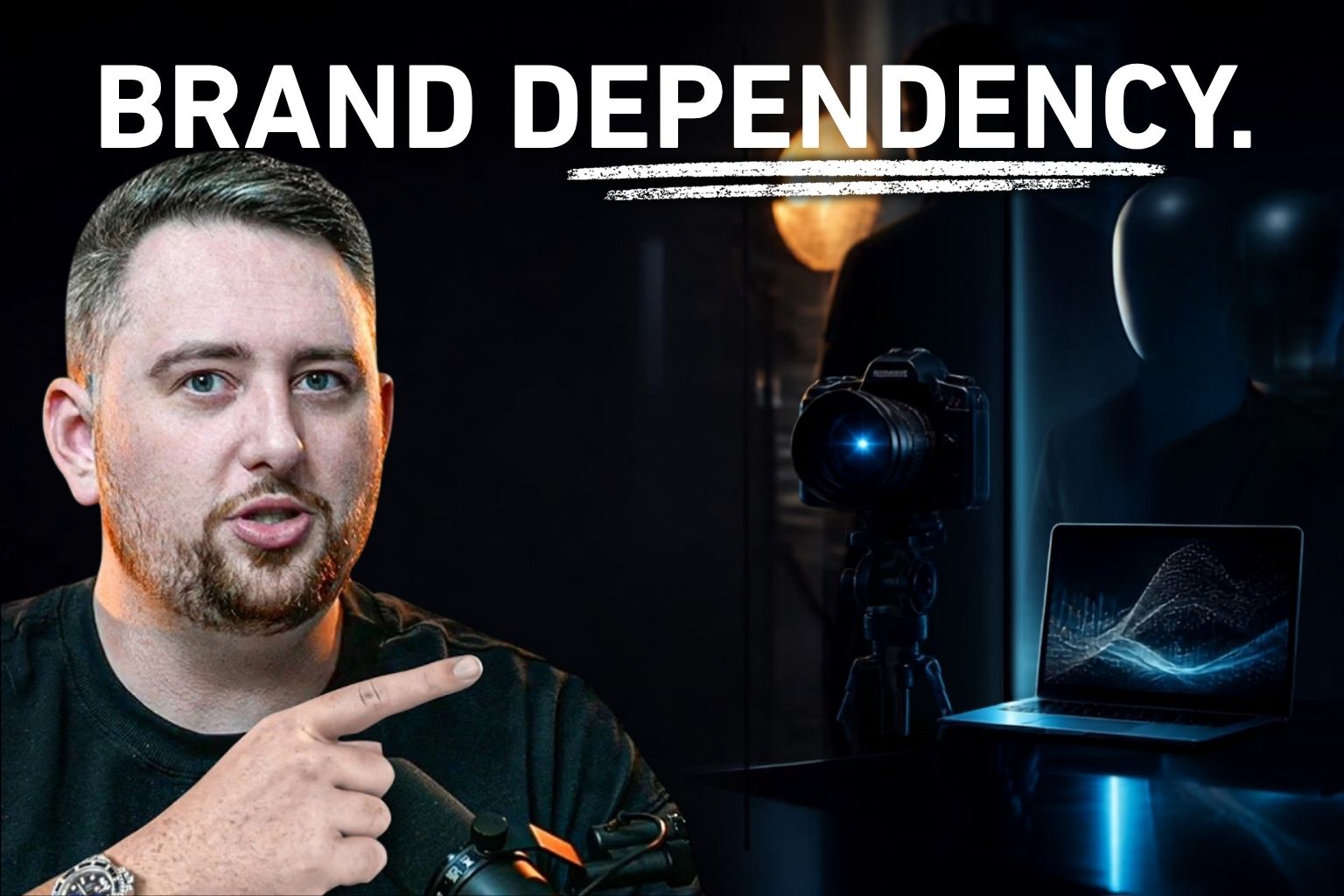
Choosing between a founder-led and faceless brand decides where trust lives. A visible founder can make judgment and point of view easier to recognize. A faceless brand can spread production and ownership across a team. Many operators need a hybrid that builds trust through the founder, then transfers it into the company, its method, and its people.
Already making money? See what it takes to make a lot more.
What Each Brand Model Makes the Founder Carry
A founder-led brand puts the founder’s identity close to the buying decision. The name, face, opinions, stories, and demonstrations all become part of how the market understands the offer. That can be useful when buyers are evaluating judgment, access, or a methodology that came directly from the person delivering it.
A faceless brand moves the emphasis toward the company identity, product, editorial standard, or customer experience. The audience may know very little about the owner and still understand what the brand does. That does not remove the need for trust. It changes the evidence used to create it.
A hybrid keeps a recognizable founder in the picture while building other reasons to trust the business. The founder may still lead major ideas and important moments. The company also builds named methods, visible team members, repeatable formats, and a clear standard that can continue without constant founder involvement.
The model is not a personality test. It is an operating decision. You are deciding whether attention, credibility, production, and customer expectations will sit with one person or be spread across a system.
When a Founder-Led Brand Has the Clearest Edge
A founder-led model makes sense when the buyer needs to evaluate how a particular person thinks. Consulting, education, and other judgment-heavy offers often fall into this category. The founder can explain decisions and show the work. This makes the standard visible before the prospect ever reaches a sales conversation.
That is the logic behind treating a personal brand as an operating system. The value does not come from a face appearing in every post. It comes from predictable thinking, demonstrated capability, clear boundaries, specific values, and recognizable taste.
This also helps when the offer serves an advanced audience. Content for established operators has to show that the speaker understands the decisions, teams, and consequences at that level. My approach to a personal brand for larger operators relies on firsthand examples and demonstration content because generic advice weakens the signal.
Trust still has to be earned through what the founder does. The Edelman Brand Trust report describes trust as a meaningful purchase consideration and ties it to relevance, responsiveness, and clear action. Visibility can help a founder show those qualities, but visibility without substance only makes weak positioning easier to notice.
Where a Faceless Brand Creates More Leverage
A faceless model becomes attractive when the product, information, or experience can be evaluated without a founder explaining it personally. A useful tool, a focused media property, or a clearly differentiated product can carry its own promise. The brand earns attention through the quality and consistency of what it publishes or delivers.
The operational advantage is that the work can be assigned by role. Writers, editors, designers, presenters, and community managers can contribute without impersonating the founder. You can define a point of view, an editorial standard, and a quality bar that the team applies across every channel.
YouTube’s own guidance shows that a channel can use a Brand Account with a separate brand identity. Its channel permissions system also lets multiple people manage specific parts of a channel without sharing the owner’s sign-in details. Those features do not build a faceless brand for you, but they illustrate the operational separation a team-run property requires.
The tradeoff is that the brand needs other trust signals to do the work a founder’s familiarity would have done. The method needs to be clear, proof needs context, and the customer experience needs to feel consistent. The content cannot sound like it came from a committee that removed every strong opinion.
Why the Hybrid Model Solves the Hardest Tradeoff
The hybrid model uses founder recognition without making the founder the only valuable part of the business. The founder introduces the point of view and teaches the central methods. The company then turns those ideas into assets and experiences other people can help deliver.
This is where a lot of operators get the sequence wrong. They hire a social team and ask it to manufacture a brand voice before the founder has made the thinking clear. The team produces polished content, but nobody can tell what the company believes or why its approach is different.
Start with the founder’s real decisions. Document the frameworks, recurring explanations, client standards, and stories that reveal how the business operates. Then build repeatable formats around them. A scalable content repurposing system creates leverage when the source material already contains a strong point of view.
Inside Master Internet Marketing, my 7-week live comprehensive training, I want operators to turn what they know into systems. Their teams need to use those systems whether the founder stays visible, steps back gradually, or never becomes the public face.
Results are not typical. Your results will vary and depend entirely on your individual capacity, business experience, expertise, and level of desire. There are no guarantees concerning the level of success you may experience. The testimonials and examples used are not intended to represent or guarantee that anyone will achieve the same or similar results. We don’t believe in get-rich-quick programs. We believe in hard work, adding value and serving others. As stated by law, we can not and do not make any guarantees about your own ability to get results or earn any money with our information, courses, programs, or strategies.
How to Build Trust Without Founder Dependence
Founder dependence becomes a problem when the audience cannot explain the value without naming the founder. If every useful idea, sales conversation, delivery decision, and public response needs one person, the brand is visible but the system is fragile.
Move the trust into things the audience and team can recognize. Name the methods and show the process. Introduce the people responsible for important work. Publish examples that reveal the standard, then let team members teach the part they actually own.
Keep the founder attached to the moments where personal judgment genuinely matters. A major point of view, a difficult decision, or a live demonstration may still benefit from the founder. Routine explanations, recurring education, product updates, and customer stories can often belong to the wider brand.
This is also where consistency matters more than volume. The audience should hear the same central beliefs from different formats and people without getting a different company every week. A systemized brand compounds because each new asset reinforces an identity that already makes sense.
How to Transition Without Confusing the Audience
Do not switch from founder-led to faceless overnight. The audience has learned where to place its attention. If the founder disappears before new sources of value are visible, the change feels like an absence instead of an evolution.
Begin by widening the cast. Bring team members into content where their expertise is relevant. Put the company method on screen and turn recurring founder explanations into diagrams, playbooks, and editorial series. Keep connecting those assets to the larger point of view until the audience recognizes them on their own.
Then test what holds attention without the founder. Compare topics, formats, speakers, and customer examples. Look for repeat engagement and qualified conversations, not just a single spike. The goal is to learn which parts of the brand already carry their own weight.
For established operators making this structural decision, my Inner Circle is where I work through the business behind the brand. The people in the room already have real teams, offers, and operating constraints.
Results are not typical. Your results will vary and depend entirely on your individual capacity, business experience, expertise, and level of desire. There are no guarantees concerning the level of success you may experience. The testimonials and examples used are not intended to represent or guarantee that anyone will achieve the same or similar results. We don’t believe in get-rich-quick programs. We believe in hard work, adding value and serving others. As stated by law, we can not and do not make any guarantees about your own ability to get results or earn any money with our information, courses, programs, or strategies.
7 weeks. Real frameworks. Covering copywriting, funnels, paid ads, and conversion systems.
Choose the Model the Business Can Actually Support
Make the choice by testing the business you are building, not the content style that looks easiest this month. Ask what the buyer needs to trust and which parts of the offer require personal judgment. Then decide how much visibility the founder wants and which activities must continue when that person is unavailable.
If the founder’s thinking is the clearest differentiator, use it. If the product or editorial standard can carry the promise, build around that. If you want trust now and optionality later, use a hybrid and start transferring value into the company from the beginning.
The mistake is not choosing one model over another. The mistake is building founder dependence by accident, or hiding the founder in a market where personal judgment is the reason people buy. Make the dependency visible, decide where trust should live, and build the content and operating system around that decision.
Results are not typical. Your results will vary and depend entirely on your individual capacity, business experience, expertise, and level of desire. There are no guarantees concerning the level of success you may experience. The testimonials and examples used are not intended to represent or guarantee that anyone will achieve the same or similar results. We don’t believe in get-rich-quick programs. We believe in hard work, adding value and serving others. As stated by law, we can not and do not make any guarantees about your own ability to get results or earn any money with our information, courses, programs, or strategies.
Get my content first on Google
Add jeremyhaynes.com as a preferred source and Google shows my articles more prominently in your search results, including AI Overviews and AI Mode.


Jeremy Haynes
Owner and CEO of Megalodon Marketing
Jeremy Haynes is the founder of Megalodon Marketing. He is considered one of the top digital marketers and has the results to back it up.

